





.jpg/e9571273-0e35-1ff2-0713-76c7fd4e3cc5?width=456)

The Hermitage of Madonna del Riparo
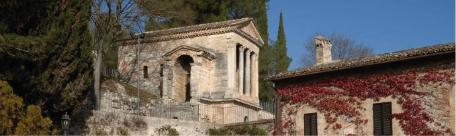
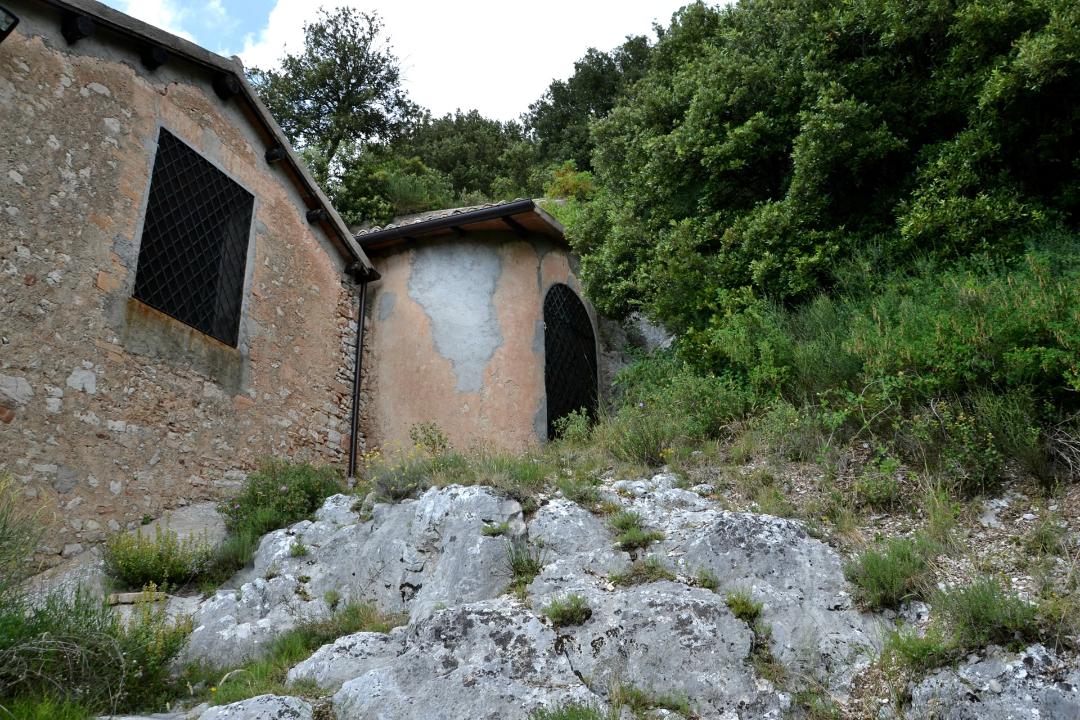
A few kilometres from Foligno, near Scandolaro, at the foot of Monte Cologna, stand the hermitage and the small church of Sant’Angelo de Gructis, commonly known as Madonna del Riparo.
As its original dedication reveals, their existence was linked to the cult of Saint Michael, which was widespread throughout Europe during the Middle Ages. The sanctuary was one of the many places of worship created ad instar, that is, in imitation of the most famous and important one on Mount Gargano in Apulia.
Michaelic sanctuaries in Umbria must have been numerous, but today their memory has largely been lost. Over time, some of these places were rededicated to the Virgin Mary, who according to later iconography of the Immaculate Conception, defeated the Dragon that Saint Michael then confined to the bowels of the Earth. Evidence of this continuity of worship can still be found at the sanctuary of Madonna del Riparo: the traditional pilgrimage was held here on 8 May (the day commemorating Saint Michael’s apparition at the cave on Mount Gargano) and on 29 September, feast day of the Archangel – a tradition still alive today.
The ancient history of the Hermitage of Madonna del Riparo, between noble lords and prodigious discoveries
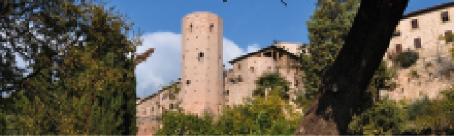
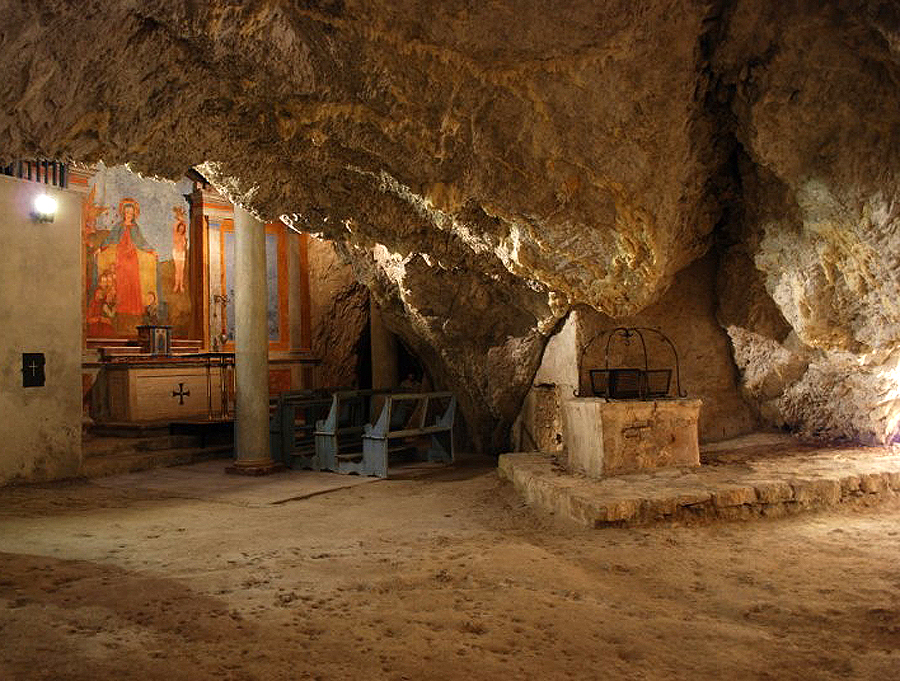
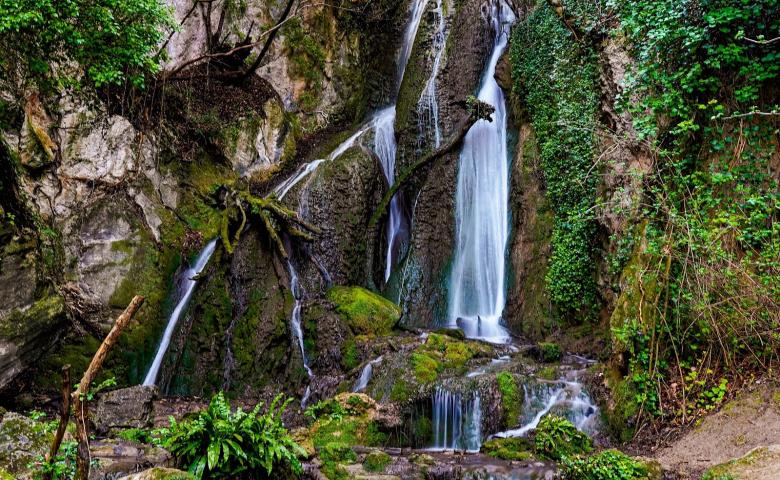
This site was most likely a pagan temple in ancient times, as often happened near springs. Owing to the presence of therapeutic waters, in the 11th century Count Offredo Monaldo built a small church dedicated to Saint Michael on its remains. The Monaldo, of Lombard origin, were a prominent family in the area (sources consider them ancestors of the Trinci and Barnabò families of Foligno, as well as the d’Alviano family of Attigliano). Later, the property passed to the Counts of Turri, whose fortress can still be seen above the little village of Scandolaro, and they maintained ownership until the 17th century. When the family line died out, the sanctuary passed to the Benedetti Roncalli. In 1899 Benedetto Benedetti Roncalli sold it to Eutizio and Domenico Federici of Scandolaro, whose descendants still own it today.Over the centuries the small church dedicated to Saint Michael fell into disuse. In 1842, while workers were repairing the roof, a landslide led to the fortunate discovery of a large natural cave, with a painted image of the Virgin on one wall. The discovery caused a great stir and was considered miraculous. Crowds flocked to the cave, and miraculous healings were reported from the very beginning. Restored thanks to the faithful, the church became known as the Sanctuary of Madonna della Grotta or del Riparo.



.jpg/9c821287-b9ac-2175-7491-002f9032c42f?width=780)
.jpeg/26712e88-9665-3ae2-a85e-3bd2b38b8a93?width=780)