


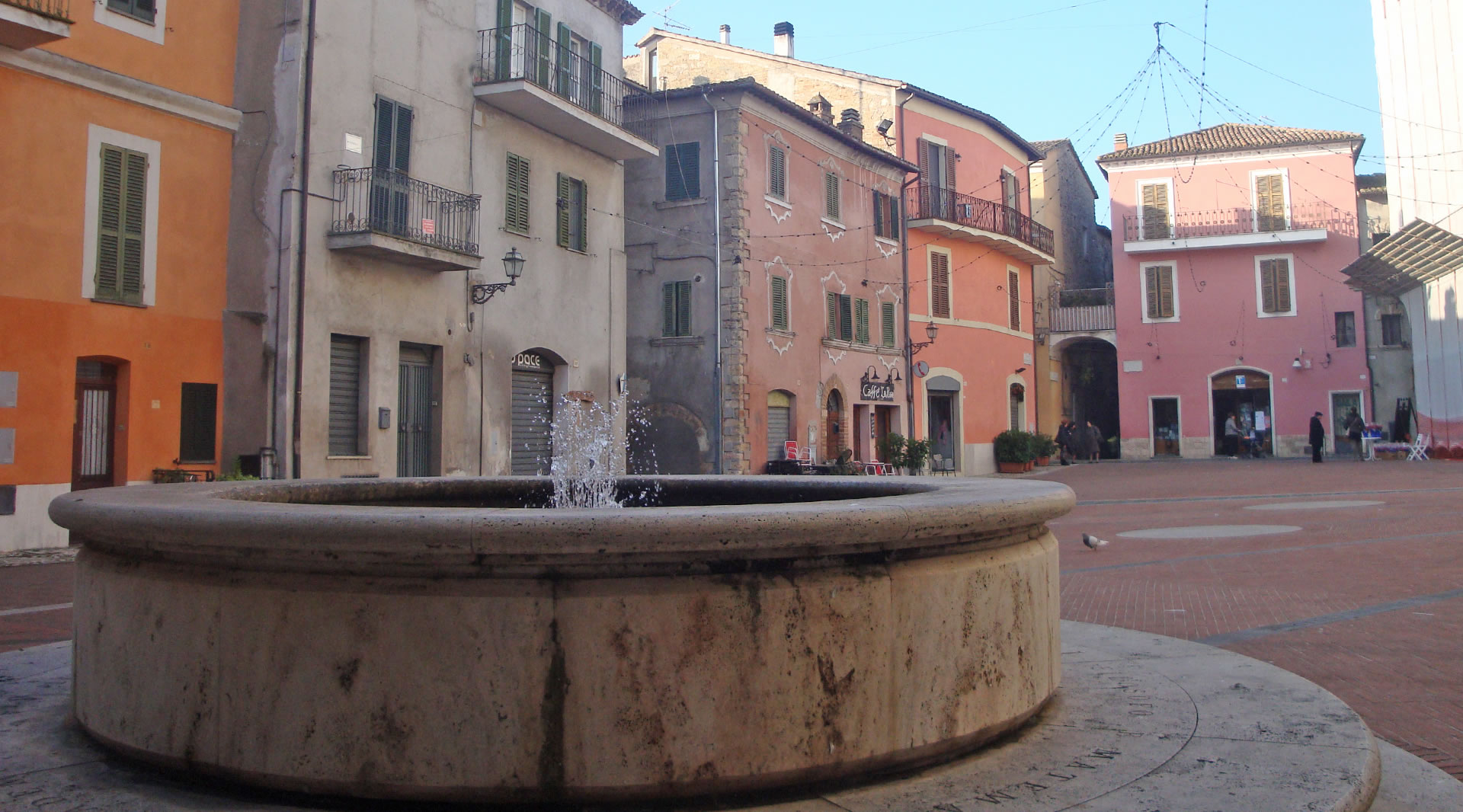
In the heart of the Monti Martani, Acquasparta has a history shaped by science, noble families, ancient castles and natural springs. The town experienced one of its greatest periods of splendour under the rule of the Cesi family, of which Palazzo Cesi remains the most significant legacy. An elegant Renaissance residence, it was chosen by Duke Federico Cesi as a favoured setting for the activities of the Accademia dei Lincei, which he founded in 1603 and which was destined to become one of Europe’s most important scientific academies. Among its members was Galileo Galilei, who stayed in Acquasparta in 1624.
The area is also characterised by its numerous low-mineral springs, which for centuries played a major role in the life and reputation of Acquasparta. The best known is the Amerino spring, also known as the San Francesco spring, around which a long tradition developed concerning the beneficial properties of its waters.
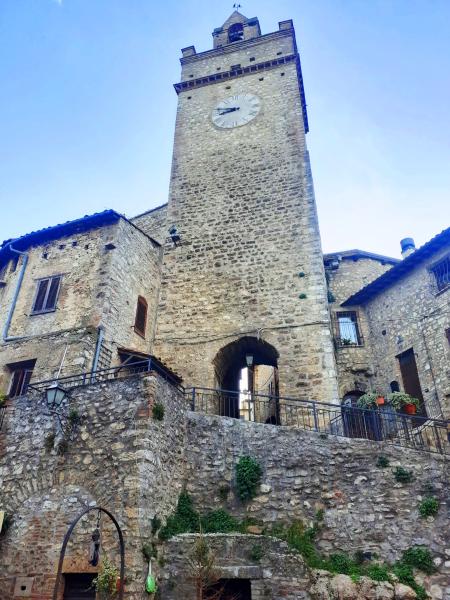
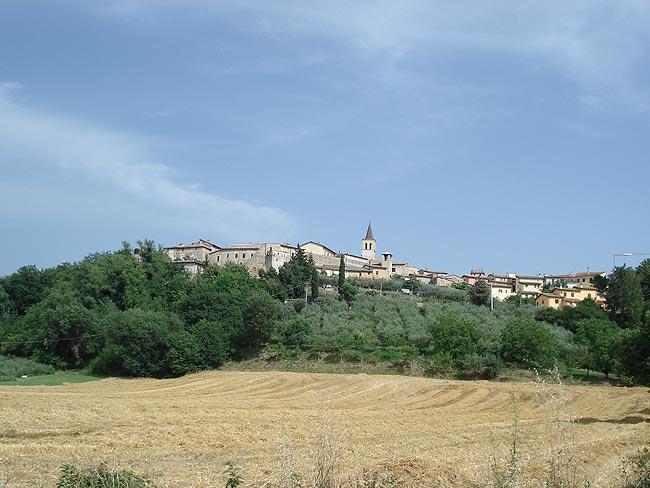
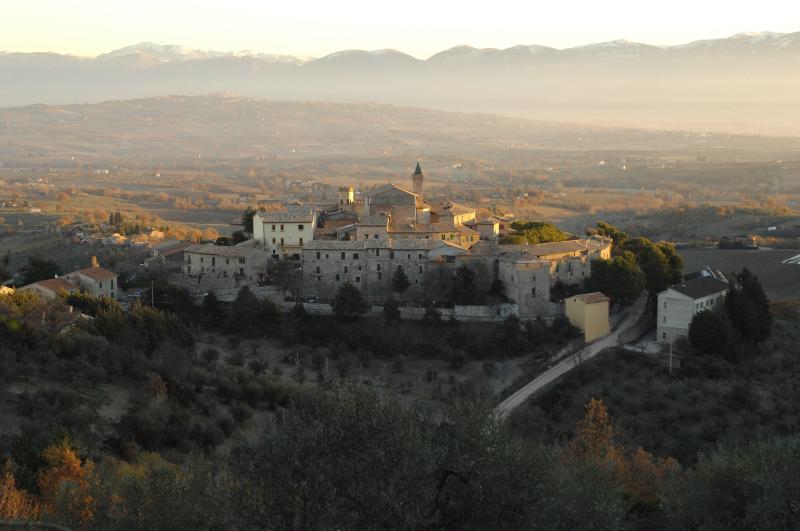
The castle founded by the Arnolfi, brought to prominence by the rule of the Cesi family
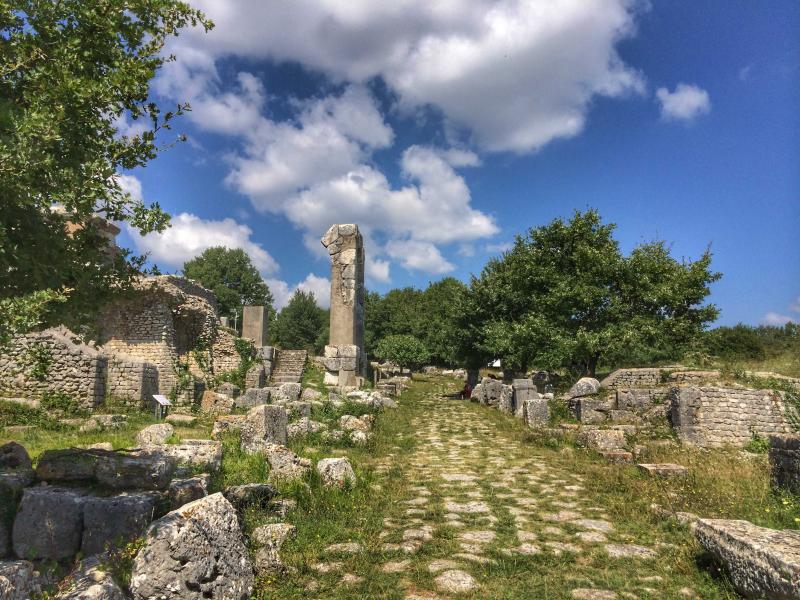
The medieval centre of Acquasparta stands in an area that was already inhabited in pre-Roman times, as shown by the hillfort of Monte Rotondo and the nearby necropolis of Piedimonte, with burials dating from between the 6th and 5th centuries BC. Numerous finds from the site are preserved in the archaeological collection of Palazzo Cesi.
Despite this ancient evidence, there is no known record of a permanent settlement in either pre-Roman or Roman times, and the hypothesis of a Latin origin for the name Aquas Partam does not appear to be supported by ancient sources. The place name, probably medieval in origin, refers to the abundance of springs that characterise the Naia Valley and to the town’s location between the Amerino and Furapane springs.
The origins of Acquasparta are linked to exiles from ancient Carsulae, who, after the decline of the Roman city, settled in an area that was probably already part of the Lombard Duchy of Spoleto. It later became one of the possessions of the Arnolfi family: Count Arnolfo, the founder of the family line, is credited with founding the abbeys of Santa Barbara and San Nicolò, now lost, around which the first settlement of Acquasparta developed, documented for the first time in 996.
In 1232, the Bentivenga family, a branch of the Arnolfi and lords of Acquasparta, submitted to the Municipality of Todi in exchange for protection, and the town remained within Todi’s sphere of influence until 1485, when a papal bull sanctioned its separation from Todi. Purchased by Pierluigi Farnese in 1538, Acquasparta was transferred two years later to Gian Giacomo Cesi and his wife Isabella d’Alviano, daughter of the renowned military commander Bartolomeo, in exchange for the castle of Alviano and the lands that formed part of Isabella’s dowry.
With the rise of the Cesi family, Acquasparta entered its period of greatest splendour. In 1588, Pope Sixtus V raised the territory to the status of a Duchy during the rule of Federico Cesi I. It was, however, under his son that the history of the town became closely linked with European culture: at just eighteen years of age, Duke Federico Cesi II founded the Accademia dei Lincei (1603), destined to become a fundamental point of reference in the birth of modern science.
At the end of the 18th century, Acquasparta became involved in the events connected with the French Revolution and the Napoleonic campaigns. In 1798 it became a municipality of the Roman Republic, under the jurisdiction of Spoleto. After a brief period of autonomy, came once again under Napoleonic rule and subsequently came under the control of the Papal States, which had already succeeded the Cesi family in 1800. Following the Unification of Italy, in 1861 it became part of the Province of Perugia, before becoming part of the Province of Terni from 1927.
Palazzo Cesi and the Accademia dei Lincei
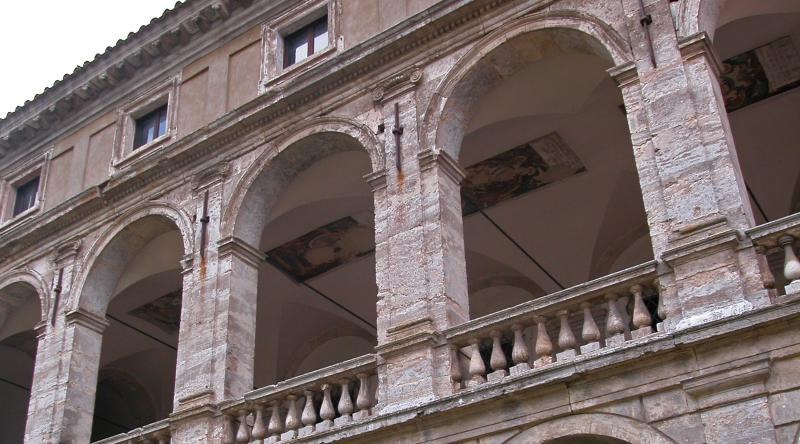
Acquasparta’s most notable monument is Palazzo Cesi, built between 1565 and 1579 for Gian Giacomo Cesi, who purchased the fief from Pier Luigi Farnese, the natural son of Pope Paul III, and transformed the earlier fortress into a sumptuous residence.
The project was initially entrusted to the Florentine architect Guidetto Guidetti and later to Giovan Domenico Bianchi. The palace became the heart of the Duchy’s cultural life, hosting important scholars and scientists such as Galileo Galilei, who stayed there in 1624.
Architecturally, the building features an imposing façade with a monumental portal opening onto an elegant square courtyard. The interiors are decorated with frescoes, wooden ceilings and pictorial cycles inspired by classical mythology and the history of the Cesi family, creating a perfect balance between art, science and spirituality typical of Renaissance culture.
Churches and confraternities, between the town and the Via Flaminia
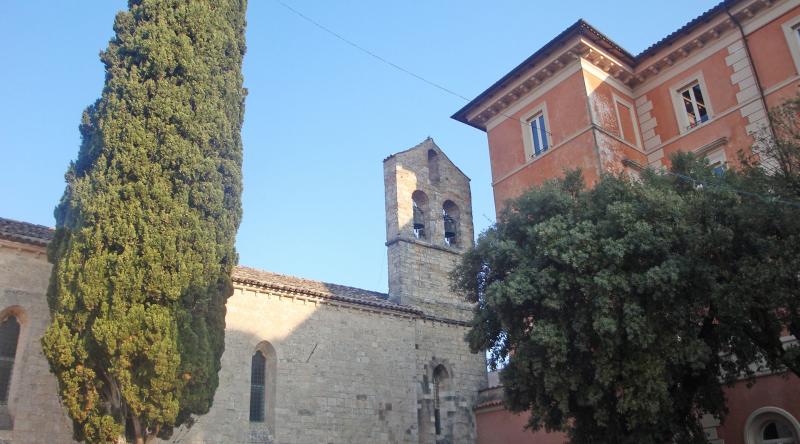
- Church of Santa Cecilia: built in the 14th century on the remains of an 11th-century oratory dedicated to the patron saint of Acquasparta, it was transformed by the Cesi family into one of the monumental symbols of their prestige. Particularly noteworthy is the Cesi Chapel, which houses important funerary monuments, including that of Prince Federico I.
- Church of San Francesco: located at the entrance to the town, it was built in 1294 at the behest of Cardinal Matteo Bentivenga of Acquasparta. Tradition links the foundation of the church to the passage of Saint Francis, during which the cardinal blessed the Amerino spring. Of particular interest is the chapel dedicated to San Bernardino da Siena, added in the 15th century, where remains of frescoes and valuable 14th-century wooden artworks can still be admired, including the statue of the Madonna della Stella, invoked during plagues, earthquakes and wars, and a crucifix from the church of San Giovanni in Butris.
- Church of the Madonna del Giglio: also known as the Church of the Crucifix, its origins date back to the 14th century, while its present appearance is the result of a 17th-century reconstruction. The high altar is surmounted by the 15th-century fresco of the Madonna del Giglio with the Child, partially damaged at the end of the 20th century. The church belonged to the Compagnia della Madonna del Giglio, founded on 1 November 1300, and also served a charitable function: beside the church stood the Hospitalis Sancte Marie de lilio, which provided shelter for the poor and the sick.
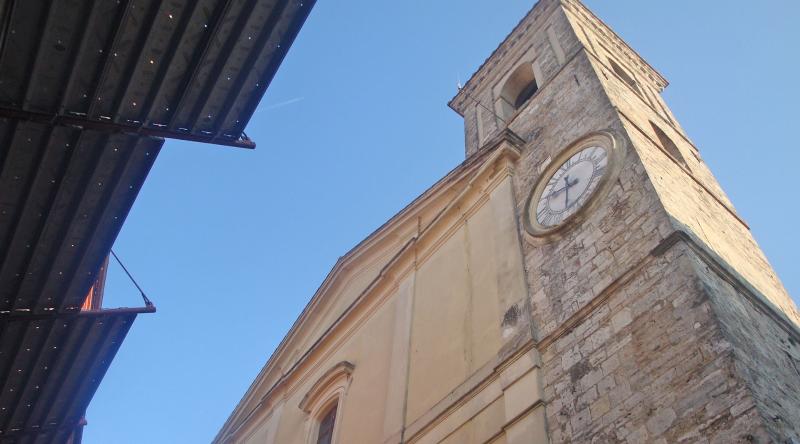
- Church of the Sacramento: despite its present appearance, altered in the 19th century, the building dates back to 1684 and was commissioned by the Venerable Compagnia del Santissimo Sacramento. During restoration works carried out in 1994, in addition to the recovery of an 18th-century painting depicting the Last Supper, a fragment of a Roman mosaic came to light, which is believed to have been transferred to this church from the ancient city of Carsulae in 1936.
- Santa Lucia di Burchiano: attached to a Benedictine monastery dependent on the Abbey of Farfa, it was built around the middle of the 11th century. The inscription in Gothic characters on the façade records restoration works carried out in 1312. Today the building, completely bare, lies abandoned.
- Church of San Giovanni de Butris: along the route leading to the archaeological area of Carsulae stands this Romanesque church, once belonging to the Order of the Knights of Malta. Its distinctive feature is the fact that it was built, around the 13th century, over the remains of a two-arched Roman bridge dating from the Augustan period, which carried the Via Flaminia. The superimposition of the two structures represents an architectural unicum, probably also conceived to protect the church from flooding by the stream.
A municipality dotted with fiefs and castles
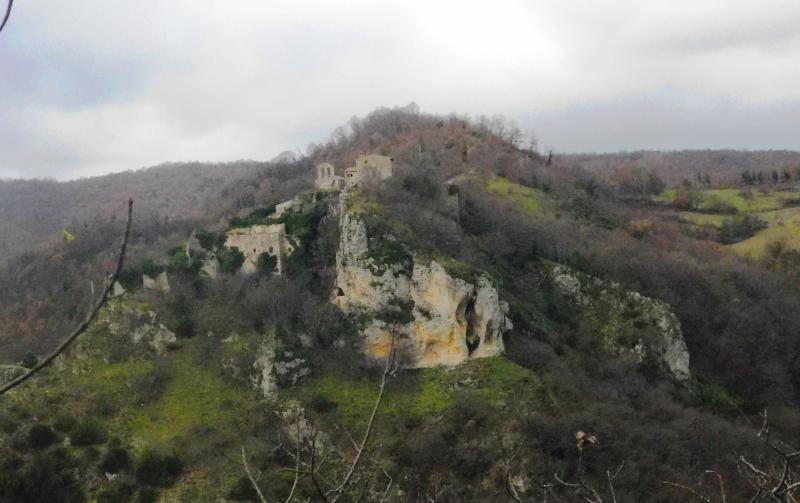
The hamlets of Acquasparta form a mosaic of medieval castles and villages that arose in the heart of the ancient Terre Arnolfe. Among the best known are Portaria, which in 1499 hosted Lucrezia Borgia on her way to Spoleto as governor, Macerino, with its Strada delle Pecore, and Scoppio, a silent ghost village.
Alongside these, numerous small fortified settlements preserve stories of wars, alliances and lordships that shaped the area for centuries:
- Casigliano: probably of Roman origin, as suggested by its name, linked to the gens Casilena, it was one of the strongholds of the Terre Arnolfe. In 1118, the Count of Todi donated it to the Abbey of Farfa and, in the following centuries, it became involved in the struggles between Guelphs and Ghibellines. In 1524 Ludovico degli Atti completed its reconstruction to a design by Antonio da Sangallo the Younger. Within the fortified walls stands the fortress, incorporated into the castle complex, and the Church of San Biagio, built in the 16th century, whose crypt contains the marble urns of the Atti family of Todi.
- Configni: formerly also known as Monte Albano or San Clemente, because of its strategic position it was long disputed between the Terre Arnolfe, of which it had been part since the year 1000, and Todi, which in 1111 exercised jurisdiction over the churches of San Clemente and Santo Stefano. Brought under the control of Narni in 1277, the fief was granted by Pope Boniface VIII to Andrea Tomacelli at the end of the 14th century. In 1629 Duke Federico Cesi once again claimed jurisdiction over it, but in 1700 it passed into the hands of the Orsini family and returned under the rule of Narni. Two fortified strongholds can still be seen today: the first is reduced to a few remains, while the second retains two quadrangular towers connected by a central structure around an inner courtyard.
- Firenzuola: the earliest mention of the name Firençola dates to 1414, while in ancient times it was known as Gallocituli or Gallicitoli, a place name that popular tradition associates to the Gauls, regarded as the earliest people to settle in this area. An important stronghold of the Terre Arnolfe, it controlled the castles of Arezzo, Scoppio and Messenano, whose representatives gathered here in 1218 to swear allegiance to Friar Bonaventura. Giovanni Scagno, a magister lapidum and a native of Firenzuola, was the creator of the portal of the Church of San Fortunato in Todi.
- Messenano:Villa Meccenani or Messenanum, a place name probably of Roman origin, was part of the Terre Arnolfe but, despite the rule of the Cesi family, its history is above all connected with the Municipality of Spoleto. Of the oldest layout of the castle, built in the 13th century, the dovecote tower survives, rising beside the Church of Sant’Apollinare, where several columns and stones from the Roman period can be seen, probably originating from a temple dedicated to the god Mars. Of the defensive walls, apart from the entrance gates, only one tower remains, used as an ossuary until the 19th century. Near the village, the ruins of an ancient mill once powered by the waters of the Marroggia can be seen emerging from the Arezzo reservoir, especially during periods of drought.