

Titolo: Duomo Santa Maria - Nocera Umbra

Duomo Santa Maria - Nocera Umbra

Duomo di Santa Maria Assunta: The Millennial Palimpsest of Nocera Umbra

A hill, a summit, a statement of faith and power. The Duomo of Santa Maria Assunta is not merely a church; it is a stratified archive of centuries, a palimpsest of stone where Umbrian, Roman, and Christian have inscribed their code. Here, the genius loci is not a distant echo, but a vibrant presence.

Pagan Goddess, Christian Queen


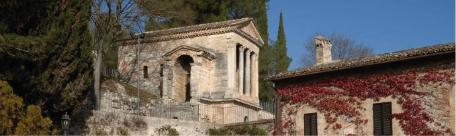
Its topographical supremacy is a sacred legacy. Before the Virgin, the goddess Favonia was invoked here, the tutelary deity from whom the local tribe, the Nucerini Favonienses, derived their name. It is Pliny the Elder who entrusts this detail to History, inextricably linking the site to the classical world. With the dawn of the 5th century and the establishment of the diocese, the pagan temple was baptized: an act of symbolic overwriting that consecrated the hill to Mary.

The Romanesque and its Scars

The ascent along Via S. Rinaldo leads to a side entrance that is a door in time. It is here that a 10th-century Romanesque portal reveals its coded language: the archivolt, a fantastical bestiary and sinuous vines carved in stone, tells of a medieval and fervent devotion. Housed in the Diocesan Museum, a massive stone cross is perhaps the last, mute relic of that first cathedral.
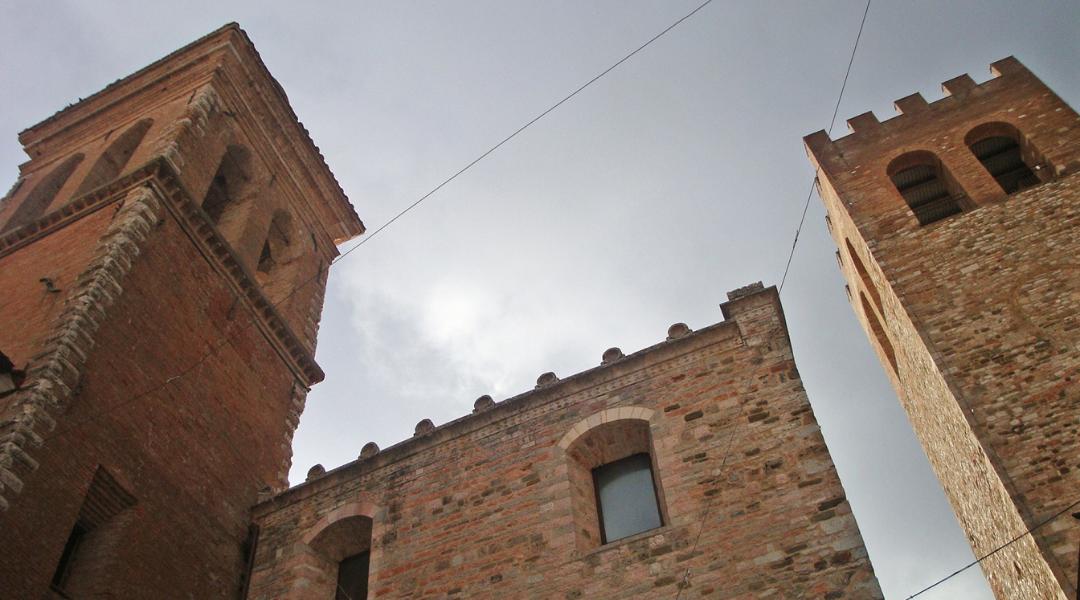
Then, the rupture: the year 1248, the wrath of Frederick II, the destruction. The church, wounded, lay abandoned for two centuries, until its rebirth in 1448. Raised again on its own foundations, it adopted a sober and powerful visage, that of the Franciscan style: a single nave marked by arched supports and exposed timber trusses, an essential spirituality that still breathes in the nearby church of San Francesco.

The Interior: A Neoclassical Theatre


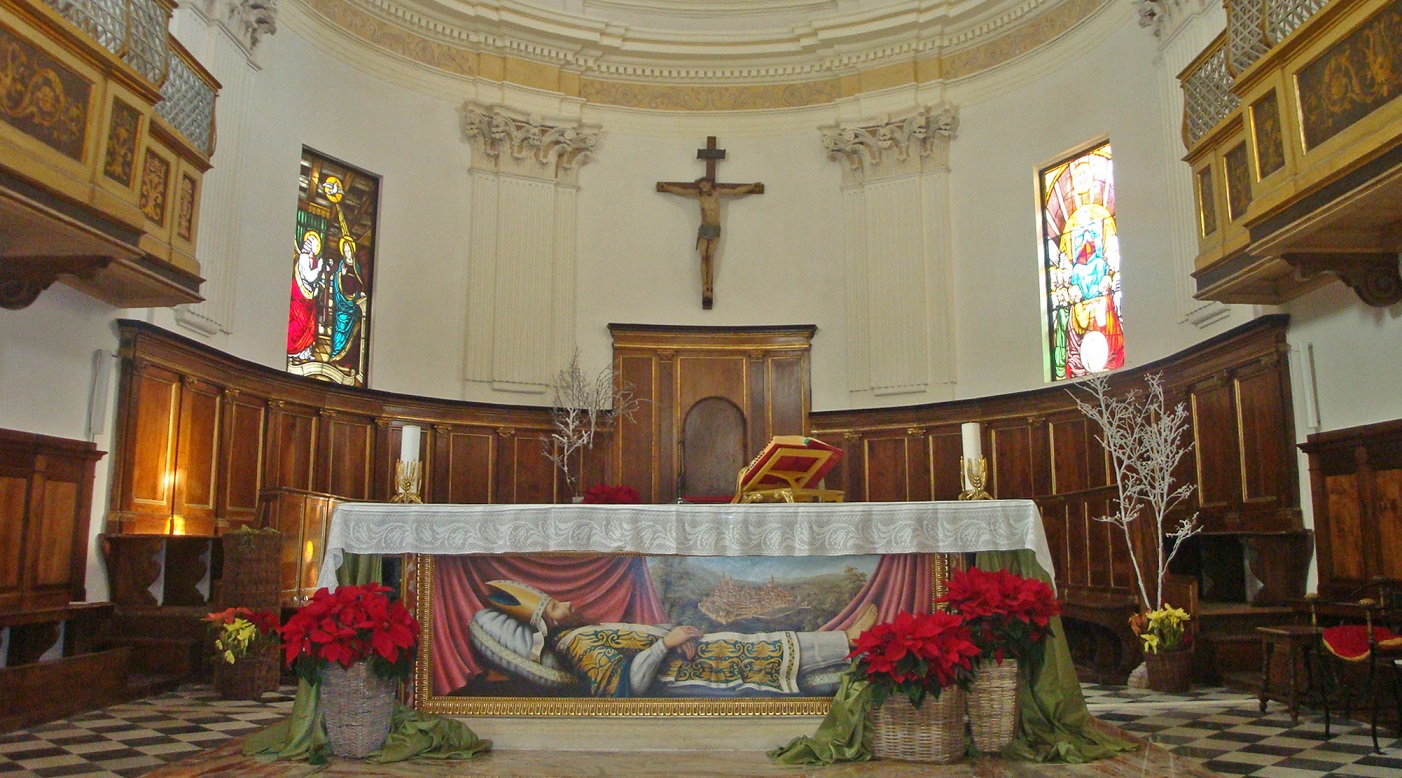
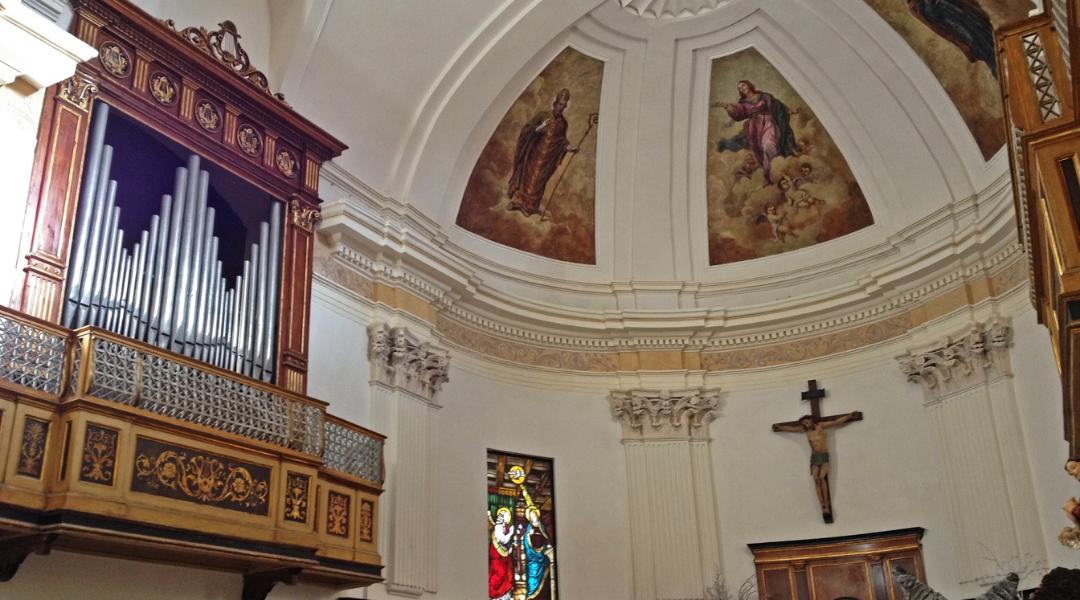
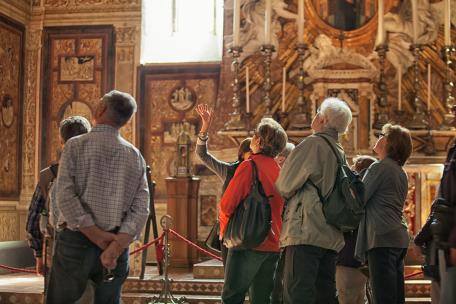
Beyond the secondary door, a surprise: the 19th-century renovation reveals a Neoclassical interior that is a veritable coup de théâtre. Columns, pilasters, and worked stucco vaults create a rarefied atmosphere, an algid elegance that contrasts with the austerity of its origins. The main facade, with its stone ornaments, is instead a stylistic operation from 1925—a restoration that was a manifesto, a modern signature on an ancient text.

The Street as a Gallery of Power


Via S. Rinaldo is not just an access route; it is a prologue. A drawing room of stone that casually aligns the palaces that wrote civil and religious history: the 18th-century Town Hall, the 19th-century Bishop's Palace, and the former Seminary (1760), now sublimated into the Piervisani Library—a temple of knowledge with 40,000 volumes and illuminated choir books of inestimable prestige.

The Ascent to Beauty: The tower and the infinite


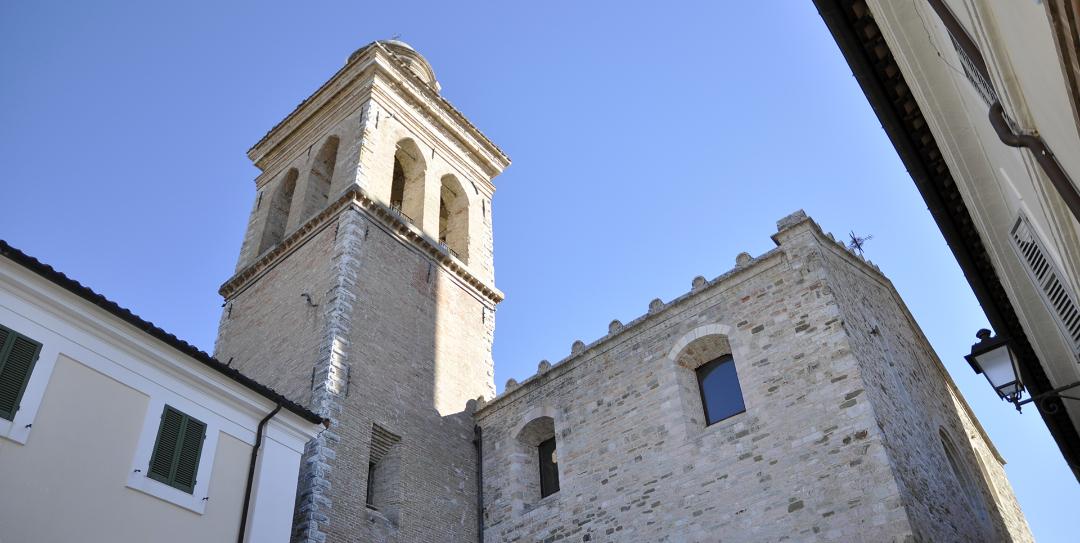
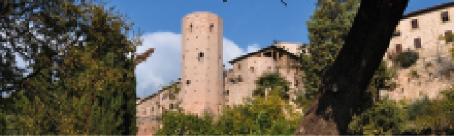
Beside it, the Civic Tower, "Il Campanaccio", stands as a monolith of resilience. The remaining keep of the medieval Rocca, brought down by the 1997 earthquake, is now a workshop of rebirth. From its small square, the final reward: a masterful panorama over the valley, an embrace of the horizon that is the perfect, poignant synthesis of earthly history and the absolute. A moment of pure beauty that, alone, is worth the pilgrimage.


Explore the surroundings
Main attractions in the vicinity