The Dragon of the Nera: The Legend of the Pestiferus Draco
The most famous tale linked to Saints Felix and Maurus revolves around a monstrous creature that haunted the valley—a dragon that devoured anyone who dared approach and killed from afar with its pestilential breath. Exhausted, the inhabitants begged the two hermits to free them from the creature.
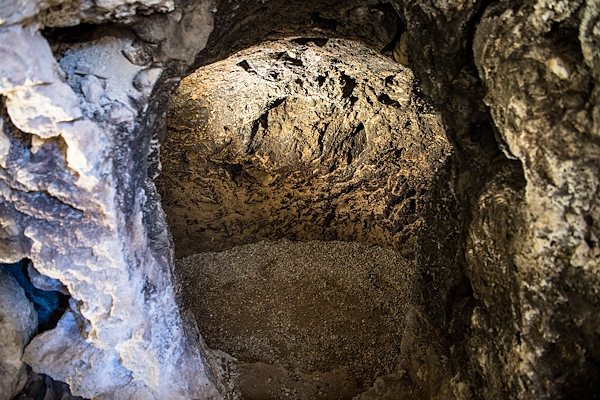
After long prayers, an angel appeared to Maurus, announcing that divine favour would guide him in his mission. So, after asking the nurse to prepare him a meal of boiled cabbages, the saint took up his pine staff and a tool for splitting rock. He planted the staff, which miraculously took root, and began to strike the rock. Awakened by the noise, the dragon—heralded by a dreadful stench—emerged from the cave.
From this point, versions of the legend diverge: in some, Maurus delivered the fatal blow; in others, Felix came to his father’s aid and, “like a new David against Goliath,” decapitated the beast. The body was thrown into the Nera River, and it bled for three days and three nights, turning even the waters of the Tiber red.
Beyond the Legend: Symbolism and Interpretation
Beyond its narrative charm, the slaying of the dragon holds a dual symbolic meaning: it represents both the triumph of Christianity over paganism and the harsh environmental conditions of the valley. In the history of the saints who lived in Valdinarco, it is certainly the latter that prevails.
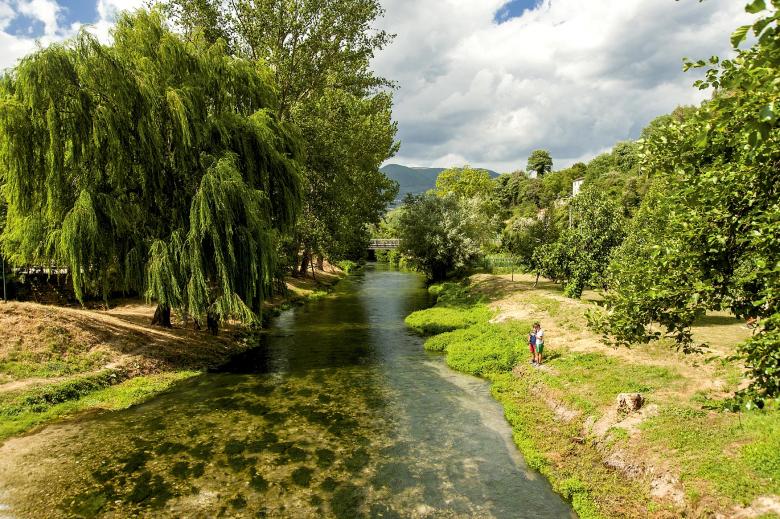
The “dragon” serves as a metaphor for the River Nera itself, which, due to natural barriers (the cave), stagnated and turned the area into a swamp, spreading malarial fevers and making the air foul and unbreathable—like the breath of a dragon. The pine staff sprouting in Saint Maurus’s hands symbolises purification of the air, while the splitting of the rock alludes to land reclamation. Even the cabbage meal eaten by Maurus before facing the dragon is said to refer to the plant’s antiscorbutic properties.
Thus, Saints Felix and Maurus emerge as true “viri Dei” (men of God) civilizers: their mission went beyond the “purification” of souls—they were those who freed the valley’s people from the scourge of the swamp and its diseases.
Miraculous Waters and Popular Devotion
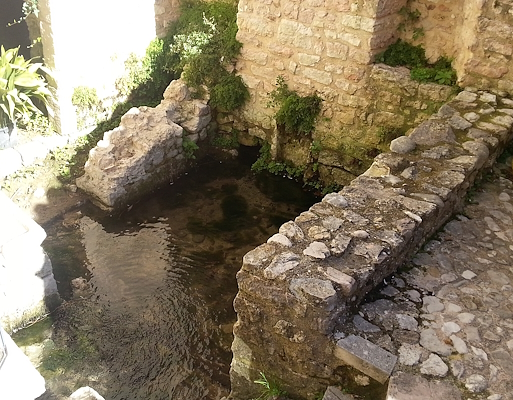
Alongside the legend of the dragon, tradition also links the two saints to a spring considered miraculous, said to have gushed forth at the very spot where Maurus struck the rock. Around this spring, stories of wonders were woven over the centuries: if stagnant water (the dragon of the legend) caused malarial fevers, then the water from this spring, when drunk with faith, was believed to cure them.
Among women, it was also customary to wash their children’s heads in the spring to free them from scabies. Beyond faith, the waters contain slight traces of sulfur, making them beneficial for skin diseases. Until the eighteenth century, the water flowed directly from a cavity beneath the church’s presbytery, closed by an iron grate, which was later moved outside by the monks because of its bad reputation.
In a 1458 volume on the storytelling arts of the Valnerina inhabitants, we learn that ablutions with the water were managed by the Lotores, charlatans who promised mothers that their children, bathed in the miraculous waters of Saint Felix, would grow strong and healthy. Naturally, the miracle was guaranteed only in exchange for a generous payment—either in money or in the fine garments of the would-be beneficiary.
The Façade: The Legend Carved in Stone
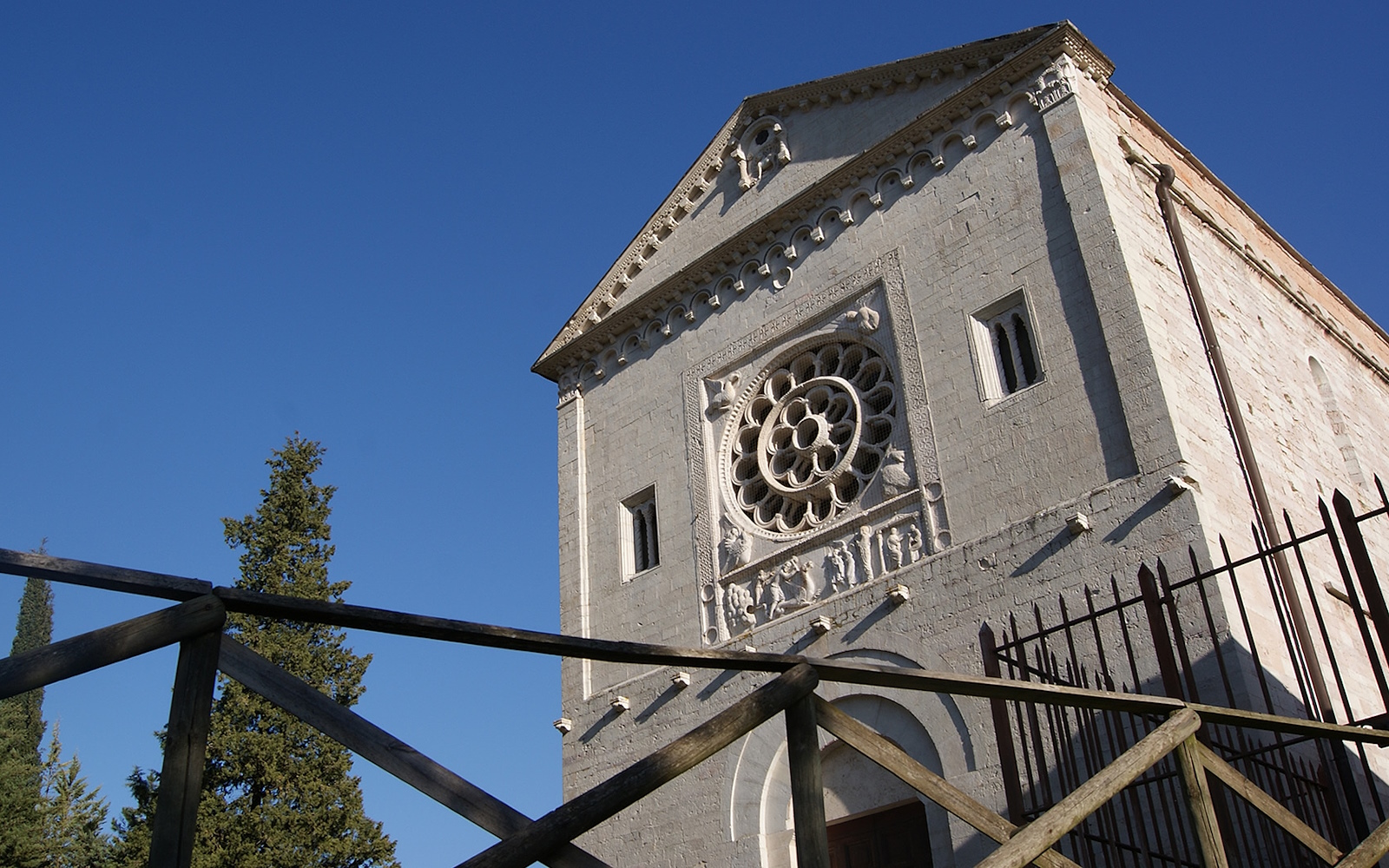
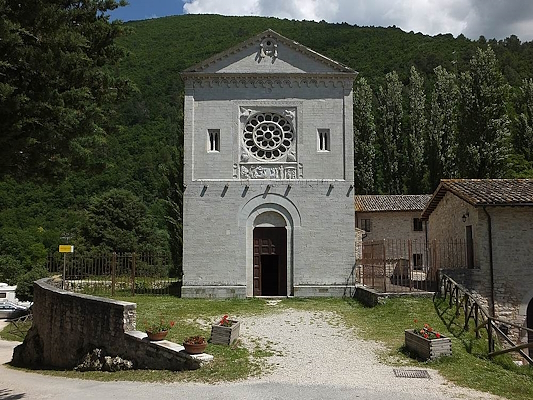
The church’s superb Romanesque façade, with its central rose window framed at the corners by the figures of the four Evangelists beneath the Agnus Dei—which, according to oral tradition, gazes toward the spot where a treasure is buried—depicts several episodes from the lives of the two hermit monks.
From left to right:
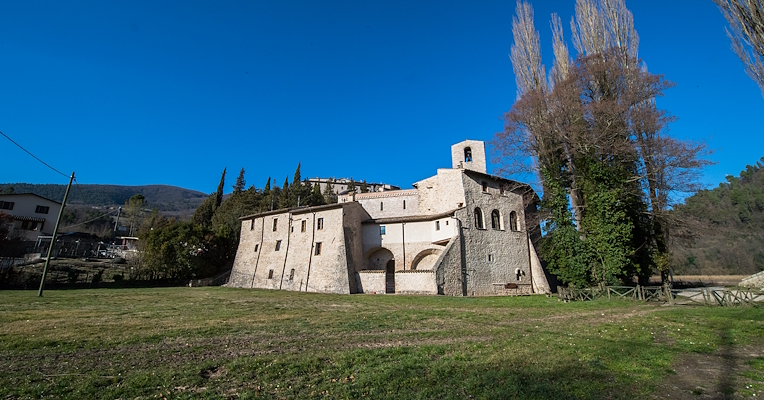
- The Cave: the first element shows the dragon’s dwelling, a cave carved within a rock of rounded, mammillated formations, representing the local sedimentary stone found in this area, upon which the abbey was built, known as pietra sponga.
- The Slaying of the Dragon: next appears a smaller winged figure—an angel—assisting Saint Maurus, shown in the act of beheading the dragon with an axe.
- The Exemplary Life of Saint Felix: during his short life, Felix lived in communion with angels; he is depicted in prayer beside two winged figures.
- A Miracle Scene: Saint Felix brings back to life the only son of a widowed mother.
The Austere Interior: A Single Nave Framing a Majestic Presbytery
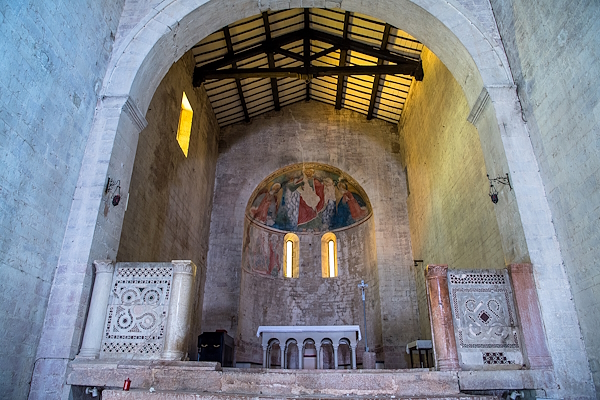
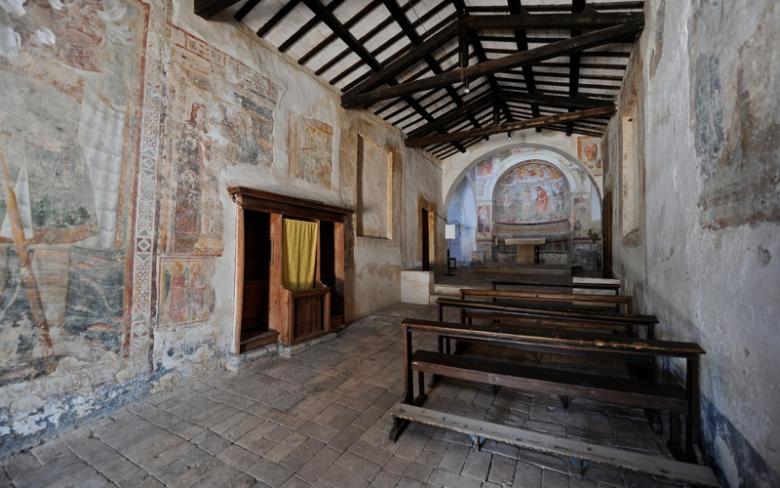
The interior of the church consists of a single nave ending in a presbytery, reached by a seven-step stone staircase, bordered by Cosmatesque plutei adorned with mosaic decorations.
The walls, almost entirely bare, preserve a few original frescoes:
- Two Dragon-Slaying Saints: a figure of a knight, identified as Saint Felix himself, and Saint Michael the Archangel holding the scales of divine justice in one hand and thrusting a spear at a demonic dragon with the other.
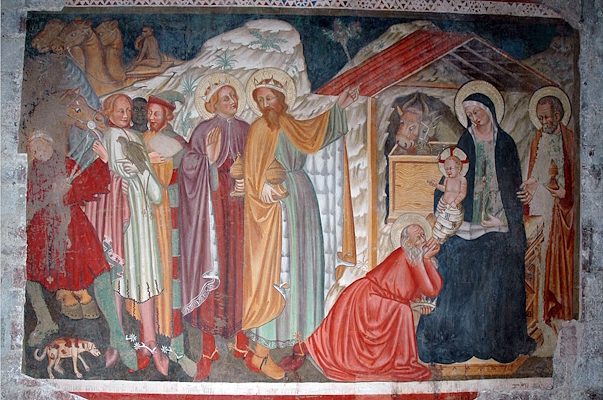
- Adoration of the Magi: painted by an unknown artist in the first half of the fifteenth century, it stands out for its characters dressed as medieval knights with spurs and falconer’s gloves, and for the presence of unusual animals such as camels and a monkey.
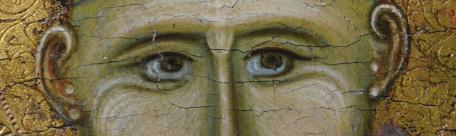
- Christ Blessing and Angels: a fresco from the mid-fifteenth century, located in the apse dome and attributed to the Master of Eggi.
Attesting to the site’s antiquity, the floor includes reused several Roman and early Christian inscriptions, along with the tomb slabs of the Medei and Campani families—among the most prominent lineages of Castel San Felice.
The Crypt and the Tomb of the Founding Saints
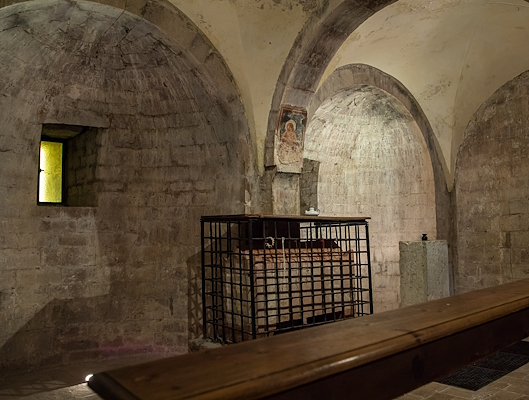
Two narrow, low side passages beneath the altar steps lead to the small underground crypt—an austere space with vaults supported by a central column and three small apses.
This was perhaps the first sacred building erected by the cenobitic community that gathered around Saint Felix. Here stands the pink stone sarcophagus that, according to tradition, once held the mortal remains of the two saints and their nurse.








.jpg/e9571273-0e35-1ff2-0713-76c7fd4e3cc5?width=456)