





.jpg/e9571273-0e35-1ff2-0713-76c7fd4e3cc5?width=456)

Temples of Monte Torre Maggiore
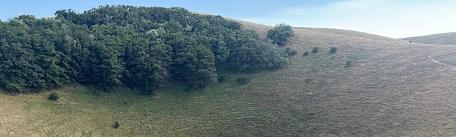
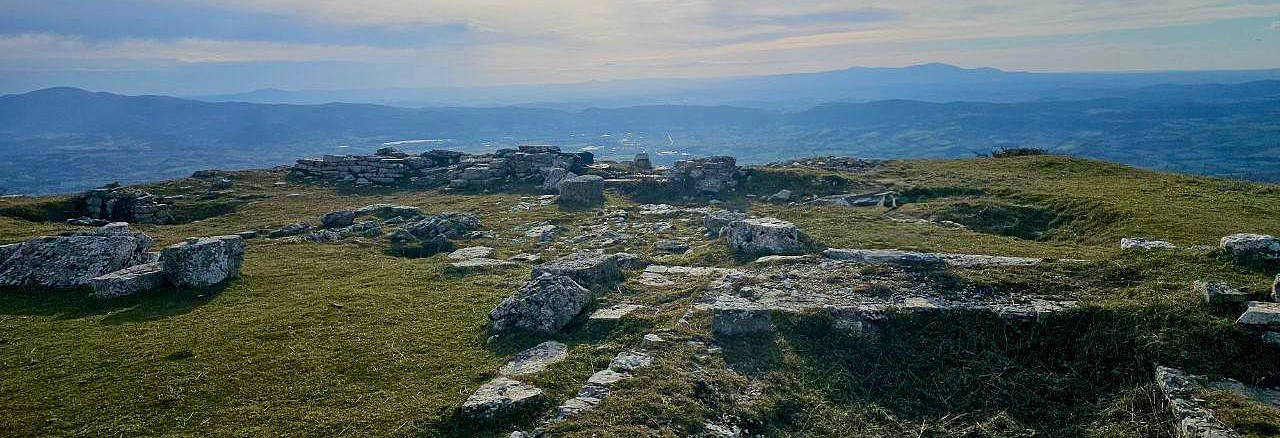
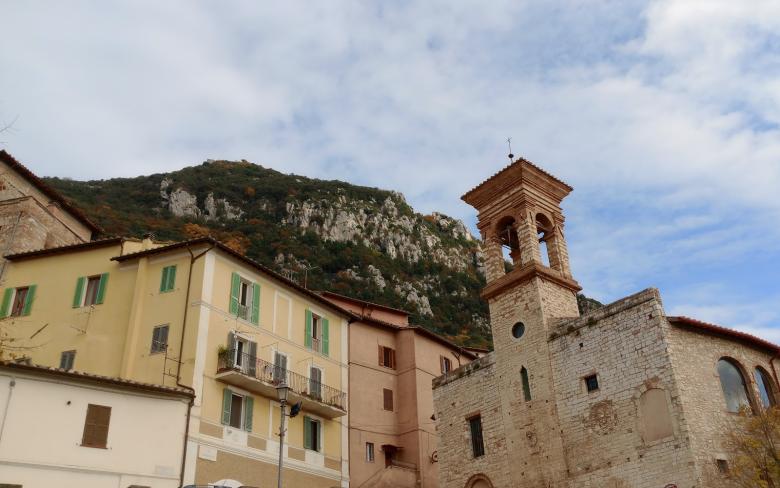
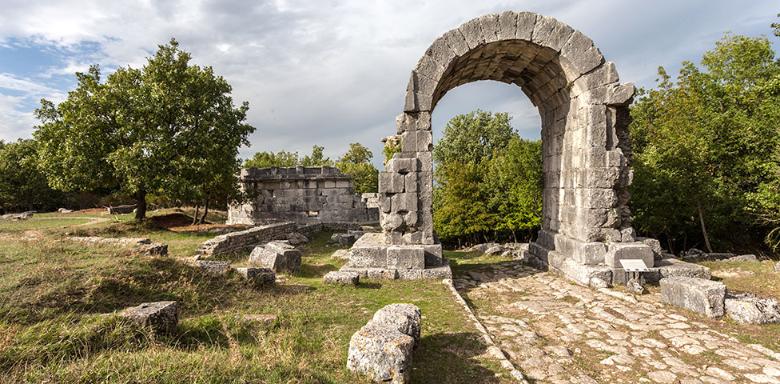
At the summit of Monte Torre Maggiore, rising above the village of Cesi at 1120 meters of altitude, lies one of the most fascinating archaeological sites of ancient Umbria. It is an imposing sanctuary with two temple structures, a place of worship first for the Umbri and later for the Romans.
In use until the 3rd century AD, the sanctuary preserved its sacred memory in the names attributed to the site between the 18th and 19th centuries, known as Ara Maior and Monte Peracle. Among the first scholars to take an interest in the site was Federico Cesi, Duke of Acquasparta and founder of the National Academy of the Lincei, who wrote a detailed description of the sanctuary, fascinated by the grandeur of this place.
Recent archaeological research has revealed several building phases:
- First building phase: dating back to the 6th century BC, it is documented by a system of channels connected to a votive offerings deposit, the mundus of the sanctuary. Inside it numerous bronzes dating from the 6th to the 4th century BC were found, representing male warrior figures, female figures, animals such as cattle and horses. A golden bronze lightning bolt suggested that the sanctuary may have been dedicated to Iuppiter Fulgurator.
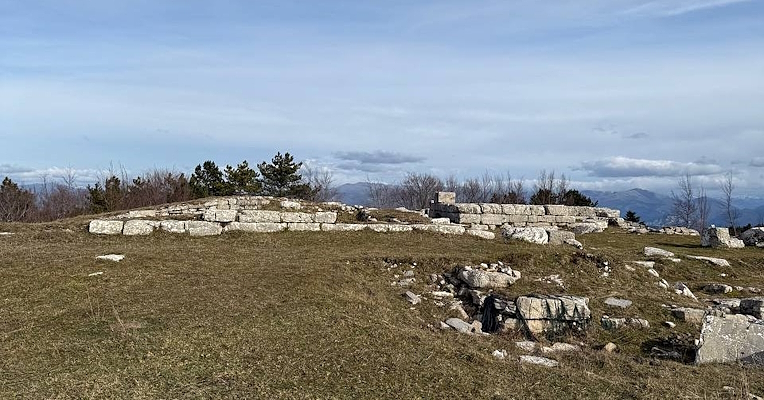
- Monumentalization of the area: in the 3rd century BC, with the Roman domination, the sacredness of the sanctuary was respected. The votive offerings deposit and the already existing rooms were monumentalized, the temenos (sacred enclosure) was built, and the earlier temple was erected: a tetrastyle structure in antis with a rectangular plan (measuring 11.80 x 7.90 meters), with a staircase leading to the pronaos and the cella. Among the most important materials found are numerous lion-head protomes, used as waterspouts, and a female head with diadem, acrolith of a cult statue.
- Late Republican phase: a second temple was erected, also tetrastyle in antis, of similar size to the first. The construction technique of the walls was different, with a cement core covered with limestone slabs.
.jpg/cef61178-1781-47c0-2f27-8aa34140004b?width=780)