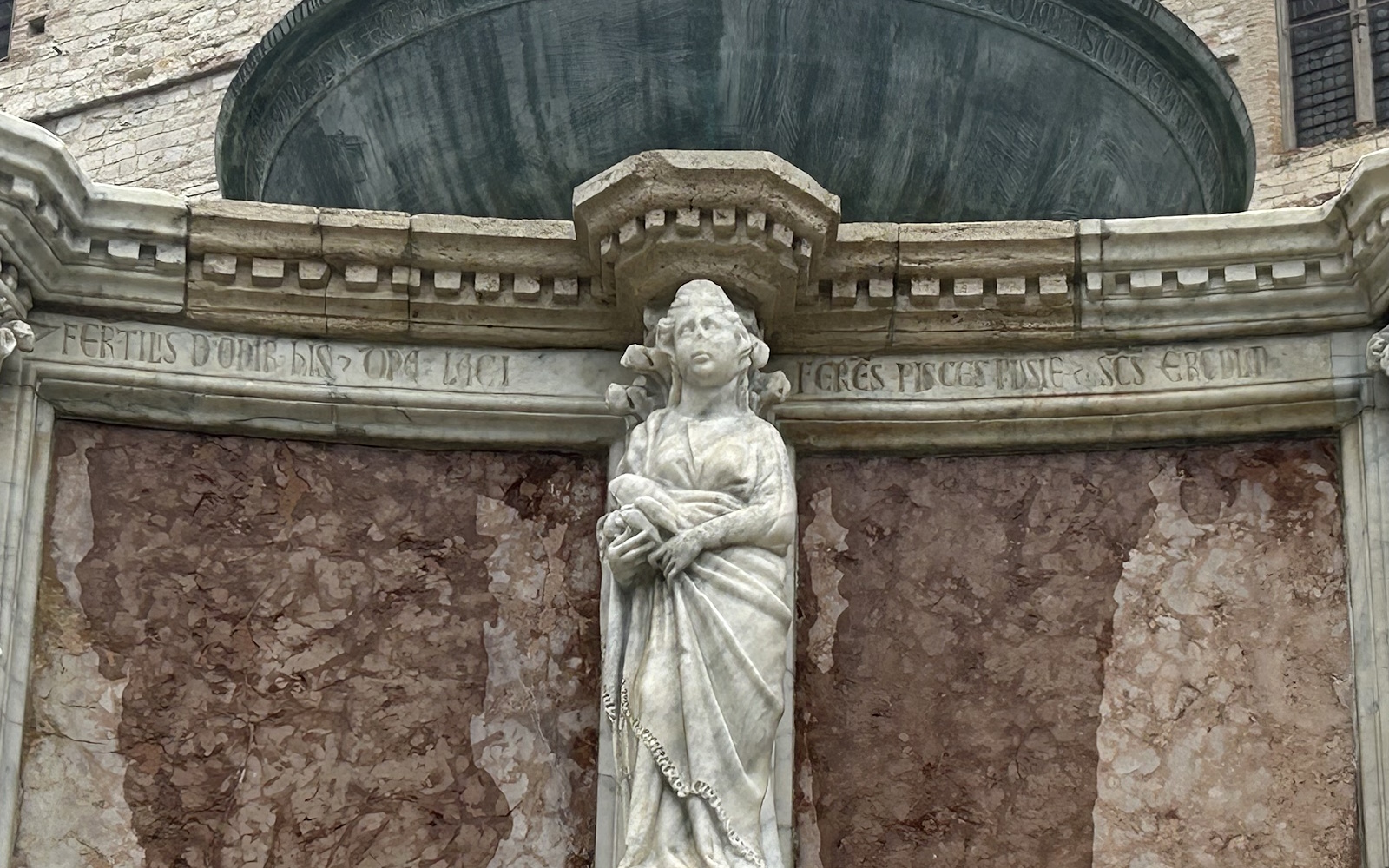
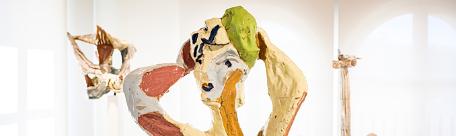



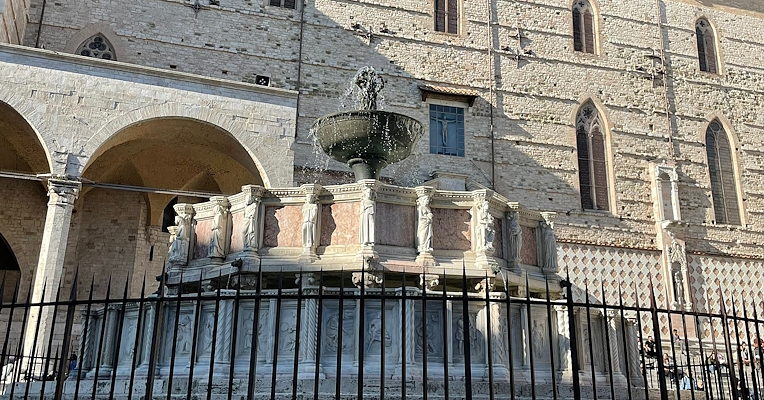
Sculpture of the Domina Lacii on the Fontana Maggiore in Perugia, holding some dace fish, with Latin inscriptions on the marble.

The Trasimeno Dace

“Leuciscus Trasimeno: we name this new species as such, not so much because it is found solely in that lake, or because no other Leuciscus inhabits it, but rather because it is so abundant that its highly profitable fishing is a considerable revenue for our treasury and is subject to a specific statute.” Thus wrote Luciano Bonaparte, author of Iconografia della Fauna Italica, published between 1832 and 1841.

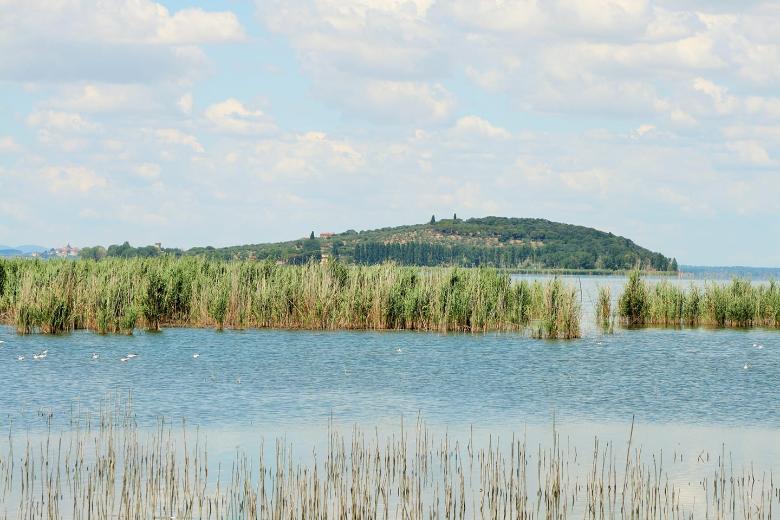
Once abundant in the waters of Lake Trasimeno, the dace disappeared from the lake’s fish species in the early 20th century for reasons that remain unclear. Nevertheless, it once played a significant role in the economy of the region. A testament to its importance can be found in the Fontana Maggiore of Perugia, where the city is depicted as a wealthy lady seated on a throne, holding a cornucopia as a symbol of its prosperity. To her left stands Domina Clusii, carrying a bundle of wheat ears, while to her right stands Domina Lacii, holding a bundle… of dace. Moreover, Guelph Perugia paid its tribute to the Pope during the vigilie comandate (obligatory fasting days) in dace, clear evidence that it was a prized fish, one that graced the tables of high-ranking prelates in the Roman Curia. Furthermore, municipal records from the 14th century state that during Lent, half of the 30 some (an old unit of measurement) of fish introduced daily to the city’s market had to consist of dace.
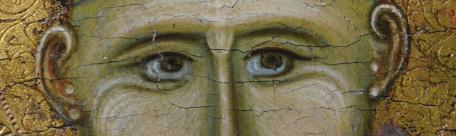
This prized lake fish was therefore an integral part of the city’s dietary customs, to the extent that, since the Middle Ages, the people of Perugia were jokingly nicknamed magnalasche (“dace eaters”). A reference to this can be found in Novella CLXIX of Trecentonovelle, a collection of stories by the Florentine writer Franco Sacchetti, written between 1385 and 1392. In the story, a Florentine painter named Buonamico Buffalmacco was commissioned by the city of Perugia to paint an image of Saint Herculanus in the main square. He had a scaffold built to work behind, concealing himself from the citizens’ view. The impatient locals frequently called out to him, urging him to complete the work. When the fresco was finally unveiled, the Perugians were shocked to discover that Saint Herculanus, instead of a halo, wore a crown… of dace! Furious, they searched for Buonamico, only to find that he had already fled back to Florence.

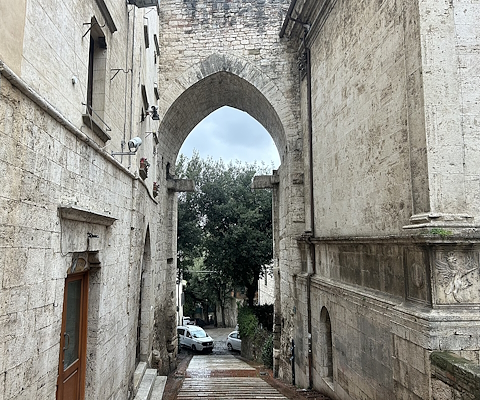
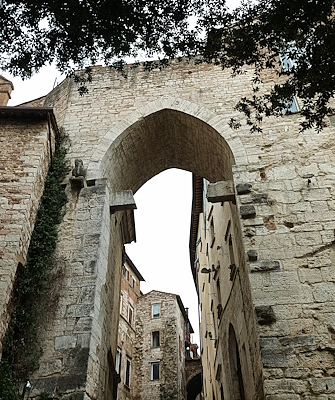
Fish entered the city through Porta Trasimena, at the end of Via dei Priori. At the top of the medieval reconstruction of the Etruscan gate, there are two small bas-reliefs: a cross at the top, and a small semicircular figure that appears to be a crescent moon but, according to popular belief, is actually a dace. This was placed there to signal to the unaware cart drivers bringing fish into the city that they were indeed heading in the right direction. From there, the fish was distributed to various fish markets. One of the main markets was located in the area where the current Palazzo delle Poste stands; another was situated in Via Oberdan, in a beautiful medieval building on the left as you walk down. On the first and last stone portal of this building, there is a bas-relief featuring a small fish, most likely a dace.

Unfortunately, we can no longer enjoy this fish or share a recipe with you, as its key ingredient is no longer available. However, let’s see what Mastro Martino da Como, the most important European cook of the 15th century and author of the famous Libro de arte coquinaria, had to say about it: “Dace: they should be fried gently so they do not burn, and for seasoning, you shall serve them with green sauce or green verjuice.”

Green verjuice was a sweet-and-sour sauce, a sort of balsamic vinegar obtained from pressing unripe grape berries. It was a widely used condiment dating back to Roman times and particularly popular in the Middle Ages.

It may not be quite the same, but by substituting dace with lake smelt, you can still enjoy a truly delicious fried dish!

Explore the surroundings
Main attractions in the vicinity