Part of it was made of brick while other parts are tunnels carved into the mountains. It follows the slope of the hills, goes through three mountains with three tunnels and then over bridges to cross to the other side of various rivers.
Fed by six springs, the aqueduct begins in Sant'Urbano, runs through the old city, and empties into a large basin from which the water was distributed where needed.
The Cardona Bridge, which is along its path, has been declared the Centre of Italy by the Military Geographical Institute as it is equidistant from the north and south, and the east and west of the country.
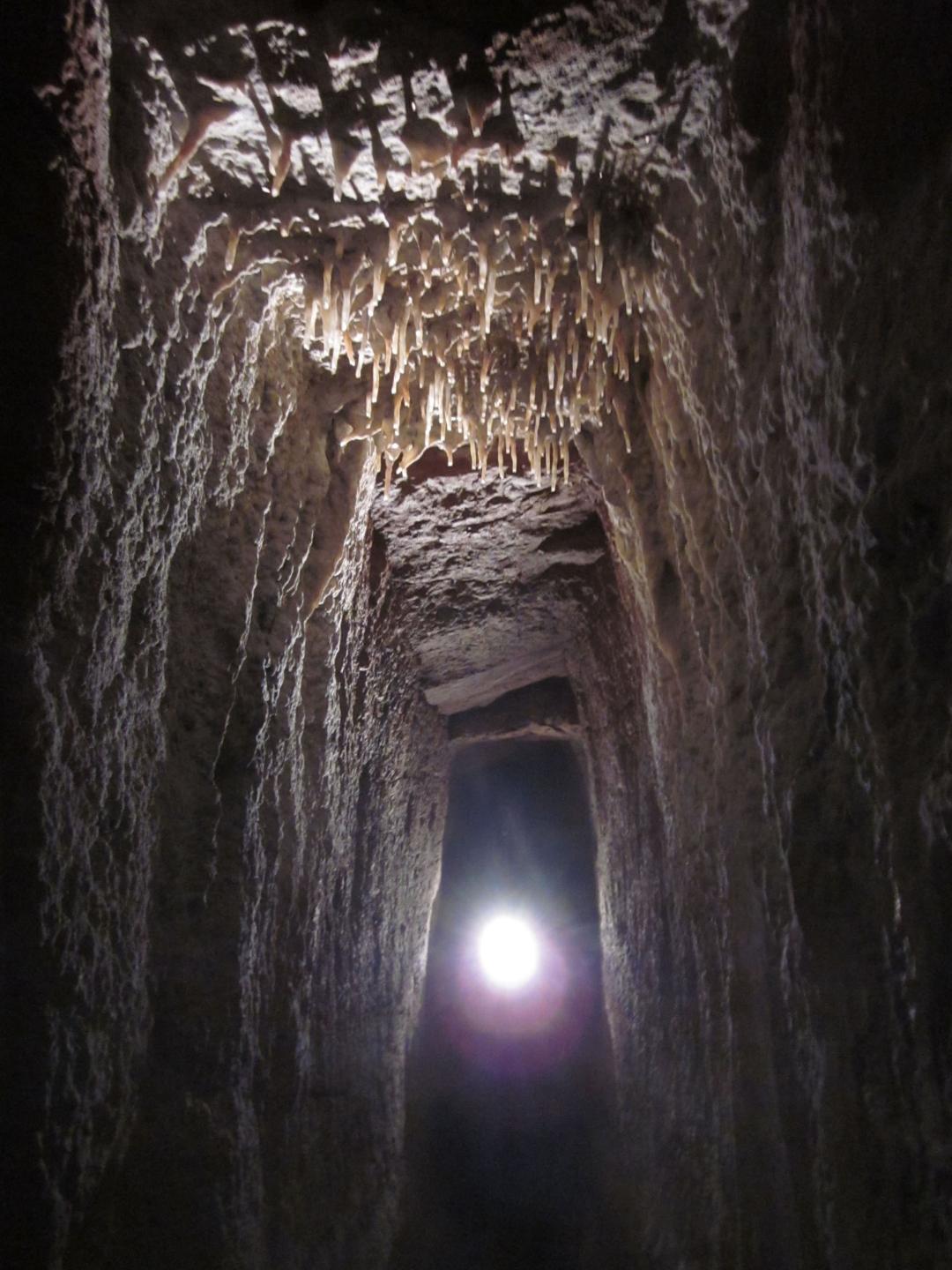
The Formina aqueduct can be explored along a 700 m long tunnel with an average width of 45 to 50 cm and a height ranging from 170 to 250 cm.
The ceiling is adorned with snow-white stalactites, and the route ends in an 18-metre-deep well carved into the rock. A steep spiral staircase leads visitors back to the surface.
For information on guided tours: www.narnisotterranea.it







.jpg/e9571273-0e35-1ff2-0713-76c7fd4e3cc5?width=456)


.png/bfc70537-6645-2c6e-3498-5d0e7556e240?width=780)