



Albornoz Fortress of Narni
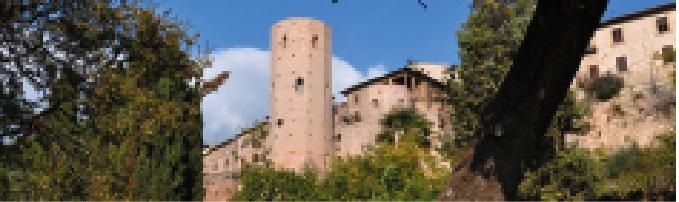
The Albornoz Fortress rises imposingly above Narni, overlooking the Nera Gorges like a stone sentinel nestled in lush vegetation. Majestic and silent, it has watched over the territory for centuries, telling a story of power, strategy and architectural splendour.
The stronghold of papal power
This extraordinary fortified complex is part of the system of fortresses commissioned by the Papacy after the end of the Avignon captivity, intended to reaffirm its authority over the territories it had only recently regained. Cardinal Egidio Albornoz, a brilliant strategist and skilled administrator, chose the top of a hill as the site for his fortress—an ideal defensive position from which the routes connecting Narni to Perugia, Terni and Amelia could be controlled.
The fortress was built on the remains of an earlier military settlement attributed to Frederick Barbarossa. It was the last great undertaking of Cardinal Albornoz, commissioned shortly before his death, which occurred on 24 August 1367 in the castle of Bonriposo, near Viterbo.
Ugolino I di Montemarte and the architect Matteo Gattapone probably contributed to the design of the fortress, under the supervision of papal legate Anglico de Grimoard, brother of Pope Urban V. In 1371 the first castellan, Giovanni di Novico, took possession of the fortress, which was completed in 1378.
Among popes, cardinals and condottieri
Between 1370 and 1449 the fortress hosted notable figures: popes, cardinals and military leaders lived within its walls and shaped its history. In 1387 it was attacked by Ugolino Orsini together with the city of Terni; the assault—motivated by the imprisonment of his brother Tommaso on the orders of Urban V—ended only after the hostage was released.
In 1392 Boniface IX, after staying there, entrusted it to the Ghibellines, but in 1395 it fell into the hands of Pandolfo Malatesta, only to return quickly under papal control and then pass to the pope’s brother, Andrea Tomacelli.
In 1417 the renowned condottiero from Perugia Braccio Fortebraccio occupied Narni and the fortress. From 1424 to 1431 it became a fief of the Colonna family, until its definitive return to the Papal States in 1439 under Pope Eugene IV.
In 1449, during a severe plague epidemic, Pope Nicholas V took refuge in the fortress and ordered major reinforcement works on its defensive structures. These continued throughout the 15th century under Sixtus IV and Innocent VIII.
The 1527 Landsknecht siege
Among the many attacks suffered by the fortress, the 1527 assault by the Landsknechts was the most devastating. Returning from the Sack of Rome, the imperial mercenaries turned their fury against Narni. After an initial victory by the Narnese, the Landsknechts prevailed and destroyed the city.
The fortress resisted further assaults over the centuries until 1798, when the French troops of General Berthier stripped it of its weapons to melt them down for cannons.In 1860 it finally passed to the Kingdom of Italy following its capture by the Umbria Brigade led by General Luigi Masi.


