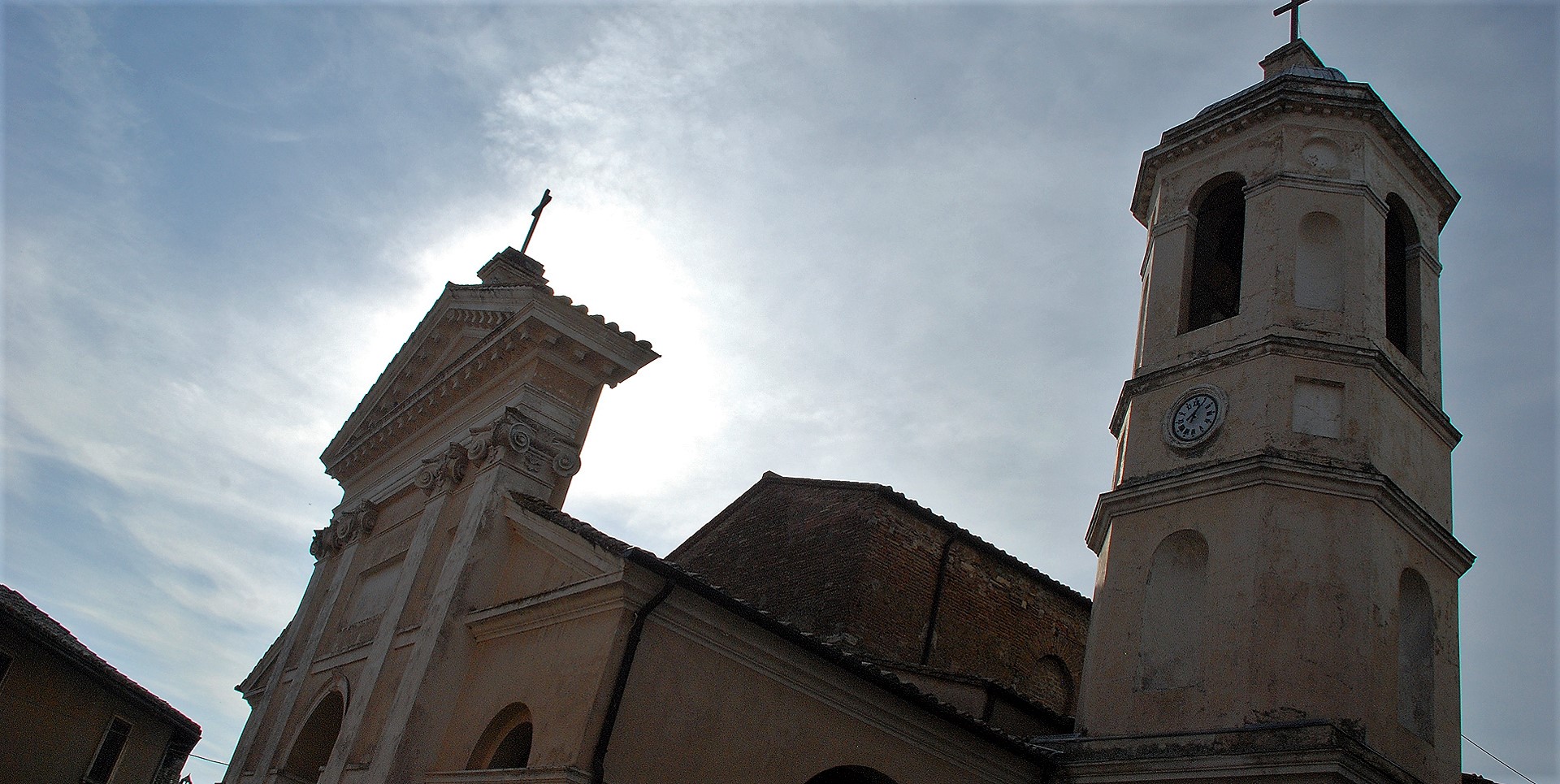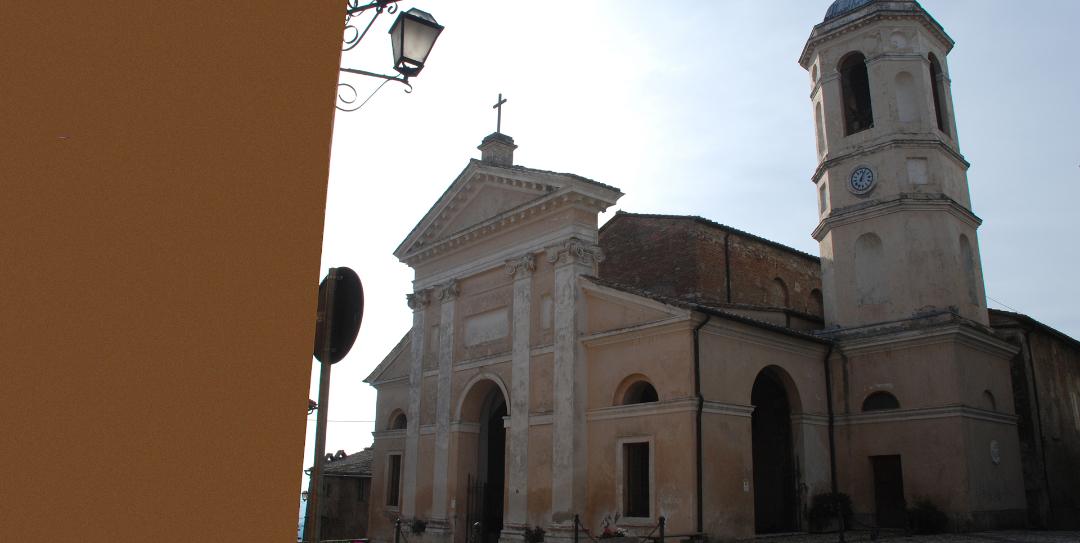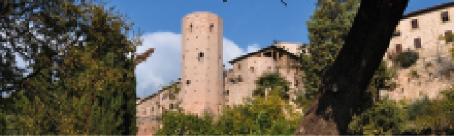
Façade and bell tower of the Collegiata of Santa Maria Assunta in Otricoli, backlit against a hazy sky.

The Collegiate Church of Santa Maria Assunta

The highest area of the town of Otricoli, its main square, is home to the remarkable Collegiate Church of Santa Maria Assunta, an important example of 7th-century pre-Romanesque architecture. The current structure is the result of several alterations and renovations carried out over the centuries.

A composite yet highly evocative complex

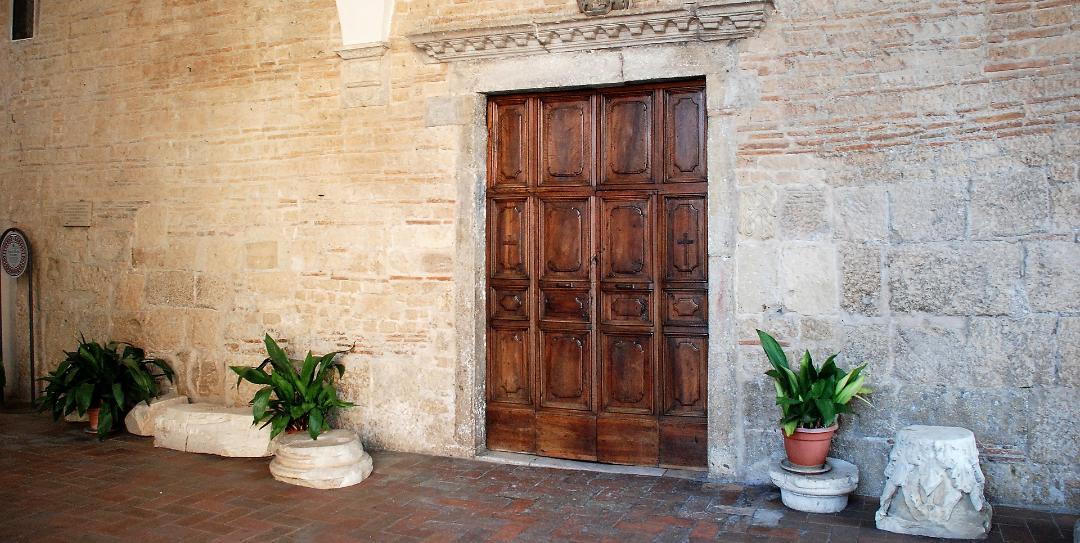
 The present façade and bell tower, in Neoclassical style, were built in the first half of the 19th century. At the base of the bell tower is a finely carved Medusa Head, discovered during the excavations at the ancient site of Ocriculum. The façade opens onto a portico that preserves stone materials documenting the different construction phases of the building.

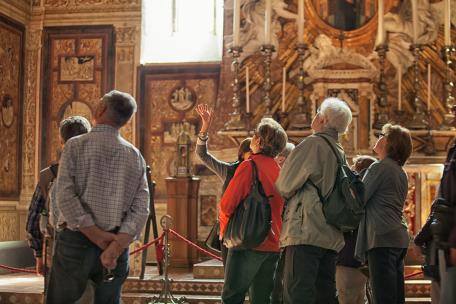
The interior has a rectangular plan with three naves and a single apse. The central entrance portal is surmounted by a fine organ and a Renaissance-era gallery. Belonging to the original structure are the remains of the arcaded colonnade and the elevations of the central nave and counter-façade, built in opus mixtum, with bands of opus reticulatum and extensive reuse of Roman materials. On either side of the portal stand two interesting stoups resting on drums of ancient columns.

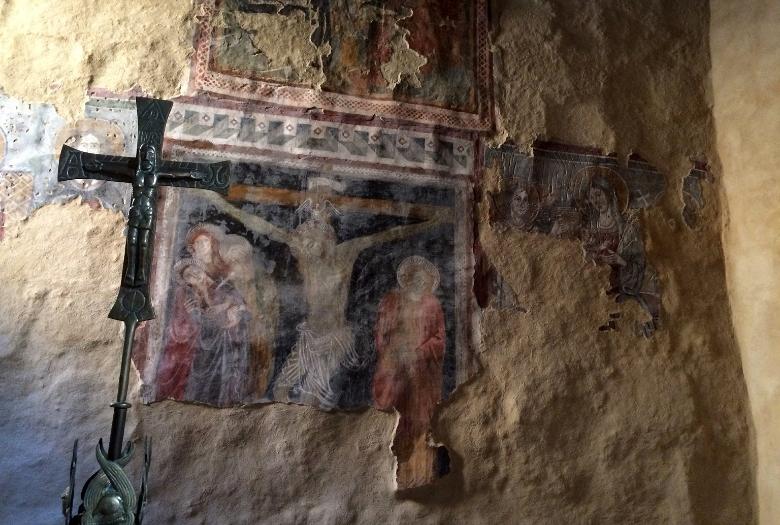
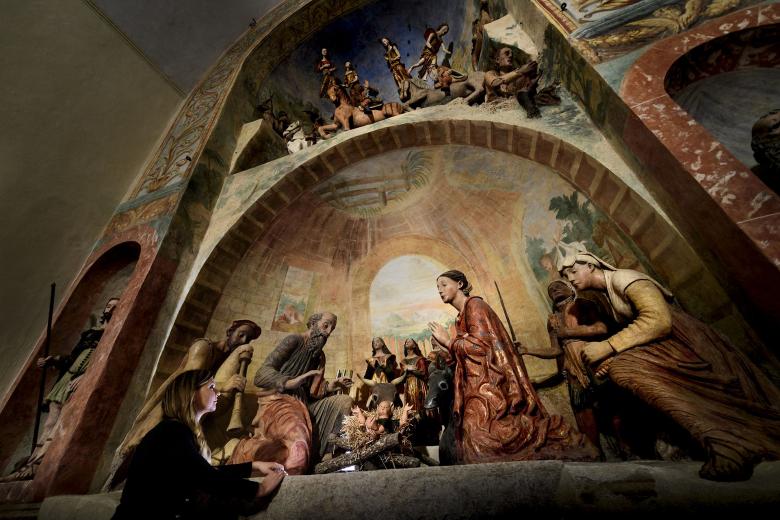
The central nave, older than the others, preserves numerous 15th-century frescoes.
 In the right nave there are three Baroque chapels dedicated to Saint Fulgenzius and Saint Dominic, as well as a baptistery. The first chapel, which contains the relics of Otricoli’s proto-martyr, features a beautiful wooden cupboard decorated with gilded faux-marble motifs (1717) and a fresco depicting St. Fulgenzius distributing bread to the poor of Otricoli. The second chapel houses a fine altarpiece and 17th-century frescoes. Next to the entrance is the Baptism Chapel, with a 16th-century marble baptismal font, an interesting 13th-century marble tabernacle, and remains of frescoes ranging from the 14th to the 17th century.

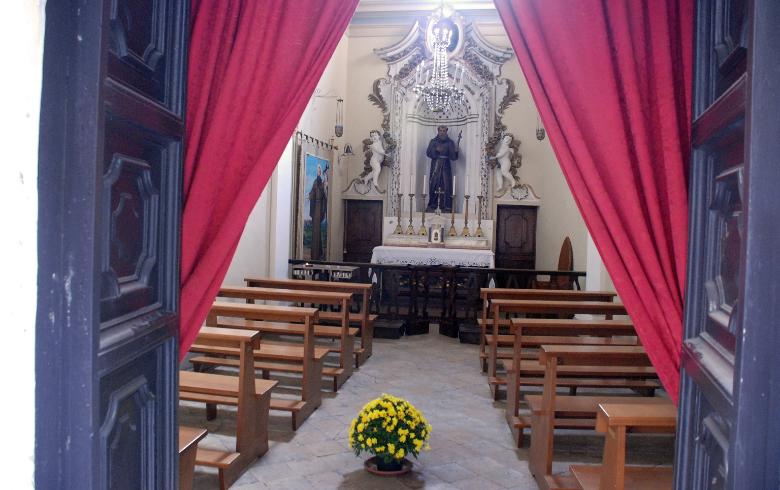
In the left nave there are two beautiful Baroque chapels: the small chapel dedicated to Saint Anthony Abbot and a “passing chapel” dedicated to Our Lady of Sorrows. The first, known as Cappella del SS. Sacramento (Chapel of the Most Holy Sacrament), is of Gothic origin but was completely rebuilt in the 16th century; its dome features a fresco depicting Vision of Saint John on Patmos and the Angel of Fire, painted by Filippo Ralli between 1722 and 1727. In the second chapel, visitors can admire a reliquary altar with sixteen frescoes framed in stucco and gilded decorations, illustrating the Mysteries of the Holy Rosary and episodes from the Virgin’s life. In the chapel of Our Lady of Sorrows, noteworthy features include frescoes dating to the first half of the 16th century and the Dove of the Holy Spirit within a radiant halo, a 17th-century work in polychrome stucco.

The main altar, a simple structure of Umbrian workmanship dating to the 12th-13th century, is enriched by a splendid 16th-century marble ciborium supported by reused Roman columns. At its base is the Fenestrella Confessiones, while below lies the Romanesque crypt dedicated to Saint Medico. Above, at the centre of the apse wall, stands a masterpiece of contemporary stained glass by the Otricoli-born artist Roberto Marini; beneath it, arranged in a horseshoe shape, is a precious 15th-century wooden choir adorned with fine inlay work.

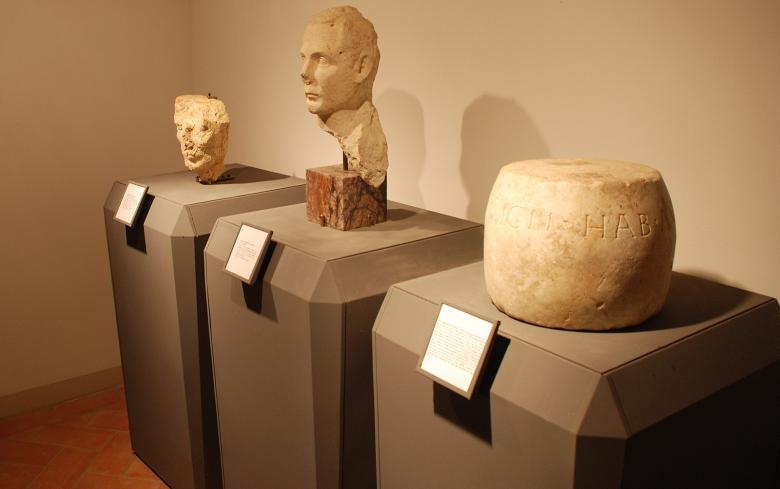
In addition to the many fine altarpieces from different periods, the church also houses stone materials uncovered during 20th-century excavations, originating both from the building itself and from the ancient city of Ocriculum. These include friezes from funerary monuments, capitals and pulvinos, inscriptions, fragments of sarcophagi, fragmentary sculptures, slabs and pieces of ciboria. Together with its long and complex history, this rich collection makes the Collegiate Church of Santa Maria a true historical museum of the city.

Explore the surroundings
Main attractions in the vicinity