








.jpg/e9571273-0e35-1ff2-0713-76c7fd4e3cc5?width=456)

The Church of San Biagio
The lesser-known Middle Ages
The only building in Cannara to have preserved its medieval appearance, the small Romanesque church dedicated to Saint Blaise dates back to the 13th century. A document in which the monks of San Benedetto del Subasio list it among their possessions attests to its existence as early as 1244. Between 1481 and 1652 it belonged to the Canons Regular of San Salvatore in Lauro in Rome, and later came under the jurisdiction of the Diocese of Assisi.
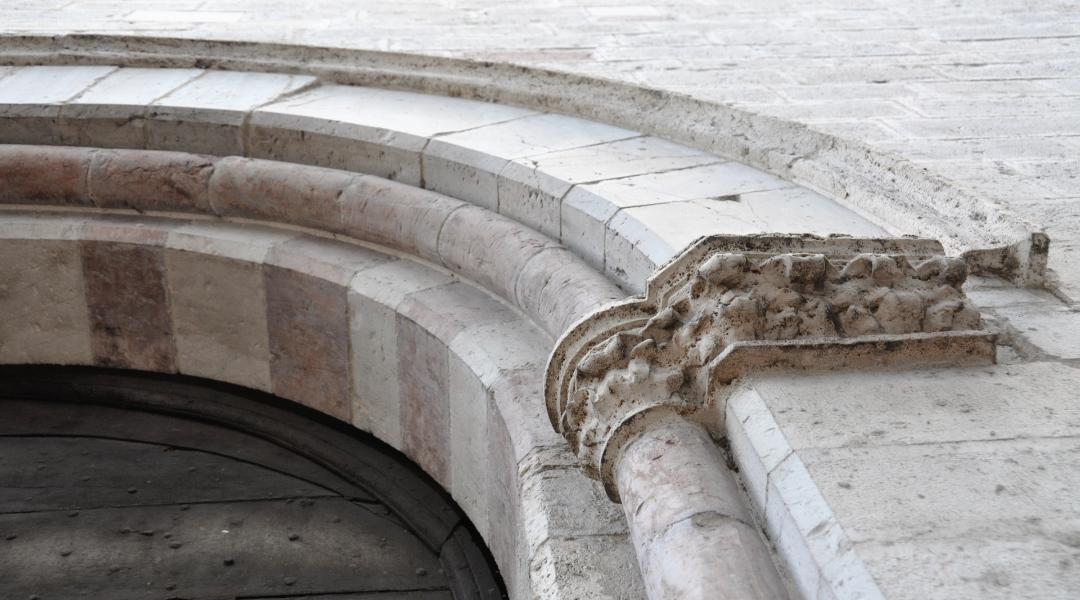
The church must have played a significant role in the life of the community: the Municipal Statutes of Cannara (1536, part III, rubric LV) state that women called to testify in criminal proceedings were to be questioned by the Podestà precisely inside the church of San Biagio, in the presence of another woman. The saint is still deeply venerated by the people of Cannara: on his feast day, 3 February, celebrations include traditional games of skill, including the so-called ruzzolone, a competition in which participants roll a wheel of cheese through the streets of the village, trying to make it travel the farthest.The late Gothic façade is built with alternating rows of white and pink stone blocks from Assisi. It features a beautiful stone portal, decorated with carved capitals and surmounted by a rose window flanked by two single-lancet windows.


_01 (1) - Modificata (1).png/d51ebe99-b652-2406-9752-db5a3e442358?width=780)

.png/1466f1b0-6b0b-66c3-d028-c44e27836a4a?width=780)