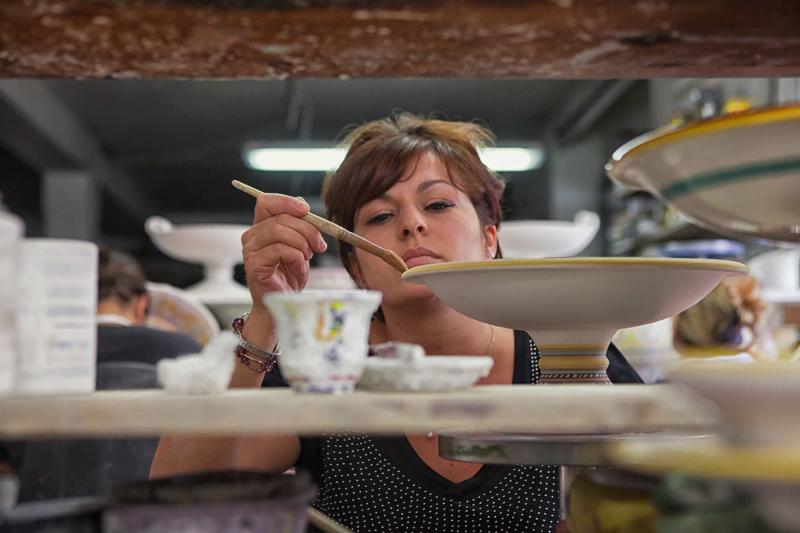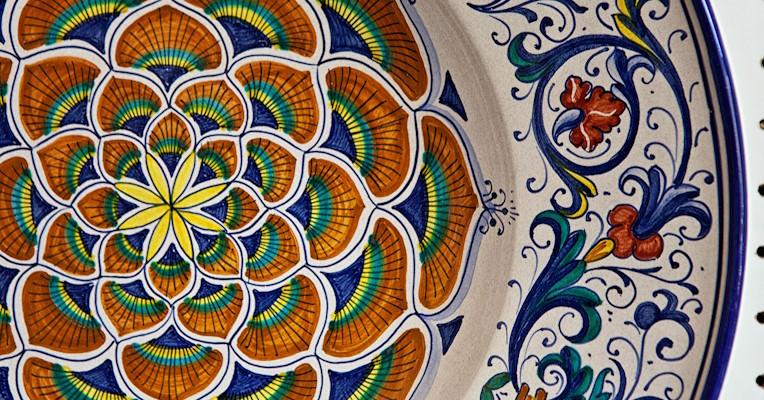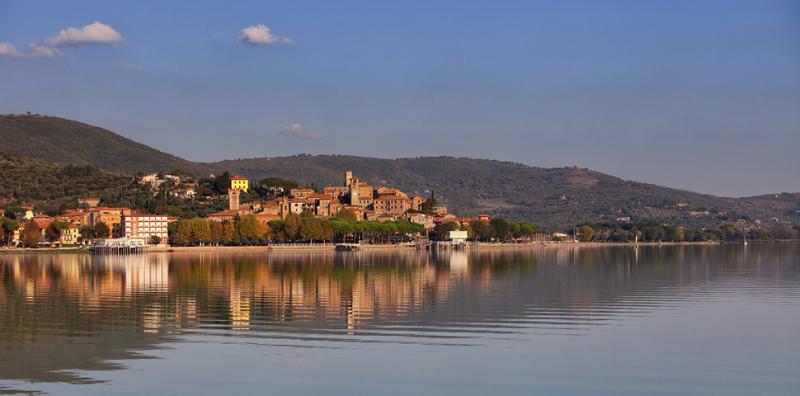




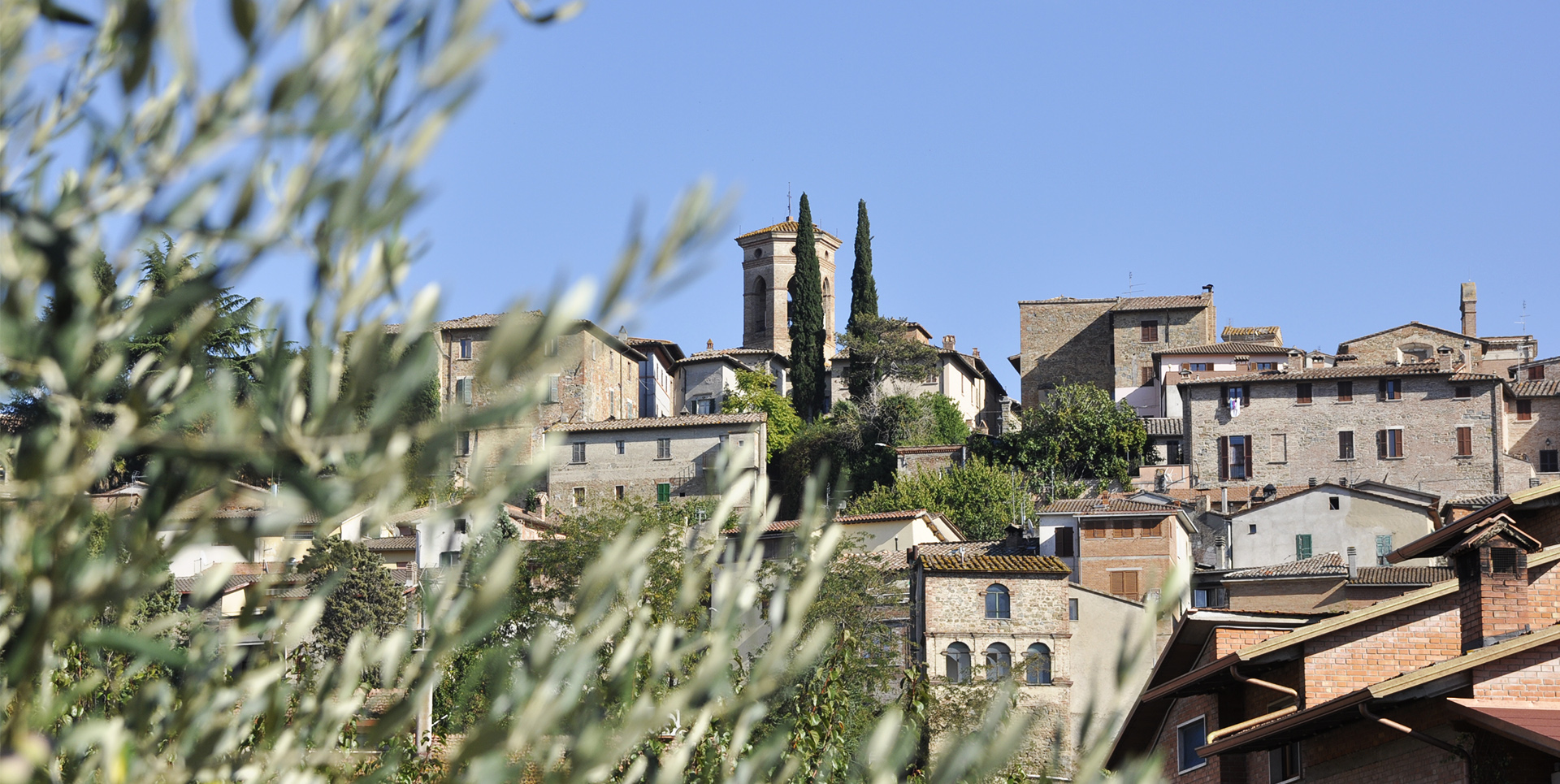
Built on a hill overlooking the valley of the River Tiber, Deruta rises among the “Most Beautiful Villages of Italy”, celebrated above all for its artistic ceramics of ancient tradition that have made it renowned throughout the world.
A long history born from… a fire
Tradition, although not confirmed, traces the origins of the village back to the fire of 40 BC that marked the end of the bellum perusinum, the clash between Lucius Antonius and Octavian Augustus for supremacy over Rome.
The people of Perugia fleeing the flames are said to have settled on the hill where the oldest district of Deruta still stands, known as Perugia Vecchia. The toponym Deruta is said to derive from this episode: a “diruta” city, meaning “ruined” or “destroyed”, just as Perugia was at that historical moment.
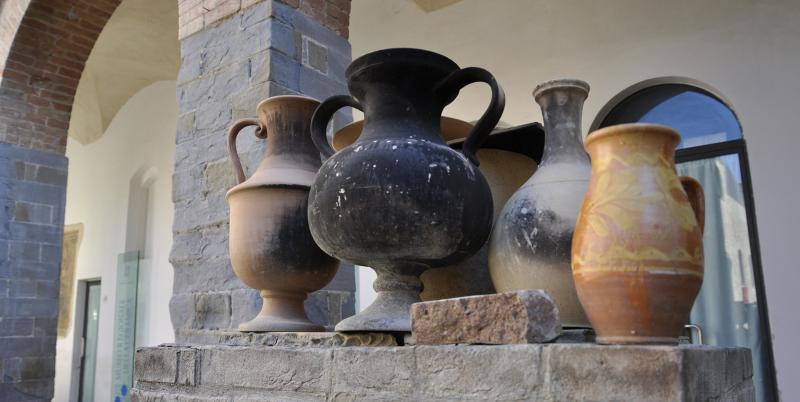
The existence of a Roman settlement is also suggested by substantial finds – capitals, epigraphs, amphorae – preserved in the Town Hall, although the first certain documentary evidence dates back to 1040, when Deruta was listed as a possession of the Abbey of Farfa.
In the 12th century, Deruta became a strategic outpost of Perugia, serving as a a defensive stronghold against the expansionist ambitions of Todi and other rival cities. In the 13th century, endowed with its own Statute, it enjoyed a degree of administrative autonomy, soon troubled by factional strife and the devastation of plagues between the 14th and 15th centuries, which drastically reduced its population and forced a reduction of the town’s defensive walls.
In the 16th century, under the rule of the Baglioni of Perugia, came a season of reconstruction and renewed vigour. Its decision to side with the Church during the Salt War (1540) guaranteed tax exemptions and admission into the Papal States, a political arrangement that lasted until the Unification of Italy.
It was in this climate of political stability that Deruta’s ceramic workshops reached their peak, with their glazes and decorations shaping the tastes of Renaissance Europe.
A journey through the town of ceramics, between art and history
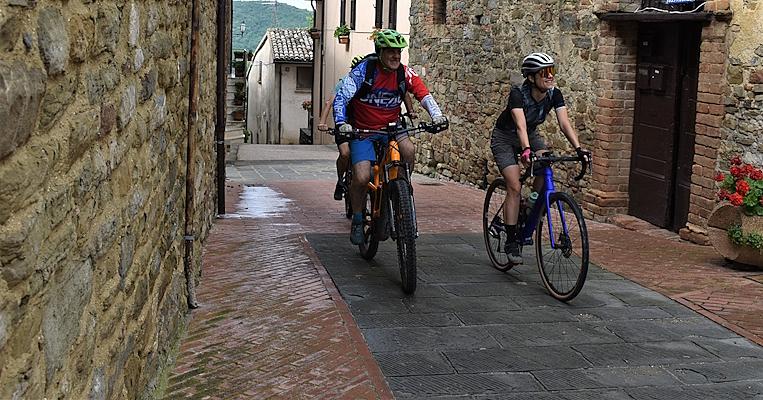
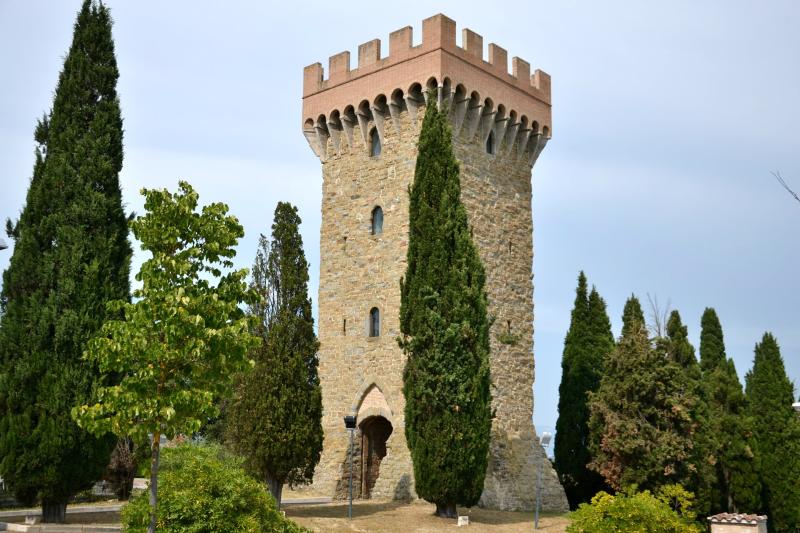
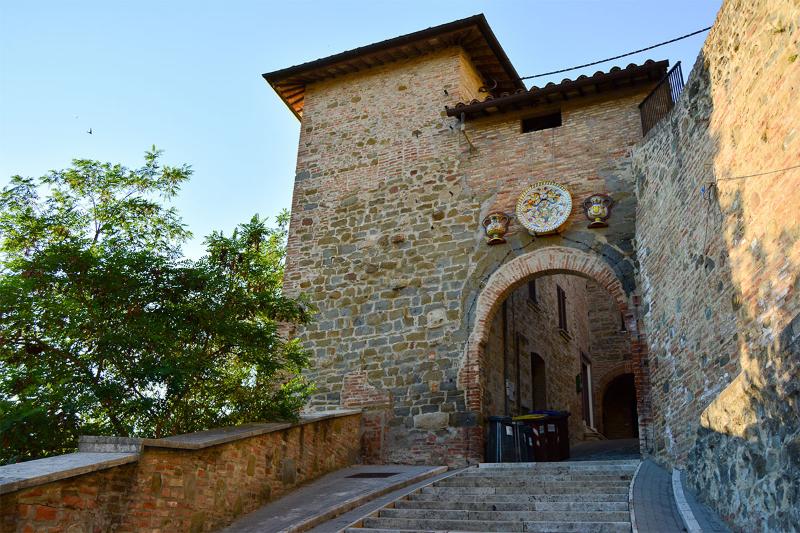
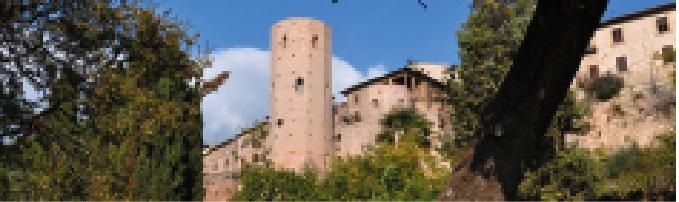
Deruta still preserves much of its appearance as a fortified village. Of the ancient castle remain three gates: Porta Perugina, Porta Tuderte, and Porta San Michele Arcangelo, as well as stretches of walls and the street layout leading to Piazza dei Consoli.
We recommend starting your tour from Porta San Michele Arcangelo, where you can admire the remains of the medieval walls and traces of the ancient kilns; the oldest, the Fornace Grazia, dates back to the 16th century (today housing the Tourist Information Office). Finally, you reach Piazzetta Biordo Michelotti, dominated by the church of San Michele Arcangelo, with its Romanesque-Gothic façade and the beautiful polygonal stone fountain dating back to 1848.
The fountain leads to what is, in every respect, the true heart of Deruta: Piazza dei Consoli. Once enclosed between two fortresses, one for lookout and defence, and the other housing the Perugian military garrisons, its narrow and elongated shape perhaps suggests an original use as a parade ground.
The square is dominated by the Town Hall, a sober 14th-century building with fine mullioned windows and a medieval portal, partly restored in the 18th century by Pietro Carattoli. Since the early 20th century, it has housed the Municipal Art Gallery (Pinacoteca Comunale), well worth a visit! It preserves valuable paintings, including The Eternal Father with Saints Roch and Romanus by Pietro Vannucci, known as Perugino, and the fine 15th-century canvases of Niccolò Alunno, originating from local churches and hospitals.
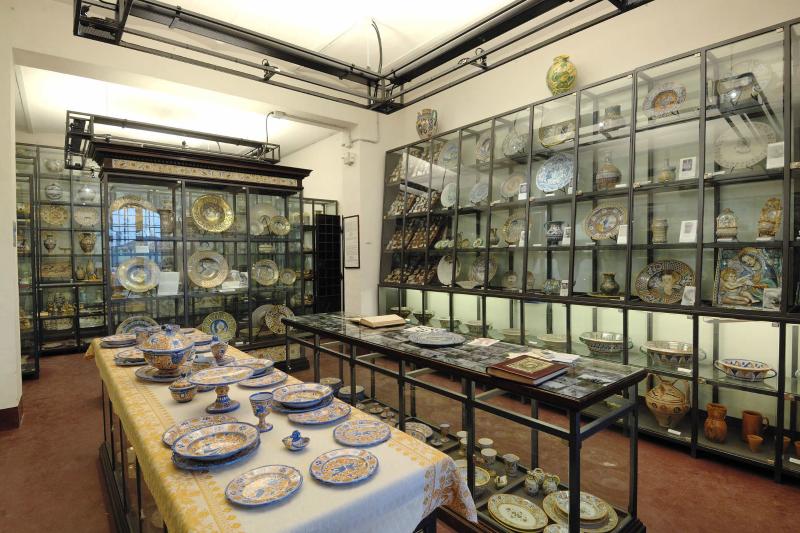
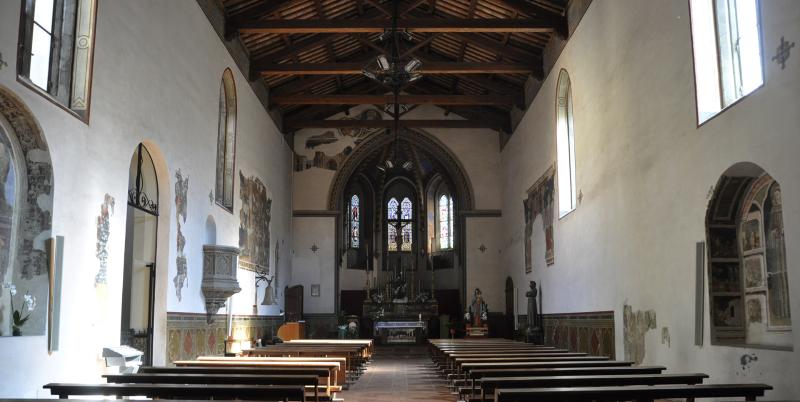
Opposite stands the 14th-century church of San Francesco, in Gothic style, and the adjacent convent of Benedictine origin, home since 1998 to the Regional Museum of Ceramics. Inside the church you can admire frescoes of the Sienese school of the 14th century and a work by Domenico Alfani, follower of Raphael. The Museum is the oldest of its kind in Italy. It documents the evolution of Deruta majolica from the Middle Ages to the 20th century, with sections dedicated to Renaissance lustreware and pharmacy ceramics.
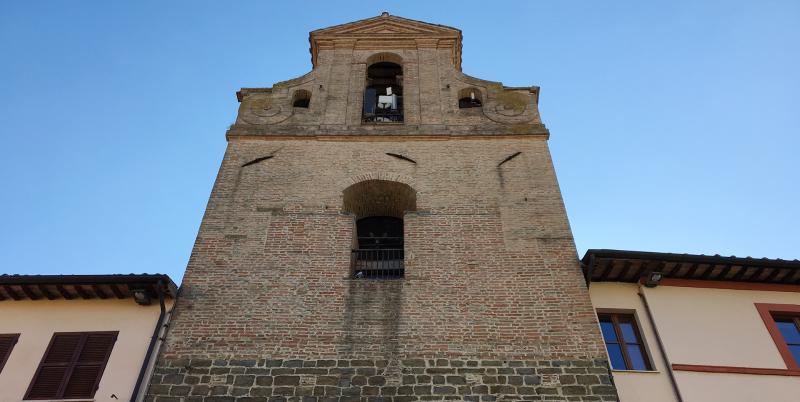
In the nearby Piazza Benincasa stands the fascinating church of Sant’Antonio Abate, where you can admire frescoes of the 15th and 16th centuries by Bartolomeo and Giovanni Battista Caporali, and a splendid 18th-century painted wooden choir loft.
Other sites of interest in the Umbrian town include the church of Sant’Angelo, with its fine Romanesque-Gothic façade, today a private residence, but once seat of the important Confraternity of the Rosary or of Death, and the church of the Madonna delle Piagge (1601), whose façade is adorned with majolica tiles.
Lose yourselves among alleys and small churches, where everywhere you will breathe in the ancient art of ceramics, frequently used as decoration on public and private buildings as well as on house numbers. In the town park, you will even find a bench entirely covered in ceramics, hand-painted by local artists in honour of lovers, who exchange kisses and promises there.
A walk in the surroundings
Of considerable artistic interest is the Sanctuary of the Madonna dei Bagni, founded in 1657 in thanksgiving for the recovery of a merchant’s wife, located in the nearby hamlet of Casalina. The interior of the church houses an extraordinary collection of votive offerings to the Virgin, created over the last four centuries. Many are painted on ceramic tiles.
Nearby, one can admire the remains of the fortifications of Casilina and those of the castle of San Nicolò di Celle. Today the largest hamlet of Deruta, it owes its name to Saint Nicholas, its patron saint, and to the presence of ancient Benedictine monastic cells. Dating back in the Middle Ages, the village developed around two original centres – San Nicolò and San Cristoforo di Celle – which were united in the 14th century with the construction of the Castle of San Nicolò, still today the heart of the town.
When to visit Deruta
On 25 November, the town celebrates Saint Catherine of Alexandria, patron saint of ceramists. On this occasion, their feast is held, and the most senior masters of this craft are honoured in church.
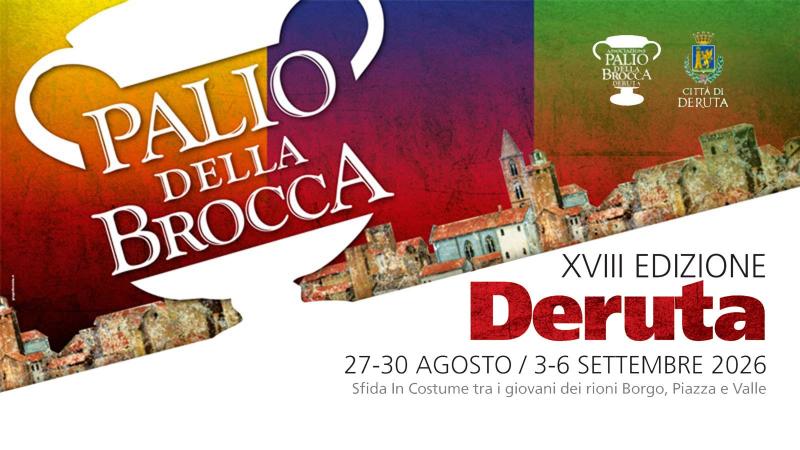
In September, on the first Sunday of the month, the Palio della Brocca takes place: a historical re-enactment set in the 19th-century, in which the town’s three districts – Piazza, Valle, and Borgo – compete in various challenges related to the production of artistic ceramics.
Throughout the year, numerous exhibitions dedicated to ceramics take place, allowing visitors to admire the splendid artisanal production of Deruta.
Altri luoghi di interesse:
Chiesa di Sant’Antonio Abate, con affreschi dei fratelli Caporali.
Chiesa Sant'Angelo, con facciata romano-gotica
Madonna delle Piagge (1601), la cui facciata è adornata da maioliche.
Santuario della Madonna dei Bagni (XVII secolo), con una collezione unica di ex voto ceramici.
Nei dintorni
Il Santuario della Madonna dei Bagni (XVII secolo), fondato nel XVII secolo, si trova nella vicina Casalina. L'interno della chiesa ospita una straordinaria collezione di ex voto di ringraziamento alla Madonna realizzati negli ultimi quattro secoli. Molti sono dipinti su mattonelle di ceramica. In zona oltre ai resti del Castello di Casilina c'è anche il Castello di San Nicolò di Celle. San Nicolò di Celle, la più estesa frazione di Deruta, deve il suo nome a San Nicola, venerato patrono, e al termine Celle, legato alla presenza di antiche celle monastiche benedettine. Sorto in epoca medievale, il borgo si sviluppò attorno a due nuclei originari – San Nicolò e San Cristoforo di Celle – unificati nel XIV secolo con la costruzione del Castello di San Nicolò, ancora oggi cuore del paese.
Curiosità e Simboli
Il nome Deruta (dal latino diruta, "rovine") potrebbe riferirsi alla migrazione dei perugini dopo la distruzione della loro città nel 40 a.C.. Lo stemma comunale, con una pianta di ruta e il grifo perugino, celebra questa eredità.