







.jpg/e9571273-0e35-1ff2-0713-76c7fd4e3cc5?width=456)

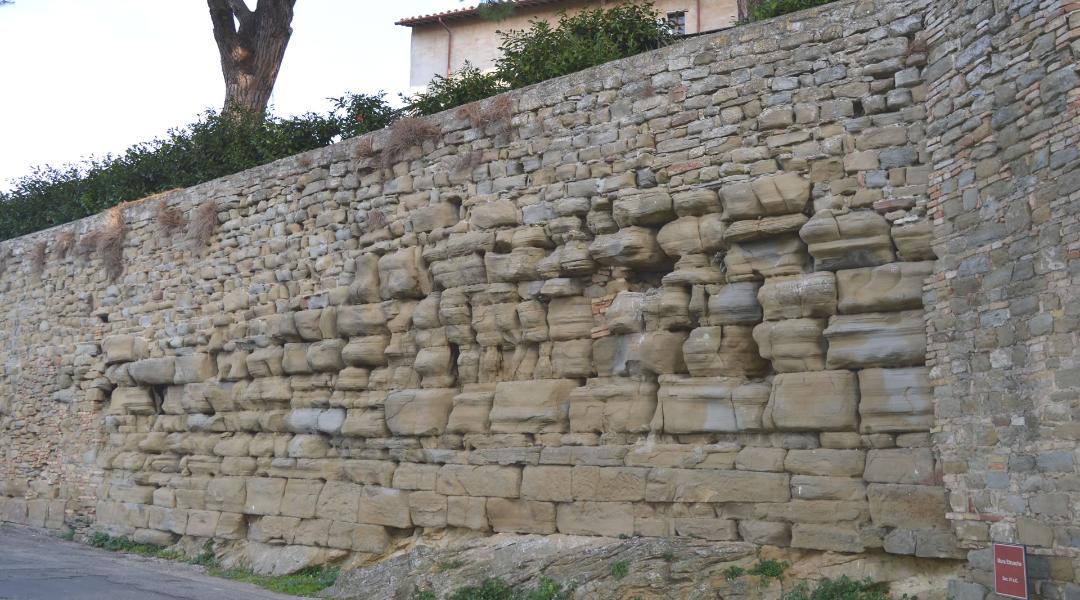
The city wall of Bettona
An embrace of walls that enclose and protect
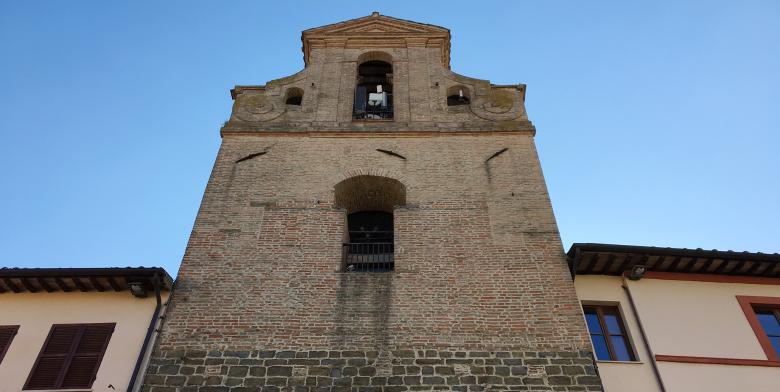
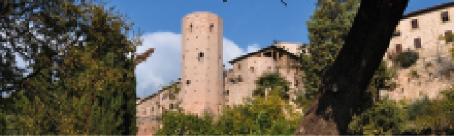
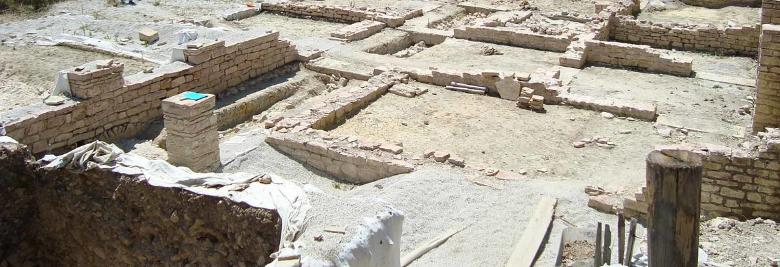
The ancient Etruscan settlement on the left bank of the Tiber, controlled by the nearby and powerful Perusia (Perugia), was equipped with a mighty city wall enclosing the entire settlement, built on the hilltop where the medieval village later developed and where today the historic centre of Bettona stands.This important work of fortification reveals defensive needs, quite understandable for a centre situated in a strategic position dominating the valleys of the Chiascio and the Topino and along the Via Amerina, an important communication route of antiquity. The Etruscan walls extended along a route of about one kilometre and display, where visible, a substantially homogeneous structure: squared blocks of local sandstone of various sizes and heights, in parallelepiped or trapezoidal form, placed in horizontal rows. Some of these show, on the visible side, the marks of workmanship. Comparisons with similar walls in other Umbrian localities, such as Todi, Assisi and above all Perugia, suggest dating the city walls of Bettona to around the 3rd century BC.

 - Sala XII, Il vino come alimento_a (1).jpg/127a9e83-66f0-b810-fd51-ed68a62d2aae?width=780)
.jpeg/c9dd1da1-9fd0-81c8-efa3-d9140647adaf?width=780)


_01 (1) - Modificata (1).png/d51ebe99-b652-2406-9752-db5a3e442358?width=780)