







Tomb of the Hescanas
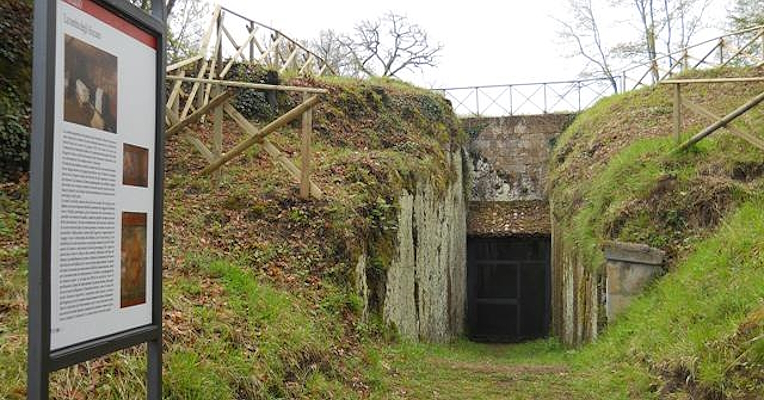
The Tomb of the Hescanas is an Etruscan burial site dating back to the late 4th century BC, located in Molinella, near Castel Rubello, in the municipality of Porano.
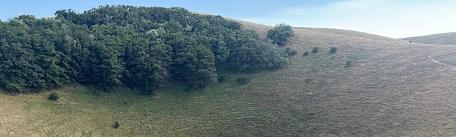
Carved into the tuff of a small wooded hill, at the base of which flows the Montacchione stream, the tomb belonged to the aristocratic Hescanas family, as attested by the inscriptions found inside. It is one of the few painted tombs still visitable in situ in the Orvieto area, along with the Golini I and II Tombs of the Settecamini Necropolis, whose frescoes are preserved in the National Archaeological Museum of Orvieto.
Visiting the Tomb of the Hescanas is a unique opportunity to discover Etruscan customs through depictions of everyday life and religious beliefs, still visible in the wall paintings preserved onsite.
Rock-cut architecture: inside the Tomb of the Hescanas
Already found violated in the late 19th century during tuff extraction works, the Tomb of the Hescanas still retains the distinctive features of Etruscan funerary architecture.
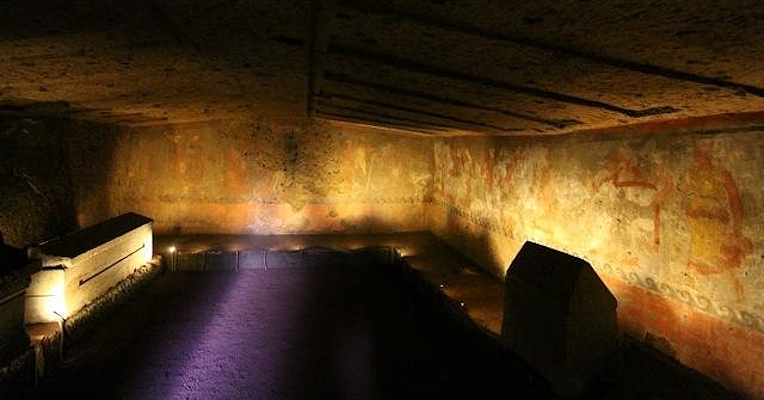
Entirely carved from tuff rock, it has a square layout and follows the typical structure of aristocratic hypogean tombs:
- Monumental dromos: a slightly descending corridor about 16 meters long leading to the entrance of the burial chamber.
- Double entrance door: from the dromos one enters a small vestibule through two doorways, originally plastered and decorated with two painted snakes — a recurring symbol in Etruscan funerary culture.
- Double-pitched ceiling: carved from tuff to imitate the wooden structure of a gabled roof, with faux beams sculpted from the rock.
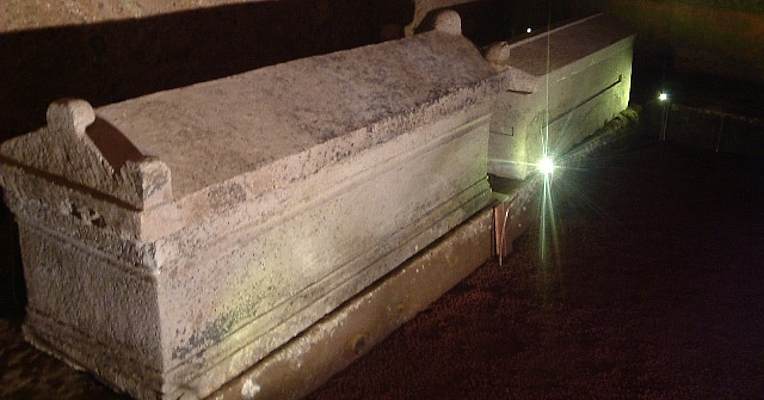
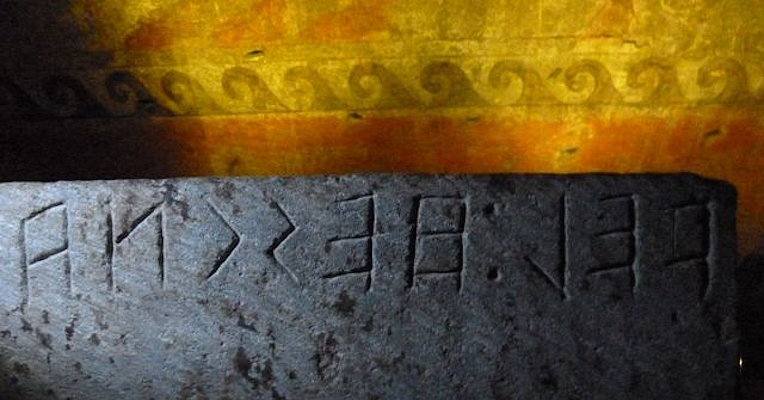
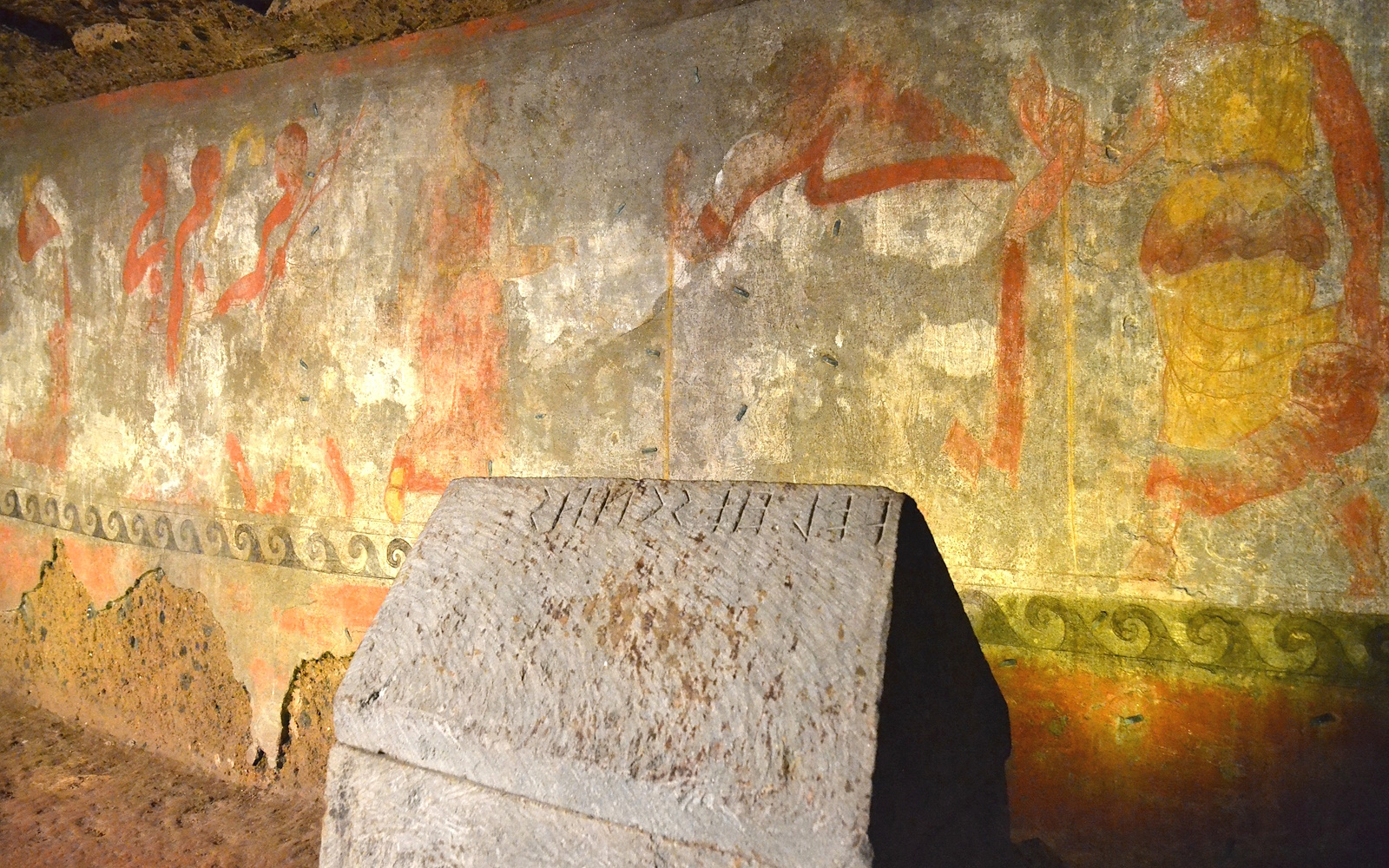
- Bench for sarcophagi: along the walls runs a bench on which lie two peperino sarcophagi imitating wooden chests, and an urn with a lid bearing the name of the deceased: Vel Hescnas.
Banquets and processions into eternity: the tomb’s wall paintings
The Hescanas family commissioned a rich pictorial decoration inside the tomb, depicting the funerary banquet held in honour of the deceased.
All the walls were originally adorned with a painted frieze, bordered below by a wave pattern. Although the paintings are now partially damaged by time, a faithful replica was skilfully created about a decade after their discovery. Today, it is preserved in Porano at the PAAO Visitor Centre (CEA), housed in the former orangery of Villa Paolina, where the original decoration is faithfully reconstructed.