








.jpg/e9571273-0e35-1ff2-0713-76c7fd4e3cc5?width=456)

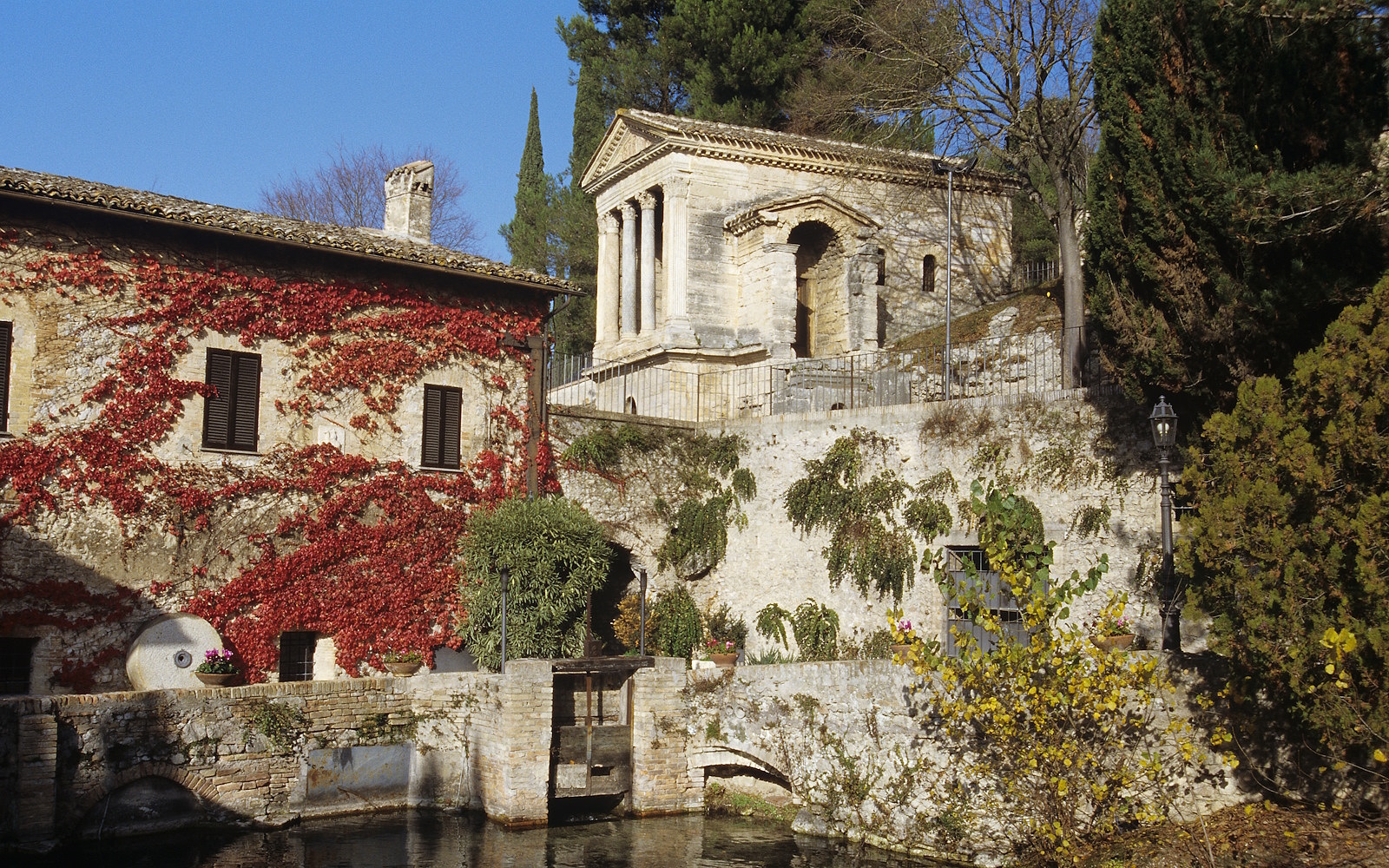
Temple of Clitunno – Campello sul Clitunno
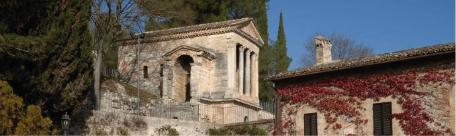
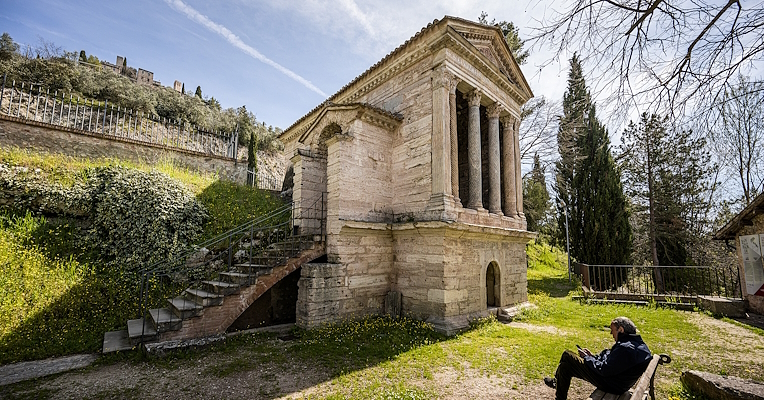
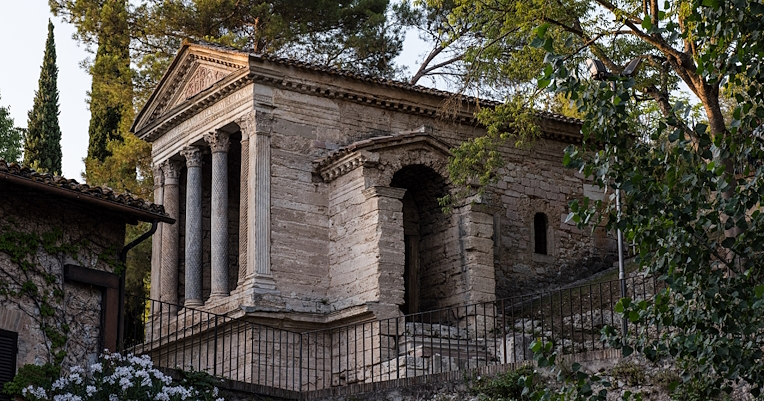
The Temple of Clitunno is a small sacred building dedicated to Saint Saviour, located in the municipality of Campello sul Clitunno, in the hamlet of Pissignano, near the famous Clitunno Springs.
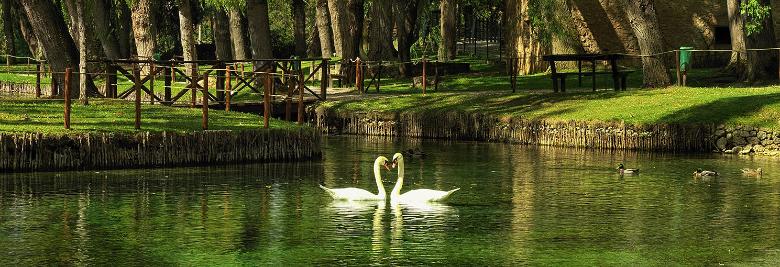
Perched on a rocky spur, hidden among tall cypress trees and overlooking the clear waters of the Clitunno River, the temple is immersed in a striking natural landscape. A place that has always captivated travellers, artists, and scholars. Pliny the Younger already described the Clitunno Springs as a place “covered with ancient and shady cypresses, at whose foot a spring gushes forth forming a small lake,” evoking an atmosphere that seems to remain unchanged through the centuries.
Over time, the classical elegance of the temple has stirred the imagination of poets, painters, and architects: romantic travellers sketched it in their notebooks and wrote about it in their travel diaries, while during the Renaissance, it inspired artists such as Francesco di Giorgio Martini, Benozzo Gozzoli, Palladio, and Vanvitelli. Its beauty was also praised by Lord Byron in his work Childe Harold’s Pilgrimage.
The Lombard jewel recognized by UNESCO
The Temple of Clitunno, considered one of the most important early medieval monuments in Umbria, is one of seven Italian sites of Lombard civilization recognised in 2011 as a UNESCO World Heritage Site, under the serial designation The Lombards in Italy. Places of Power (568–774 AD).
Together with the Basilica of San Salvatore in Spoleto, the temple is regarded as one of the highest artistic expressions of the Lombard people and a testament to the cultural dialogue between the classical and Christian worlds during the Early Middle Ages.
A deceptive appearance
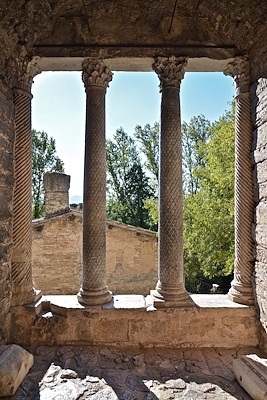
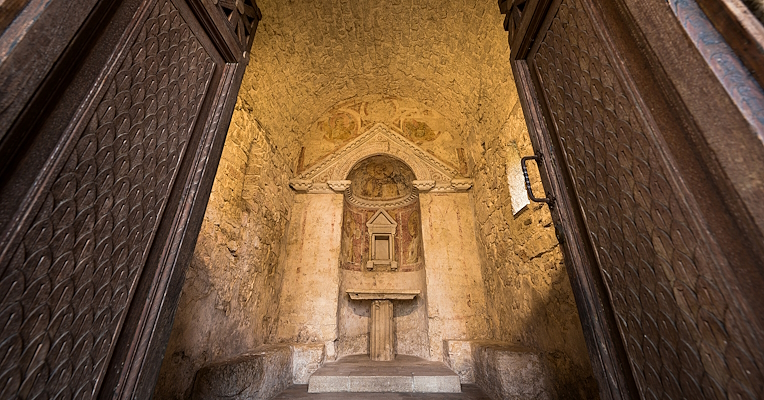
Its architecture is among the most fascinating and deceptive in Umbria: though originally built as a Christian place of worship, it closely resembles a Roman temple. This feature has misled many scholars over the centuries, who believed it to be an ancient pagan sanctuary later transformed into a Christian church.
Today, most scholars agree on its Christian origin — some date it between the late 4th and early 5th centuries, shortly after the Basilica of San Salvatore; others between the 7th and 8th centuries, under Lombard rule — with a skilled reuse of architectural elements and decorations imitating classical forms.
.jpg/0182c564-e085-d7a4-40b6-cb530587703e?width=780)