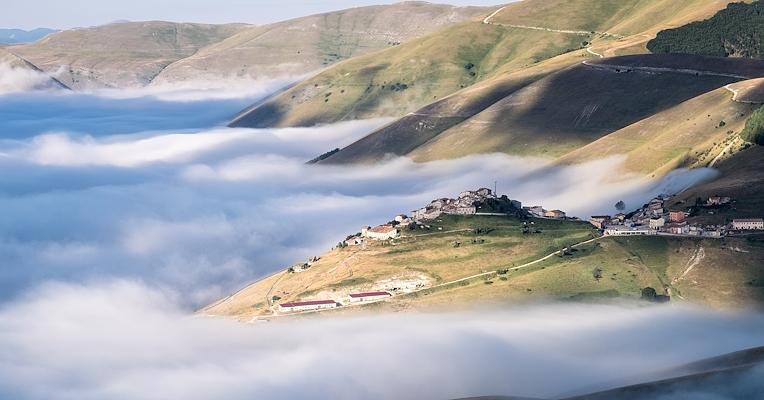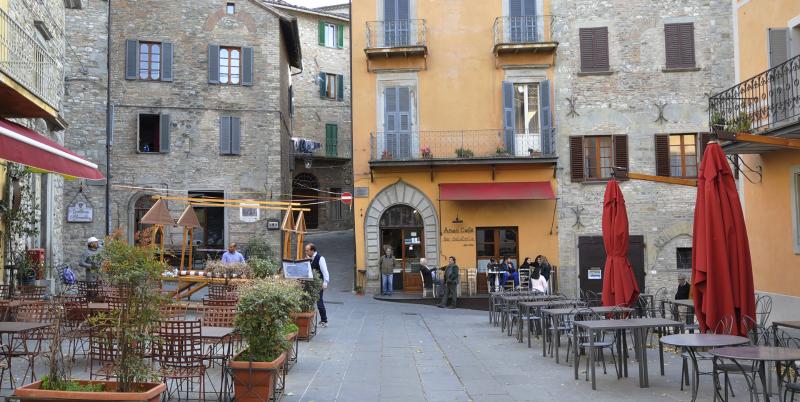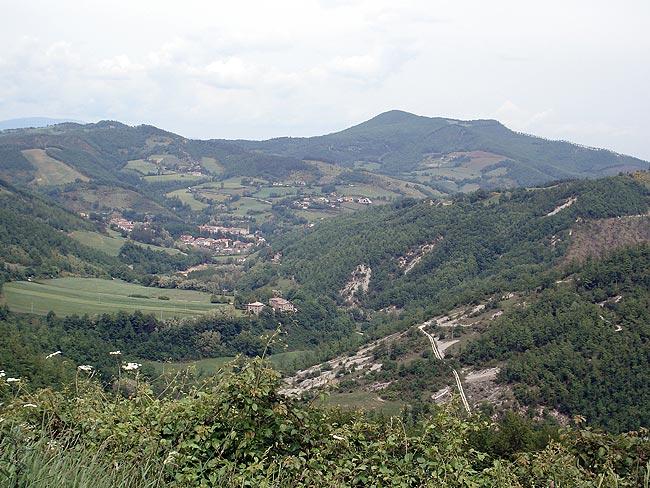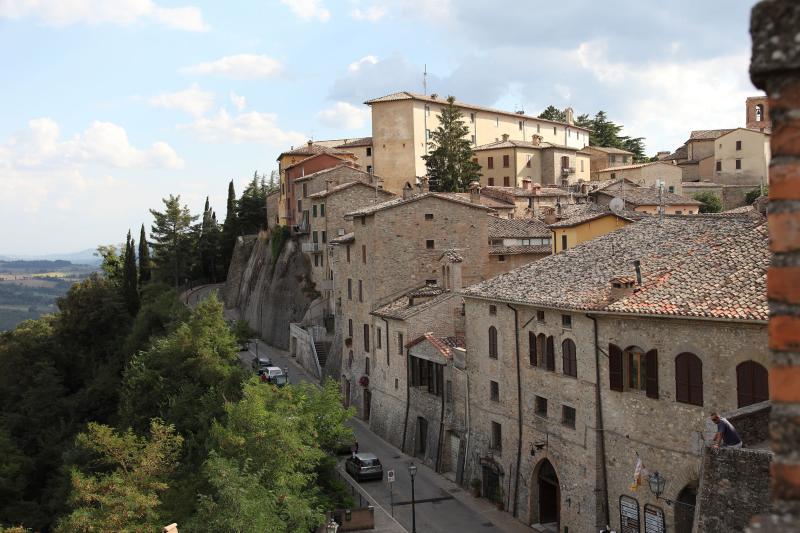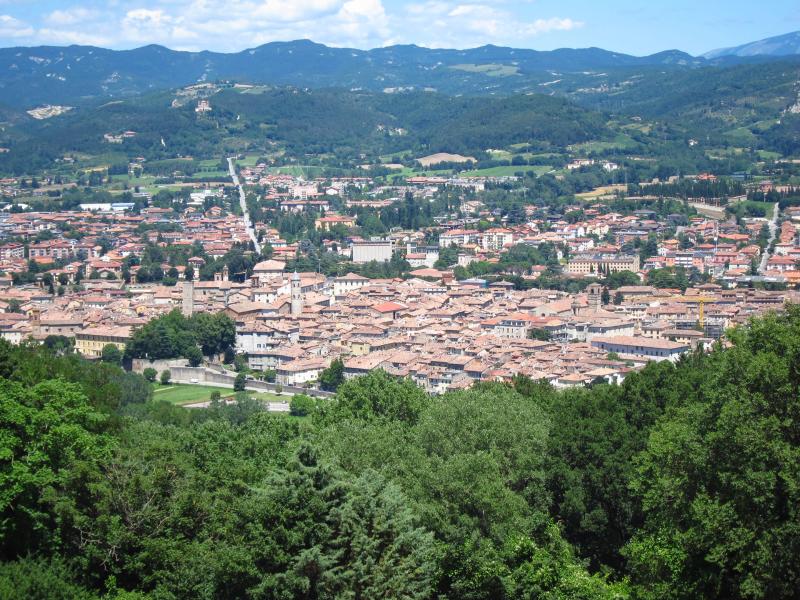
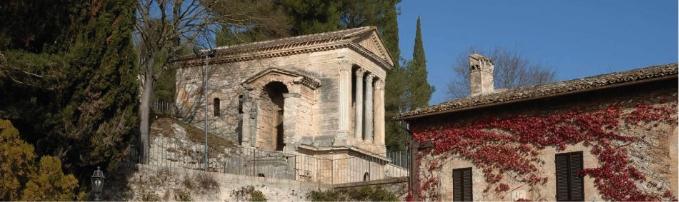





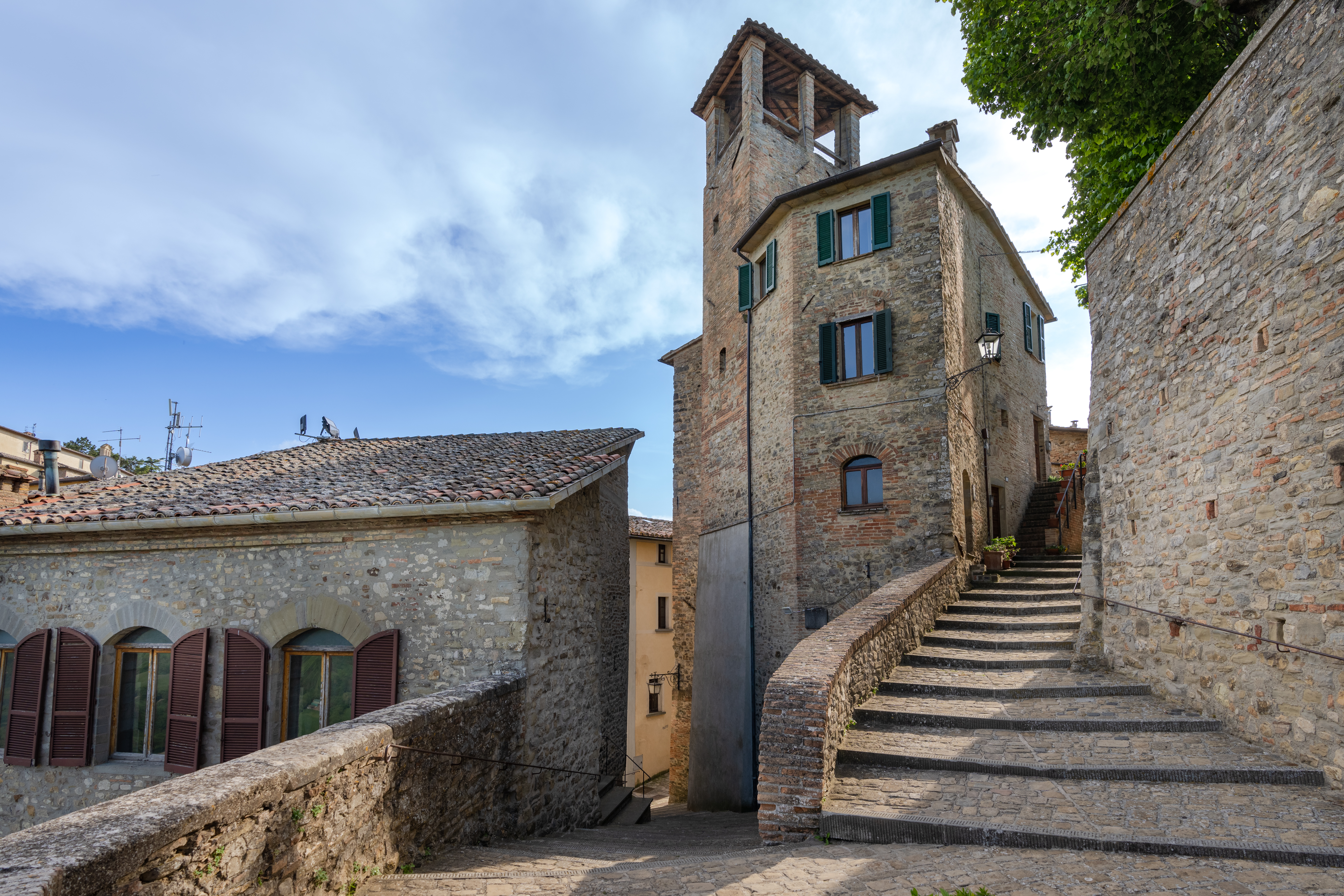
A breathtaking landscape lies at the confluence of the Upper Tiber Valley and the valley carved by the Carpina river. Nestled among olive groves and oak woods, Montone preserves its medieval identity intact, rich in architectural and artistic treasures. A place well worth a visit.
Its name is linked to the famous 15th-century condottiero Braccio Fortebracci, who, as Alessandro Manzoni wrote in The Count of Carmagnola (1816), “is still named with wonder and with terror.”
Tales of cape and sword
In the Early Middle Ages, the area surrounding the Umbrian village was literally dotted with towers, castles, and fortifications. Among them was Aries (Latin for ram), from which—according to an undocumented tradition—the Fortebracci family set out to found a new fortified village: Montone. Fact or legend?
The earliest reliable records of the village date back to the 10th century, when it was among the holdings of the Marquises of Santa Maria Tiberina. A 1121 document mentions the existence of a castrum and the possibility of enjoying autonomous institutions and magistracies, though formally under Perugia’s control. By 1150, Montone had become a free municipality. From the 13th century, however, it became a fief of the Fortebracci family, who sought to consolidate power in a territory contested by Perugia, Gubbio, and Città di Castello. They ceded all their possessions to Perugia in exchange for the title of “Perugian nobles” and other privileges.
In 1368, the most famous of the Fortebracci family was born: Andrea, better known as Braccio da Montone, one of Italy’s most renowned mercenary captains. He had the daring plan of establishing a strong, autonomous state in central Italy, completely independent from papal rule. In 1414, he received the County of Montone from antipope John XXIII. By 1416, he had become lord of Perugia, but in 1424, he died in battle at L’Aquila, fighting for control over the Kingdom of Naples. The fief then passed to his son Carlo, who, in 1473, fought against the Turks on behalf of the Most Serene Republic of Venice. As a reward for his victory, he was given a thorn from Christ’s crown—the “Holy Thorn”, still preserved in Montone. The relic's arrival is celebrated every Easter Monday. In the 16th century, Montone became a fief of the Vitelli family, and later fell under Papal rule. It regained autonomy only with the unification of Italy in 1860.
A walk among shady alleys and splendid Gothic churches
The most artistically significant building in Montone is the Gothic Church of San Francesco.
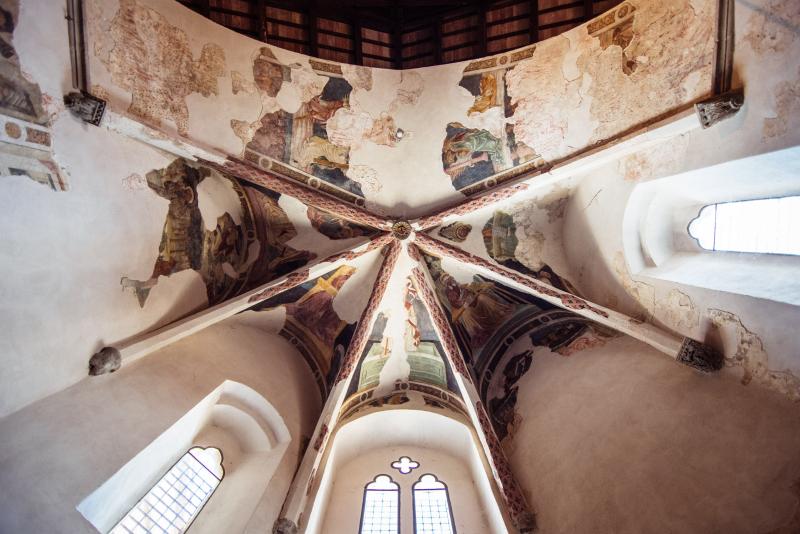
Built around 1300, the church stands on the hill where the Fortebracci family once had their homes. It features the typical layout of Mendicant Orders: a single nave, wooden truss ceiling, and a polygonal apse.
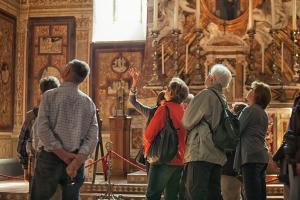
Inside, visitors can admire four fresco cycles, located on the vaults and walls. The oldest date back to the late 14th century; the most remarkable are from the following century, when the Franciscan church became the family church of the Fortebracci, who enriched it with altars, paintings, and sacred furnishings. These are fresces of the Umbrian school, with some attributed to Bartolomeo Caporali. The church also houses valuable wooden works: the magistrates' bench decorated with grotesques, the wooden choir, and the pulpit.
Within the former convent and the church is the Museum Complex of San Francesco, where visitors can admire paintings, sculptures, silverware, and sacred vestments of high artistic value, coming from sacred buildings from the Montone area. Among these are the beautiful wooden group of the Deposition of the 13th century, from the church of San Gregorio located outside the town walls, a plague-processional banner representing the Madonna della Misericordia, a work of 1482 by Bartolomeo Caporali, and the Annunciation between Saints Fedele and Lazzaro, of the school of Signorelli, dated 1532. Also of historical interest are two 18th-century family trees of the Fortebracci family. On the ground floor, the ethnographic museum “Il tamburo parlante” ("The Talking Drum") houses over 600 items from East Africa, displayed in a unique setting inspired by the ecosystems of the African region. Currently, this museum is closed to the public.
From Piazza Fortebraccio, where the beautiful Town Hall stands, you can reach the highest point of the village, where the ruins of the Rocca di Braccio are located. This fortress was destroyed in 1478 by order of Pope Sixtus IV. On its remains now stands the former Convent of Santa Caterina, which today houses the Municipal Historical Archive—one of the most important in Umbria for its extensive collection of historical documents.
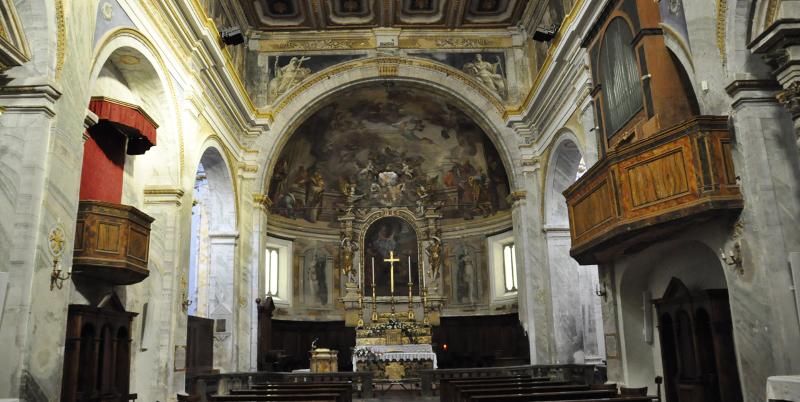
Another major religious building is the Collegiate Church of Santa Maria and San Gregorio Magno, originally an early medieval parish church (pieve) rebuilt in 1317 when it was elevated to the rank of Collegiate Church. In 1668, it was refurbished in Baroque style. The interior features a single nave with a coffered ceiling and a semi-circular apse, and preserves beautiful canvases and altarpieces from the 17th and 18th centuries, including a remarkable The Last Supper (1611) by Flemish painter Denijs Calvaert, originally from the Church of Santa Croce. Every Easter Monday, this church displays the relic of the Holy Thorn.
Outside the town walls
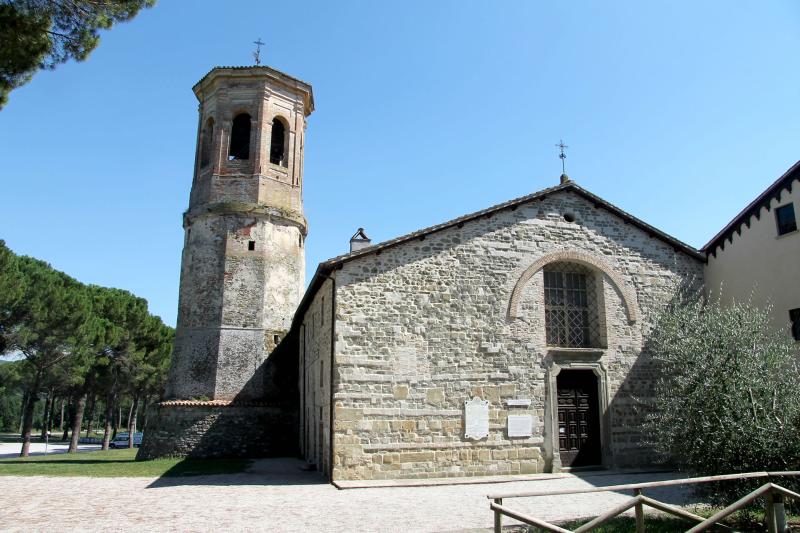
The so-called “Old Parish Church” (Pieve Vecchia), also dedicated to Saint Gregory the Great, is located outside the town walls, along the scenic valley of the Lana stream. Built around the year 1000 in Romanesque-Byzantine style over a pre-existing structure, it underwent major renovations in the 16th century. It is a fortified church with three naves, a central apse, and side chapels. The apse features Umbrian school frescoes and a notable gilded wooden aedicule that once held the 13th-century wooden Deposition group, now kept at the Museum Complex of San Francesco.
Also noteworthy is the Church of Santa Croce, a Benedictine construction from the 12th century. In the 16th century, the Vitelli family founded the Confraternity of the Blessed Sacrament there, which in 1577 was entrusted to the Basilica of Santa Maria sopra Minerva in Rome to obtain greater privileges and income.
Nearby, about six kilometres from the town centre, stands the Rocca d’Aries, an imposing castle restored to its ancient splendour thanks to careful restoration.
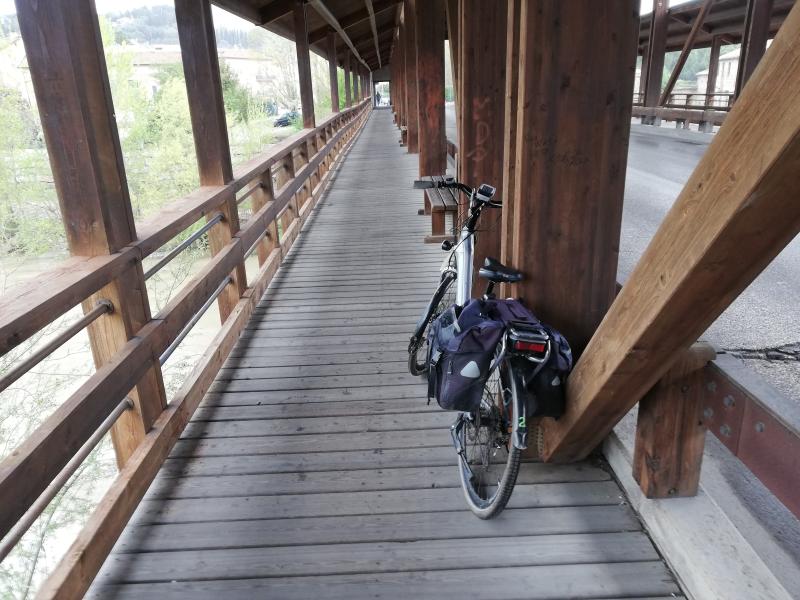
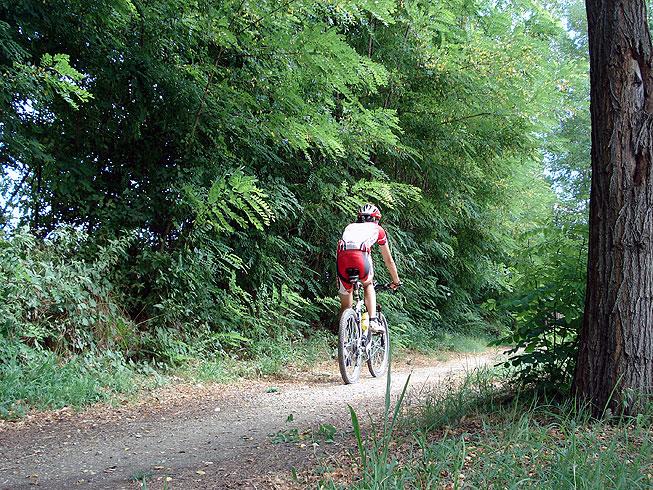
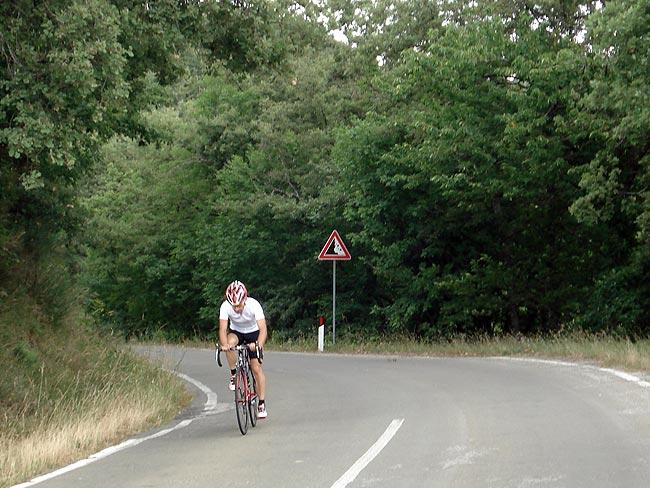
The lush countryside surrounding Montone offers plenty of opportunities for outdoor activities: walks, trekking, cycling, and even stargazing. In the hamlet of Coloti, about 8 kilometers from Montone’s town centre, lies a small, now uninhabited village, situated in a panoramic position along the valley of the Carpina strea,. Since 2000, Coloti has been home to one of the most advanced astronomical facilities in Italy. The Coloti Astronomical Observatory includes a precious telescope housed in a 7-meter dome, and twelve additional rooms, to which are added the former little church of the village, now used as a meeting room, and the Sirio Hall, a modern space for entertainment and dining.
Festivals and events: between the sacred and the profane
Montone and its surroundings are rich in events that celebrate both its historic legacy and the abundance and variety of its local products.
One of the most famous is the Festival of the Donation of the Holy Thorn.
In 1473, Carlo Fortebracci, son of the powerful Braccio, received the Holy Thorn as a gift of thanks from the Most Serene Republic of Venice for his victory over the Turks, and decided to donate it to Montone. Legend has it that, when the relic entered the village, the bells of all the churches began to ring joyfully... on their own. In the 17th century, the Holy Thorn was placed inside a precious silver reliquary. Due to the large crowds that gathered on Easter Monday to see the relic, a second celebration was established in 1638, held on the penultimate Sunday of August: thus the Festival of the Donation was born, which is celebrated every year and gave rise to a historical re-enactment celebrating the splendour of the Fortebracci seigniory. The village’s three districts compete in various challenges to win the Palio and the election of the Castellana, a noble lady whose role is inspired by the historical figure of Margherita Malatesta of Rimini—wife of Carlo Fortebracci—who ruled Montone during her husband’s long absences due to his duties as a condottiero, and endowed it with splendid works of art.
But one must also please the palate! The Festa del Bosco (Forest Festival) is a market fair held in autumn (usually between late October and early November), accompanied by various cultural events. It celebrates the abundance of Montone’s local products: chestnuts, honey, olive oil, cured meats and cheeses, displayed along the streets, alleys, and ancient buildings of the village.