






.jpg/e9571273-0e35-1ff2-0713-76c7fd4e3cc5?width=456)

A journey to discover the traces left by the great families that shaped the history and culture of Umbria. Among them, the Vitelli stand out as one of the few ruling families in the region. Between the 15th and 16th centuries, condottieri such as Vitello Vitelli—first in the service of the Venetians and later of the papacy—secured the family’s place in history, while their patronage transformed Città di Castello into a true Renaissance jewel.
Today, the imprint of the Vitelli is still evident in four palaces—each located in a different district—as well as in a smaller residence that preserves the memory of the struggles that marked the family’s rise. An itinerary that spans centuries of history, art and power.
1. Palazzo Vitelli in Piazza (or all’Abbondanza)
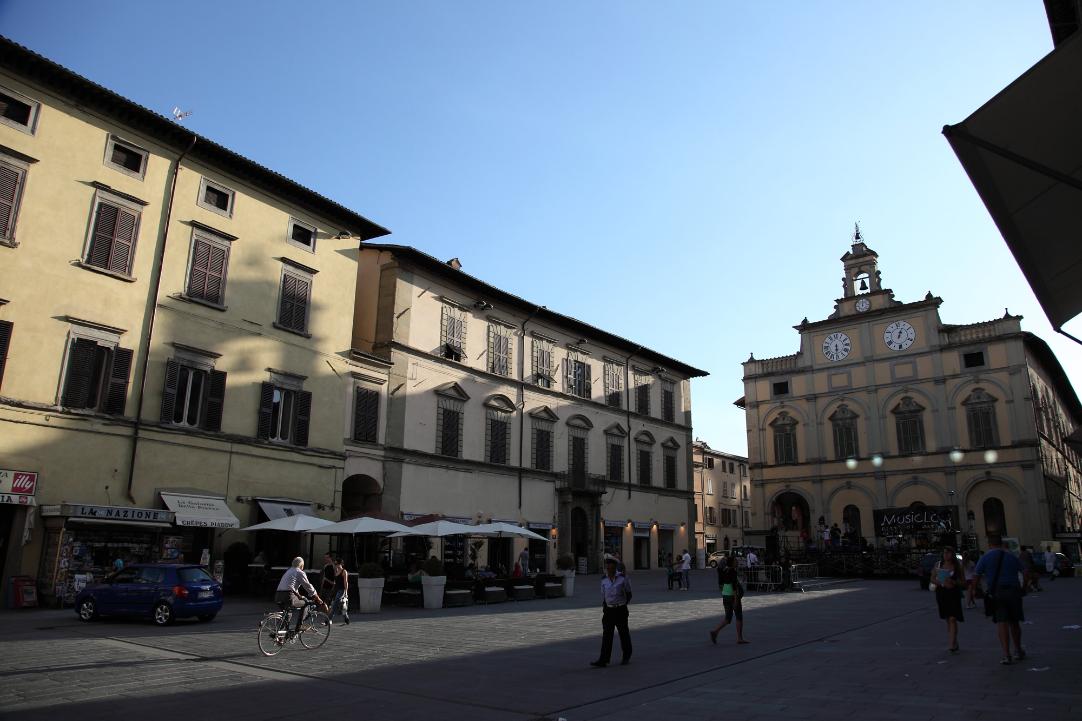
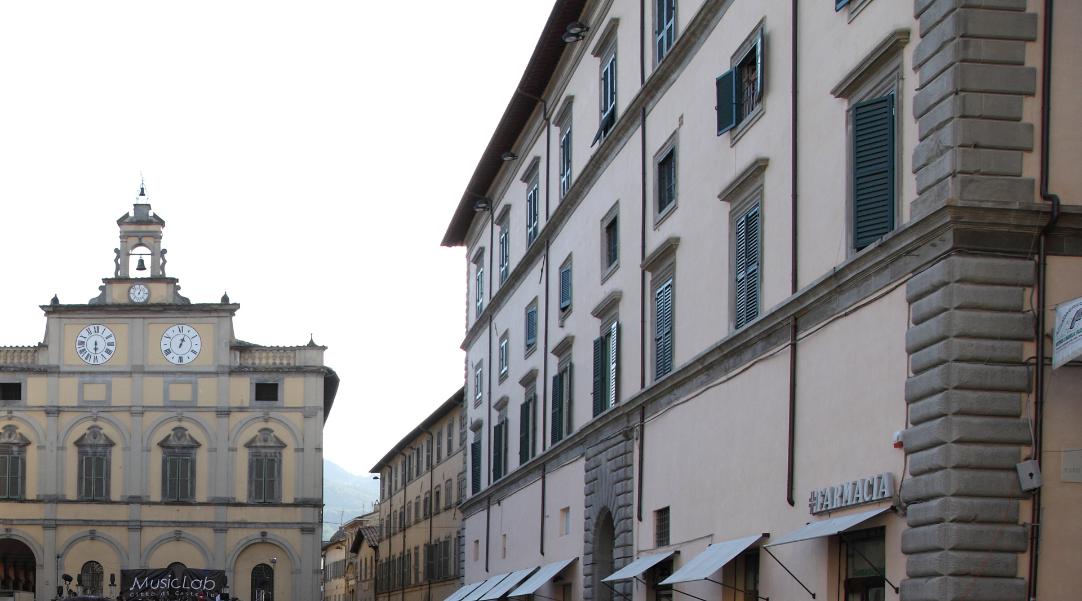
Overlooking the eastern side of Piazza Matteotti, the historic heart of the town, this palace encapsulates the different phases of the Vitelli family’s urban story.
The original core—known as all’Abbondanza—was initially a grain storehouse, as the name suggests. It was expanded at the end of the 15th century by the sons of Niccolò Vitelli and later completely transformed at the request of Alessandro Vitelli, his grandson, who in the first half of the 16th century obtained permission from the municipality to enlarge both this building and the one at the Cannoniera.
The façade on Piazza Matteotti reveals a clear Florentine influence, with grey rusticated stone set against a light plaster surface. The architect remains unknown, but the work undoubtedly reflects the hand of Tuscan masters. The cornice was added only in the 18th century, when the palace had already passed to the Bufalini family. The side facing Via del Popolo, by contrast, still retains a markedly medieval character, bearing witness to the building’s layered history.
Inside, particular attention should be paid to:
- the basement with cross-vaulted ceilings resting on massive pillars;
- the stables, covered by vaulted ceilings supported by tall columns;
- the large hall on the upper floor, which preserves fragments of a high painted frieze, now unfortunately difficult to read.
The building is now privately owned, but its imposing presence still dominates the square, recalling the central role the family once played in the life of the city.
2. Palazzo Vitelli a San Giacomo
A short distance away stands Palazzo Vitelli a San Giacomo, built in the early decades of the 16th century for Paola Rossi of San Secondo Parmense, wife of Vitello Vitelli. After being widowed, she married Alessandro Vitelli in 1528, cousin of her late husband, further intertwining the family’s dynastic history.
The palace stands out for the elegance of its façades, enhanced by sandstone-framed windows. Inside, the columned courtyard, the first-floor loggia and the refined coffered ceilings testify to the Renaissance taste that the Vitelli brought from their contacts with Tuscan courts.
Also noteworthy are the frescoes decorating some of the rooms, the result of artistic patronage that made the family renowned.
Today, the palace houses the prestigious “Giosuè Carducci” Municipal Library, a place where historical culture meets contemporary cultural life.
3. Palazzo Vitelli alla Cannoniera
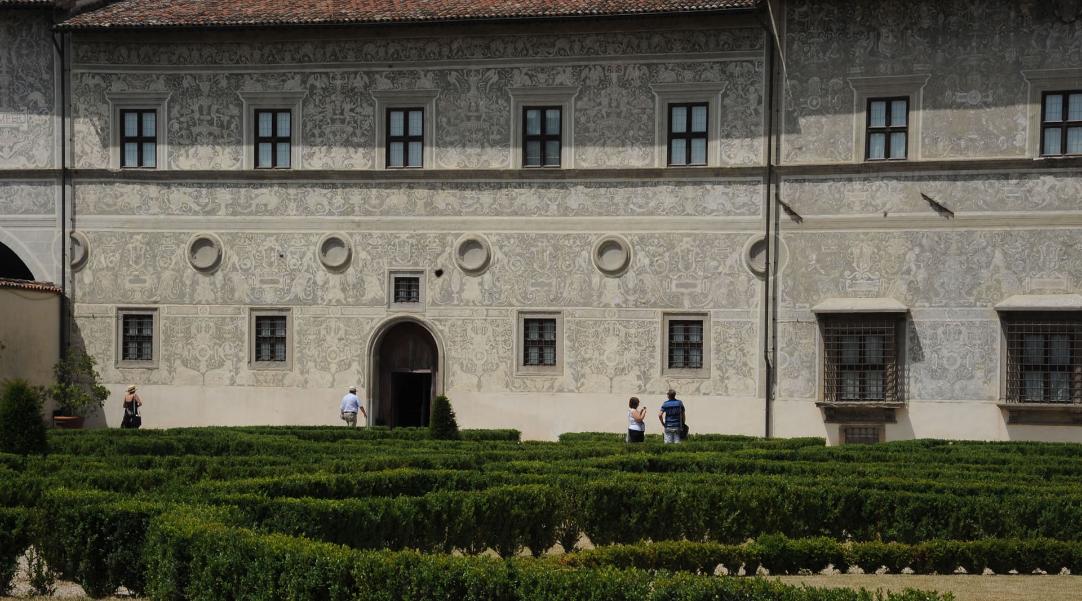
Moving towards the south-western sector of the city, in the San Florido district, one encounters the imposing Palazzo Vitelli alla Cannoniera. It is one of the most celebrated residences commissioned by Alessandro Vitelli, who invited the finest artists of his time to shape his ideal of a Renaissance court.
The sgraffito façade—rare and valuable—follows a design attributed to Giorgio Vasari, who worked in Città di Castello alongside other masters such as Pontormo and Doceno.
Today, the palace houses the Municipal Art Gallery, the second richest art collection in Umbria. Among the highlights are:
- works by Luca Signorelli;
- a renowned painting by the young Raphael, who at the time was working in the service of the Vitelli.
A visit here is not only an artistic experience, but also a journey into the heart of Renaissance patronage.
4. Palazzo Vitelli a Sant’Egidio
In the eastern part of the city, in the district of the same name, stands the last and most sumptuous of the four palaces: Palazzo Vitelli a Sant’Egidio.
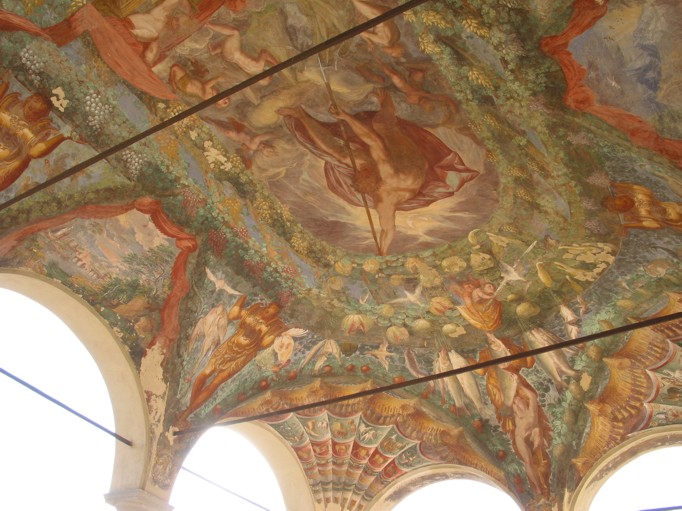
The complex overlooks a charming Italian garden, partly enclosed by the ancient city walls. From here one enters the Palazzina, built around a medieval tower, which preserves intact the charm of a residence designed for leisure and representation.
The interior frescoes narrate the entire story of the Vitelli family, following a unified iconographic programme. The intention was explicit: “so that the memory of their name and their worth might not perish.” A wish that can still be said today to have been fully achieved.
An additional stop: Casa Vitelli (formerly Fucci)
To complete the itinerary, it is worth pausing at No. 6 Piazza Magherini Graziani, where Casa Vitelli stands, a smaller yet historically rich building.
Originally belonging to the rival Fucci family—as evidenced by the damaged coat of arms (a rampant lion on a blue background) still visible on the entrance portal—the house later passed to the Vitelli, who placed their own emblem on doors and windows, accompanied by the philosophical motto OMNIA CUM, a reference to the harmony of the cosmos.
A typical example of 16th-century Renaissance residential architecture, it features a simple and refined façade, marked by sandstone string courses supporting lintelled windows. Inside, original elements remain—staircase, doors, fireplace—framed in pietra serena.
But it is the history that makes this place especially evocative. The changes in ownership reflect the struggles between the “noble” (Fucci) and “popular” (Vitelli) factions that shook the city in the 15th century. The climax was reached at Easter 1468, when Niccolò Vitelli ordered the massacre of the Fucci and the Giustini, definitively establishing his family’s supremacy.