





Nestled among the gentle Umbrian hills on the border with Tuscany, Città di Castello holds treasures ranging from the Renaissance to Contemporary Art. What sets the town apart? It boasts two main squares of equal importance, known locally simply as “Piazza di Sotto” and “Piazza di Sopra”.
Piazza di Sotto (Piazza Gabriotti): the heart of Religious and Political Power
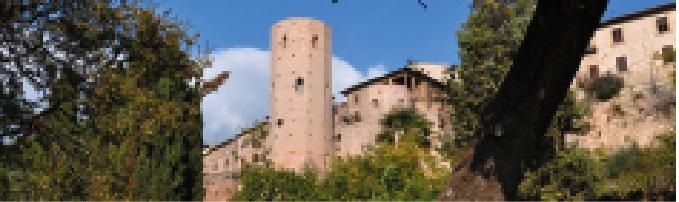
The itinerary begins in Piazza Gabriotti, home to the Cathedral of Saints Florido and Amanzio, distinguished by its unusual cylindrical bell tower in the Ravenna style – a rarity in Umbria. Next to it, the fourteenth-century Town Hall still displays its elegant, mullioned windows and rusticated stone blocks, recalling the hand of its illustrious designer, Angelo da Orvieto.
Piazza di Sopra (Piazza Matteotti): the centre of Civil Power
A short stroll away lies Piazza Matteotti, framed by two architectural gems. Here stands the Palazzo del Podestà, a masterpiece of fourteenth-century civic architecture. It was built in 1368 by Angelo da Orvieto – the same architect behind the nearby Town Hall – on commission from the powerful Tarlati family of Pietramala. The building tells its story through its details: note the smooth, squared blocks of pietra serena that create an exceptionally elegant effect. Above the doors of the former workshops, you can still glimpse the worn coats of arms of ancient Podestà, while the large semicircular mullioned windows on the main floor reflect a refined Gothic style.
Palazzo Vitelli alla Cannoniera, where Masterpieces reside today
A short distance away, in Via della Cannoniera, stands another of the Vitelli family residences: Palazzo Vitelli alla Cannoniera. Its name derives from the nearby artillery depot, and its construction (between 1521 and 1545) is linked to a joyful event: the marriage of Alessandro Vitelli and Paola Rossi, commemorated in an inscription inside the building.
The architecture draws inspiration from Florentine models, but the true surprise awaits outside: the rear façade is adorned with graffiti decorations executed by Cristofano Gherardi, based on a design traditionally attributed to Vasari. This palace is not only a work of art, but also an act of love towards the city: in 1912, the renowned antiques dealer Elia Volpi restored it and donated it to the Municipality so that it could become the home of the Municipal Art Gallery.
And here the visit becomes unforgettable: you will be left breathless before the Banner of the Holy Trinity by Raphael, an early masterpiece of the genius from Urbino. In the same rooms, the dramatic Martyrdom of Saint Sebastian by Luca Signorelli captivates visitors with its powerful expressiveness.
The fabrics of Tela Umbra
For a unique experience, head to the Tela Umbra Workshop in Palazzo Tommasini. Here, since 1908, skilled craftswomen have carried forward the ancient art of handloom weaving. You can not only admire splendid carpets and tapestries, but also gain insight into how this craft provided an important opportunity for emancipation for the women of Città di Castello.
Alberto Burri’s Twentieth Century: a Museum across two locations
Here, Città di Castello takes a leap into the twentieth century with one of the world’s most important monographic collections. The Palazzo Albizzini Foundation “Burri Collection” is spread across two sites:
- Palazzo Albizzini:inside this elegant fifteenth-century residence, 130 works (1948–1989) trace the artist’s evolution, from his early Black series to the famous Sacks, Woods and Irons.
- Former Tobacco Dryers(just outside the historic centre): these vast industrial spaces house 128 monumental works (1970–1993), where Burri moves beyond the concept of the single artwork to create powerful thematic cycles.
Burri himself curated the exhibition layout, crafting a perfect dialogue between artworks and architecture. It is a unique testament to how humble materials — sacks, wood, plastics — can be transformed into poetry.
…and a Soup!
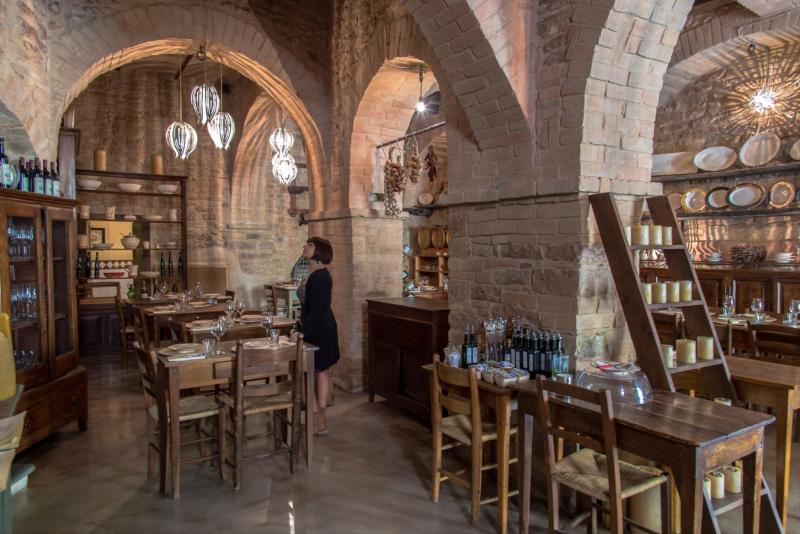
After so much art, baggiana — a soup of broad beans, tomatoes and basil — will bring you back down to earth, accompanied by the authentic flavours of white truffle and barrel-aged pecorino.
Why visit Città di Castello?
- To discover works by Raphael and Signorelli off the beaten track
- To discover Burri’s work
- To immerse yourself in a “borderland” Renaissance between Umbria and Tuscany
- To appreciate ancient crafts that are still alive today
- To savour wholesome local cuisine