
















Country Herbs
What can you find among the green fields and hills of Umbria? We present four country herbs with beneficial properties and authentic flavours, ready to be enjoyed in local recipes.
Rapunzolo

Let's start with the Rapunzolo (Campanula rapunculus), also known as Rapunzel or Raponzolo. It is a member of the Campanulaceae family, whose name is derived from the bell shape of its blue or lilac flowers. The seeds usually germinate in early autumn, and the plant can withstand very cold winters, even down to -13 °C. Rapunzel often grows in olive groves up to an altitude of 1,200 metres, but it is also possible to grow it in one's own garden, as long as one prepares fresh, fertile soil that is not too exposed to the sun. Thanks to its components, such as mineral salts, vitamin C and proteins, it has antiseptic and refreshing properties. The roots are particularly rich in inulin, which helps regulate blood sugar levels and improves lipid metabolism.
Want to try it raw? Try it with its tasty root on its own or in Misticanza:
- Preparation: 10 minutes
- Difficulty: Very easy
- Serving Size: 4 people
Ingredients:
- 500 g country herbs including: Ginestrella, Caccialepri, Crespigni and Pimpinellone
- Extra virgin olive oil
- Salt to taste
- Wine vinegar
The preparation of the recipe is very simple. Wash the vegetables well and remove excess water. Place everything in a bowl and season with oil, salt and vinegar. Now all you have to do is 'mix' the seasoned vegetables with two hands. The dish is ready to serve at the table.
In the recipe for Crostone al Rapunzolo it is first blanched and pan-fried:
- Cooking time about 30 minutes
- Difficulty Easy
- Servings Serves 4
Ingredients:
- 300 g Raponzoli
- 100 g caciotta-type cheese (semi-hard)
- Extra virgin olive oil to taste
- Butter to taste
- Salt to taste
- Bread
Blanch the raponzoli in salted water for about 15 minutes. Once ready, drain, squeeze and roughly chop them. Heat oil and butter in a pan and add the raponzoli. Sprinkle with caciotta cheese and let it melt just a little. Toast the bread slices and place the cooked and seasoned herbs on top. The crostoni are ready to serve at the table.
Chicory

Our exploration continues with chicory (Cichorium intybus), a country grass easily recognisable by its blue flowers that bloom from summer until late October. This plant is like a natural clock for shepherds: when its flowers begin to close in the afternoon, it is time to milk the grazing animals. Chicory grows in low mountains and adapts to various types of environment, from path margins to ruderal areas, from meadows to urban areas. This herb has been used for medicinal purposes for thousands of years, as demonstrated by the Egyptian papyrus Ebers, dating back almost four thousand years. The Greeks and Romans also knew of its therapeutic properties, such as Galen, who considered it beneficial for the liver, and Pliny, who praised its refreshing properties. Today, thanks to the presence of mineral salts, inulin and vitamins A, B and C, we know that chicory stimulates the appetite, regulates intestinal function and has a detoxifying effect on the body, especially on the liver and kidneys.
Some say that sautéed is the best way to eat it. Some even say it should be the only one. Opinions. In Spello, for example, they prepare it with potatoes, in this interesting recipe, Cicoria alla Spellana:
- Preparation and cooking time: about 1 hour
- Difficulty: Easy
- Servings: Serves 4
Ingredients:
- 500 g potatoes
- 100 g chicory
- 100 g bacon
- Salt to taste
- Oil to taste
- Pepper to taste
Boil the potatoes in previously salted boiling water for about 30/50 minutes, depending on their size. To check the cooking time, you can use a long wooden skewer or the tines of a fork. Once cooked, peel and coarsely chop them, drizzling them with oil while still hot. Meanwhile boil the previously washed chicory in hot salted water. Place the diced bacon in a pan with a little oil, let it brown for a few minutes and add the chicory and potatoes. Serve on a plate, seasoning with the cooking liquid from the bacon and a generous sprinkling of pepper.
Dandelion

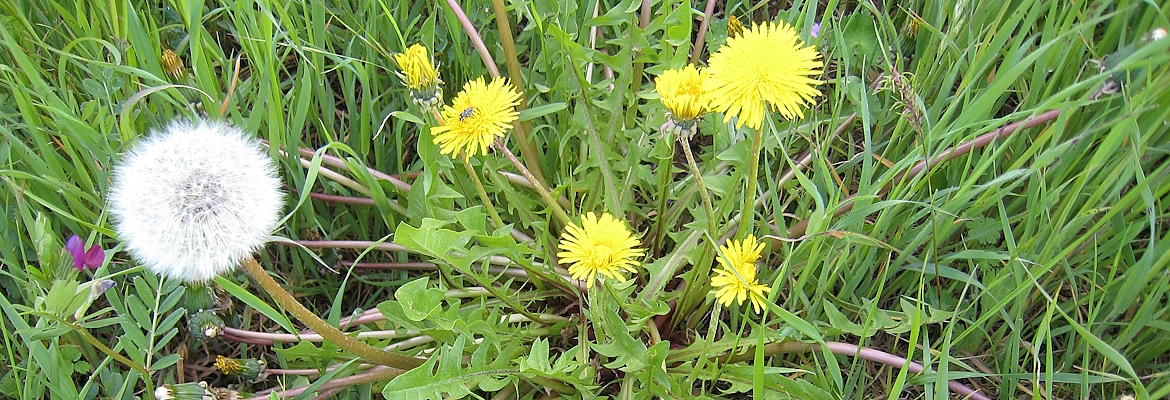
With its intensely yellow flowers, the Dandelion (Taraxacum officinale), also commonly known as the dandelion or puffball, is known for its characteristic white spherical shape at the end of the inflorescence, ready to be blown by both adults and children. This perennial herb has been known for its medicinal properties since ancient times; its name in Greek, "taraxakos," means "I heal." Dandelion is rich in proteins, vitamins, carbohydrates, and minerals, and among its many healing properties, its diuretic effect stands out, thanks to the high potassium content in its roots and leaves, which helps combat water retention. Furthermore, thanks to the presence of taraxacin, this herb facilitates and improves digestion.
We suggest you enjoy its flower buds in oil by preparing this recipe, Dandelion in Oil:
- Cooking Time: Approximately 10 minutes
- Difficulty: Easy
- Servings: 4 servings
Ingredients:
- 500g of Dandelion flower buds
- ½ liter of vinegar
- 2 glasses of dry white wine
- 2 tablespoons of coarse salt
Harvest the Dandelion flower buds, preferably tender and healthy. Remove the collar leaves and wash them gently. Boil ½ liter of vinegar with 2 glasses of dry white wine and 2 tablespoons of coarse salt in a pot. Once the water is boiling, add the Dandelion flower buds to the pot and let them boil for 5 minutes. Collect them with a slotted spoon, drain them from the cooking liquid, and place them on a cloth to dry. After a day, place them in small jars and cover them completely with olive oil. For proper preservation, it is recommended to remove all the air and ensure they are always covered with oil.
Wild Lettuce

Soft and spongy, Wild Lettuce (Sonchus asper) prefers fertile and fresh soils and doesn't adapt well to sandy ones. It grows near ruderal grounds, olive groves, vineyards, along the roadside, and even in urban areas such as sidewalks and old walls. Similar to dandelion, Wild Lettuce, also called Crespigno, was used in monasteries precisely for its purifying and diuretic properties and is particularly valued for its beneficial effect on facial skin. Furthermore, this plant is attributed with anti-inflammatory, toning, and antipyretic properties.
We suggest the recipe for Pureed Dried Fava Beans with Wild Lettuce:
Cooking time: about 2 hours
Difficulty: Moderate Servings: 4 people
Ingredients:
- 500g dried fava beans
- 500g wild lettuce
- 100g wild chicory or dandelion
- 1 onion
- 1 clove of garlic
- 1 yellow carrot
- 1 stalk of celery
- 2/3 potatoes
- Salt to taste
- Chili to taste
- Oil to taste
Peel the potatoes, cut them roughly, and boil them in boiling water for about 20 minutes. Meanwhile, clean the wild lettuce and wild chicory thoroughly, removing any residues, and boil them for about 15 minutes until the ribs are tender. Save the cooking water for use as vegetable broth to cook the dried fava beans. In a pan with a drizzle of oil, sauté the coarsely chopped onion, carrot, and celery with the garlic and chili. Add the dried fava beans that you soaked overnight and cook them for about 2 hours over low heat, adding the cooking water from the vegetables. Add the cooked potatoes and let them season for a few minutes. Transfer the mixture to a blender and add raw oil. Place the resulting puree on a plate, laying the previously cooked vegetables on top and seasoning with raw oil. To make it crispy, you can garnish the dish with slices of toasted bread.
If you are interested in learning more about them or how to recognize them correctly – which is very important – and understand how to collect them, visit the website of the Academy of Wild Field Herbs or follow their Facebook page.