








.jpg/e9571273-0e35-1ff2-0713-76c7fd4e3cc5?width=456)

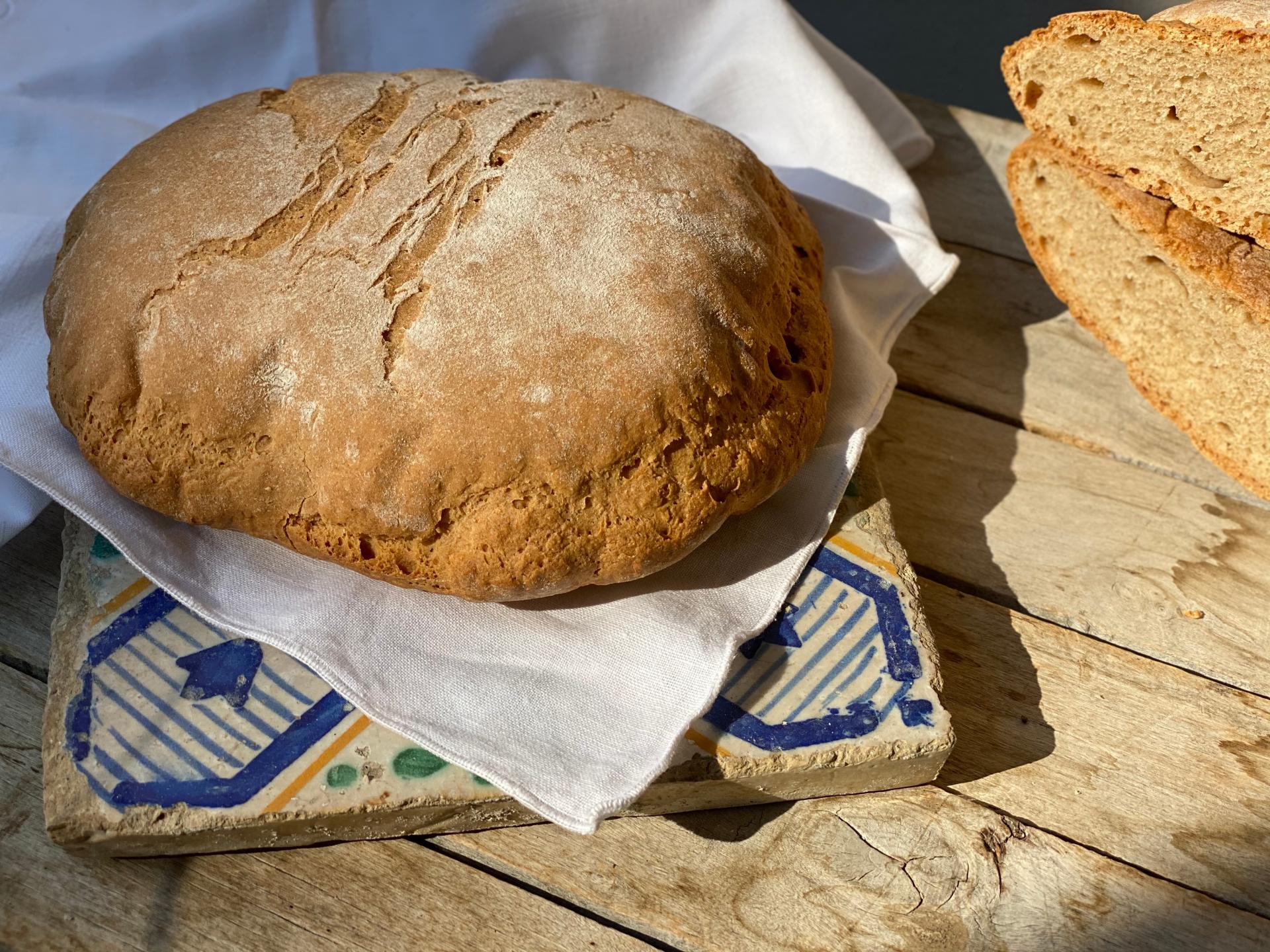
Spelt is cultivated in the hilly and mountainous areas of Umbria, with the most renowned variety being that of Monteleone di Spoleto, which obtained PDO (Protected Designation of Origin) status in 2010.
According to legend, it was Saint Nicholas of Bari who brought spelt to Monteleone di Spoleto to help the impoverished population. Although this tale is likely a reinterpretation of an event originally set in the town of Mira, archaeological evidence confirms the ancient presence of spelt in the area: in the Etruscan “chariot tomb” (6th century BC) found in Monteleone, tools used for grain processing and spelt grains were discovered.
The Etruscans used spelt to prepare polentas, unleavened flatbreads, and soups. One of the most famous recipes was puls, a dish also popular in ancient Rome, made by toasting the grains, grinding them, and boiling them, sometimes with the addition of legumes.
Dissolve the brewer’s yeast in a cup of lukewarm water and mix it with olive oil and salt. Place the spelt flour on a work surface, add the liquid mixture, and combine all the ingredients.
Knead the dough vigorously until it reaches a smooth consistency, then transfer it to a bowl, cover with a tea towel, and leave it to rise for about two hours, until it has doubled in volume.
Divide the dough into portions and shape into small rolls. Let them rise again for 30 minutes in a glass container covered with cling film.
Place on a baking tray lined with baking paper and bake in a preheated oven at 190°C for about 40–50 minutes.
Photo Credits: Arianna Grillo