




.jpg/e9571273-0e35-1ff2-0713-76c7fd4e3cc5?width=456)

The city of Orvieto rises on the tufa plateau known as La Rupe, overlooking the valley of the Paglia river, a tributary of the Tiber river.
Its identity lies in the unique relationship between what is visible and what is hidden. Medieval streets, papal palaces and the cathedral—a Gothic masterpiece that is a hymn to light and colour—form the surface layer. Beneath it lies a mirrored world of crypts, cisterns and Etruscan caves. Such a rare and accomplished balance earned the city its nomination, in 2006, for inclusion in the UNESCO World Heritage List.
Historical notes: rise, decline and rebirth on the cliff
The origins of Orvieto lie in a prehistoric settlement which evolved into the ancient and powerful Velzna, a flourishing Etruscan metropolis and seat of the Fanum Voltumnae, the federal sanctuary of the Etruscan League. Its prosperity came to an end with the Roman conquest in 264 BC. Administrative reorganisation and new trade routes, which favoured river transport, condemned Volsinii Vetus to gradual decline, relegating it to the margins throughout the Late Antique and early medieval periods, marked by successive dominations.
In the early Middle Ages the cliff once again became a natural stronghold, where the citadel of Ourbibentos was founded. Around the year 1000, the linguistic evolution of this name gave rise to the designation Urbs Vetus (“Old City”), from which the present-day name Orvieto is derived.
The attainment of the status of free commune, formally recognised in 1137 and confirmed by an official act in 1157, marked the beginning of a new phase of political and economic development. This period reached its peak in the 13th and 14th centuries, when the city experienced a remarkable flourishing of culture, institutions, and architecture.
The Middle Ages, however, also represented a period of civil and religious conflict between noble families and the Papacy. This came to an end with the intervention of Cardinal Albornoz, who in 1354 reasserted papal control by building the fortress that still bears his name, rising above the cliff.
Orvieto maintained its communal independence until 1499, when it definitively became part of the Papal States. It remained under their rule—except during the Napoleonic period, which provoked an uprising of its inhabitants—until the establishment of the Kingdom of Italy.
In the footsteps of ancient Velzna
Orvieto is a privileged destination for discovering Etruscan civilisation, having risen on the ruins of the ancient and powerful Velzna. The historic centre preserves a rich museum heritage that retraces the life, culture and religious practices of this refined people.
Three institutions are essential for exploration: the Claudio Faina Museum, with its outstanding collection of ceramics; the Civic Museum, which displays precious epigraphic evidence and artefacts of daily life; and the National Archaeological Museum, home to the majestic architectural remains of the Temple of Belvedere and finds from the Fanum Voltumnae.
Just outside the town, the necropolises form a veritable “city of the dead”. The Necropolis of Cannicella, with its sanctuary dedicated to a female deity, and the celebrated Necropolis of Crocifisso del Tufo, whose monumental tombs arranged in blocks still bear the names of great aristocratic families, offer a silent yet powerful account of Etruscan social organisation.
The journey ideally continues in the surrounding area, with frescoed tombs such as the Golini Tombs and the Tomb of the Hescanas, places which, through their wall paintings, reveal both the Etruscan vision of the afterlife and their extraordinary artistic skill.
The city in the rock and its medieval heart
The morphology of Orvieto is entirely determined by the volcanic plateau that serves as a stable and defensible geological platform—the physical basis for the development of a fortified urban centre of strategic importance.
The Cathedral: the Gothic soul of Umbria
Orvieto Cathedral, the undisputed masterpiece of Italian Gothic architecture, is an unmissable landmark. Its façade, characterised by alternating white travertine and black basalt bands, stands as the quintessential symbol of the city. Construction began in 1290 under Pope Nicholas IV, directed by Fra Bevignate of Perugia, but the façade was only completed in the mid-16th century with the refined bas-reliefs by Ippolito Scalza.
Inside, highlights include the Chapel of the Corporal, frescoed between 1357 and 1364 by Ugolino di Prete Ilario, which houses the reliquary by the Sienese goldsmith Ugolino di Vieri containing the blood-stained linen of the Miracle of Bolsena (1263). Also unmissable is the Chapel of San Brizio, frescoed by Fra Angelico and Luca Signorelli, whose powerful apocalyptic and Last Judgement scenes mark one of the pinnacles of Italian Renaissance painting.
The architecture of communal independence
With the rise of municipal autonomy in the 13th century, Orvieto experienced an intense period of urban renewal, which gave shape to palaces that became symbols of civic sovereignty:
- Town Hall: built between 1216 and 1290, and later renovated by Ippolito Scalza, it still shows its medieval origins in the seven rounded arches of the ground floor. Next to it stands the Church of Sant’Andrea, with its distinctive twelve-sided bell tower, completing the complex.
- Palazzo del Popolo: constructed between the 13th and 14th centuries as the residence of the Capitano del Popolo, it preserves traces of Etruscan walls and a medieval aqueduct on the ground floor. The Sala dei Quattrocento, decorated with historical frescoes, is today a prestigious venue for conferences.
- Palazzo dei Sette: built at the end of the 13th century to house the magistracy of the Signori Sette, the consuls representing the guilds. A focal point of medieval political and civic life, it was renovated in the 16th century with the addition of a grand portal and majestic staircase. Restored again at the end of the 20th century, it now hosts numerous exhibitions and cultural events.
- Torre del Moro: a 47-metre-high tower built around 1200 in the heart of the city, at the crossroads of its four quarters (Corsica, Serancia, Olmo and Santa Maria della Stella). Initially called the Torre del Papa, it owes its current name to Raffaele di Sante, known as “Il Moro” from Viterbo, owner of the adjacent Palazzo Gualtiero.
Palaces asserting papal control
The influence of the Papacy profoundly shaped Orvieto, leaving its mark on the urban fabric through palaces and fortresses that asserted papal authority.
- Bishop’s Palace (977): commissioned by Pope Benedict VII, it served as the residence of numerous popes. Today it houses the National Archaeological Museum, with the precious Golini Tombs dating back to the 5th century BC.
- Adjacent to it is Palazzo Soliano, also known as the Palace of Boniface VIII. It hosts the Emilio Greco Museum and, on the upper floor, the Museo dell’Opera del Duomo.
- Rocca Albornoziana (1364): a quadrilateral fortress, it was a symbol of papal control. Of the original structure, only the perimeter walls and towers remain. Today the site is home to the Public Gardens.
Churches: layers of history and faith
- San Giovenale (1004): one of the oldest churches, built over an Etruscan temple and an early Christian building.
- Sant’Andrea (1013): next to the Town Hall, it houses a museum itinerary spanning from the Bronze Age to the Christian era. Its most distinctive feature is the twelve-sided bell tower.
- San Domenico (1233): preserves the original apse, the chair of Saint Thomas Aquinas, and the mausoleum of Cardinal De Braye, a masterpiece by Arnolfo di Cambio with a statue of the Virgin remodelled from a 2nd century BC Roman sculpture.
- San Francesco (c. 1240): its Baroque appearance conceals 13th-century origins. The adjoining convent houses the Municipal Library.
- San Lorenzo de’ Arari: built around the year 1000 on an Etruscan altar, it features a 15th-century portal set into a Romanesque tufa façade.
Orvieto Underground: ingenuity beneath the surface
The city reveals its most ancient history and engineering genius in the underground chambers carved into the tufa.
- Orvieto Underground: a labyrinth of caves, quarries and chambers excavated over more than 2,500 years, starting with the Etruscans. A journey through the city’s stratification.
- Wells and cisterns: complexes such as the Pozzo della Cava and Adriano’s Labyrinth showcase extraordinary Etruscan hydraulic expertise, with a network of tunnels and reservoirs designed to secure the water supply.
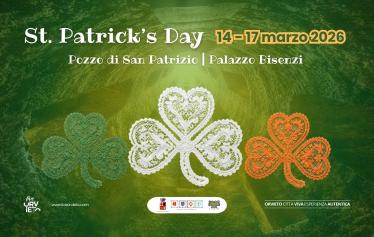
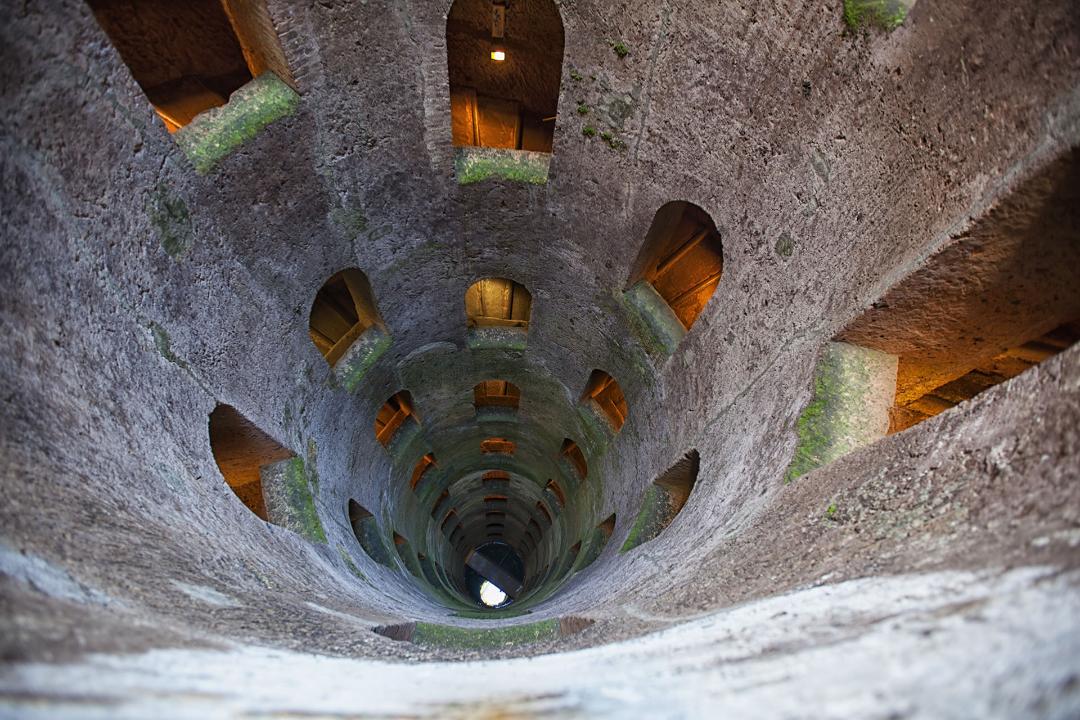
- Pozzo di San Patrizio: a masterpiece of Renaissance engineering commissioned by Pope Clement VII. In 1527 Antonio da Sangallo the Younger conceived a 62-metre-deep structure featuring two independent helical staircases—an ingenious solution to regulate the flow of those descending to fetch water and those climbing back up.
Intermodalità: Per visitare Orvieto è attivo Orvieto Link, il nuovo servizio intermodale funicolare+treno (Busitalia/Trenitalia) che rende ancora più semplice raggiungere il centro storico di Orvieto.