






.jpg/e9571273-0e35-1ff2-0713-76c7fd4e3cc5?width=456)


Chiesa di Santa Maria Assunta - Allerona
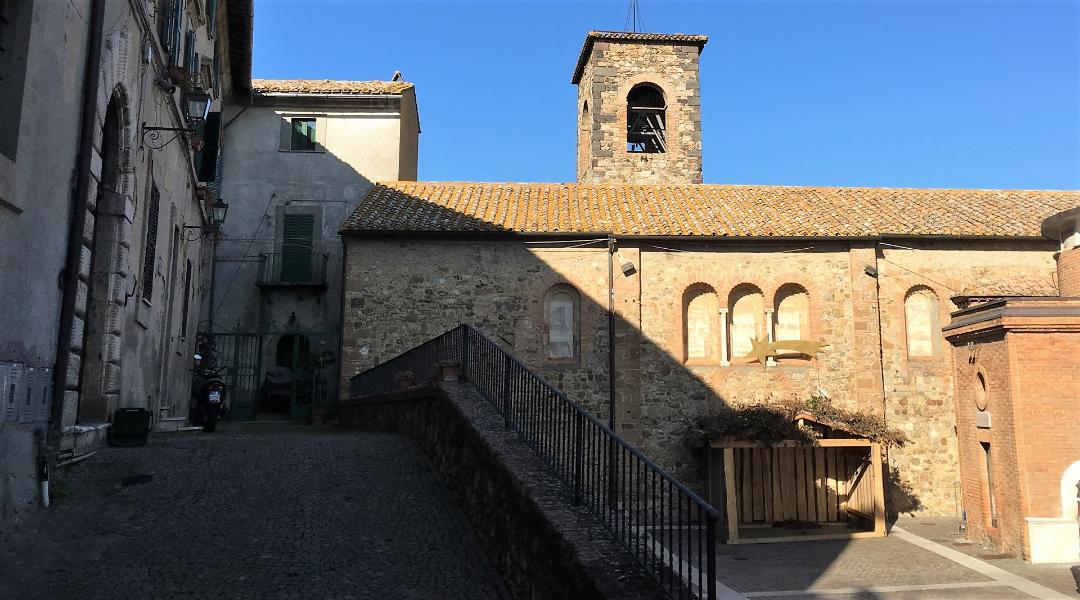
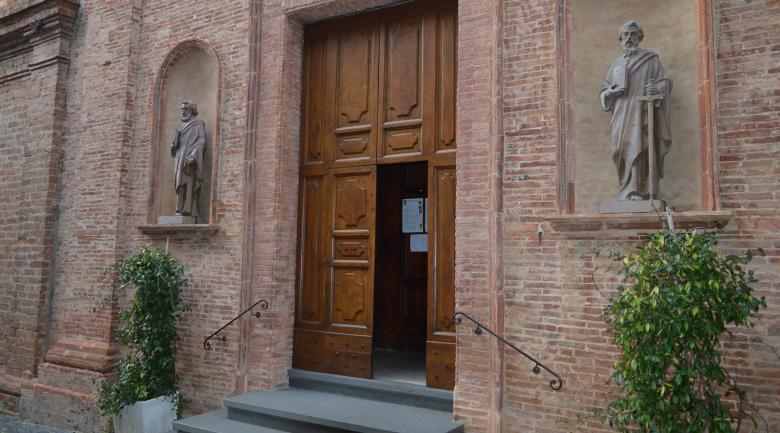
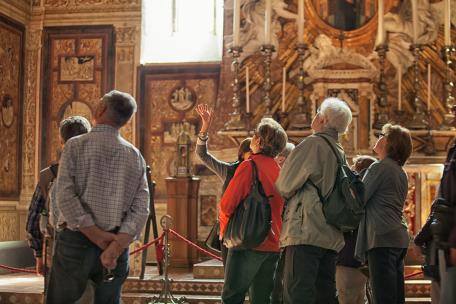
In the heart of Allerona's historic centre stands the Parish Church of Santa Maria Assunta, a fascinating tapestry of history woven from the Middle Ages to the nineteenth century. Its interior safeguards masterpieces from the Renaissance alongside the aesthetic ambitions of Neoclassicism.
An Artistic Patrimony
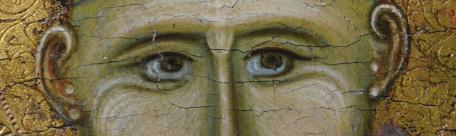
While its origins date back to the 12th century, it was in the late 15th century that the church was endowed with significant works. On the cusp of the 16th century, it was adorned with a precious panel by Nicolò Alunno, depicting the Virgin Mary Assumed into Heaven amidst glorifying angels. Originally, this polyptych was complemented by two side panels featuring Saint John the Baptist and Saint Sebastian, now housed in the National Museum of Castel Sant'Angelo in Rome.
Shortly thereafter, in 1516, the widow of the condottiero Bartolomeo d'Alviano, Pantasilea Baglioni, commissioned a fresco from Giovanni Antonio de' Sacchis, known as Il Pordenone. The work, which portrays the noblewoman in adoration before a Madonna and Saints, confirms the church's status as a site of prestige and patronage.
The Nineteenth-Century Renovation
The church's current appearance is the result of a radical restructuring between 1882 and 1896, based on a design by the Orvieto engineer Paolo Zampi. His was an audacious and erudite choice: an architecture that evoked the medieval style, with a polychrome truss roof inspired by ancient rural churches of the region.
Inside, Zampi conceived a single-nave space, enhanced by an extraordinary series of terracotta artefacts—altars, ambo, holy water stoup, choir loft, and balustrades—crafted by the renowned Perugian workshop of the artists Angeletti and Biscarini. A rhythmic sequence of single and triple-light windows on the walls filters light through finely worked alabaster.