The architecture: between military and sacred
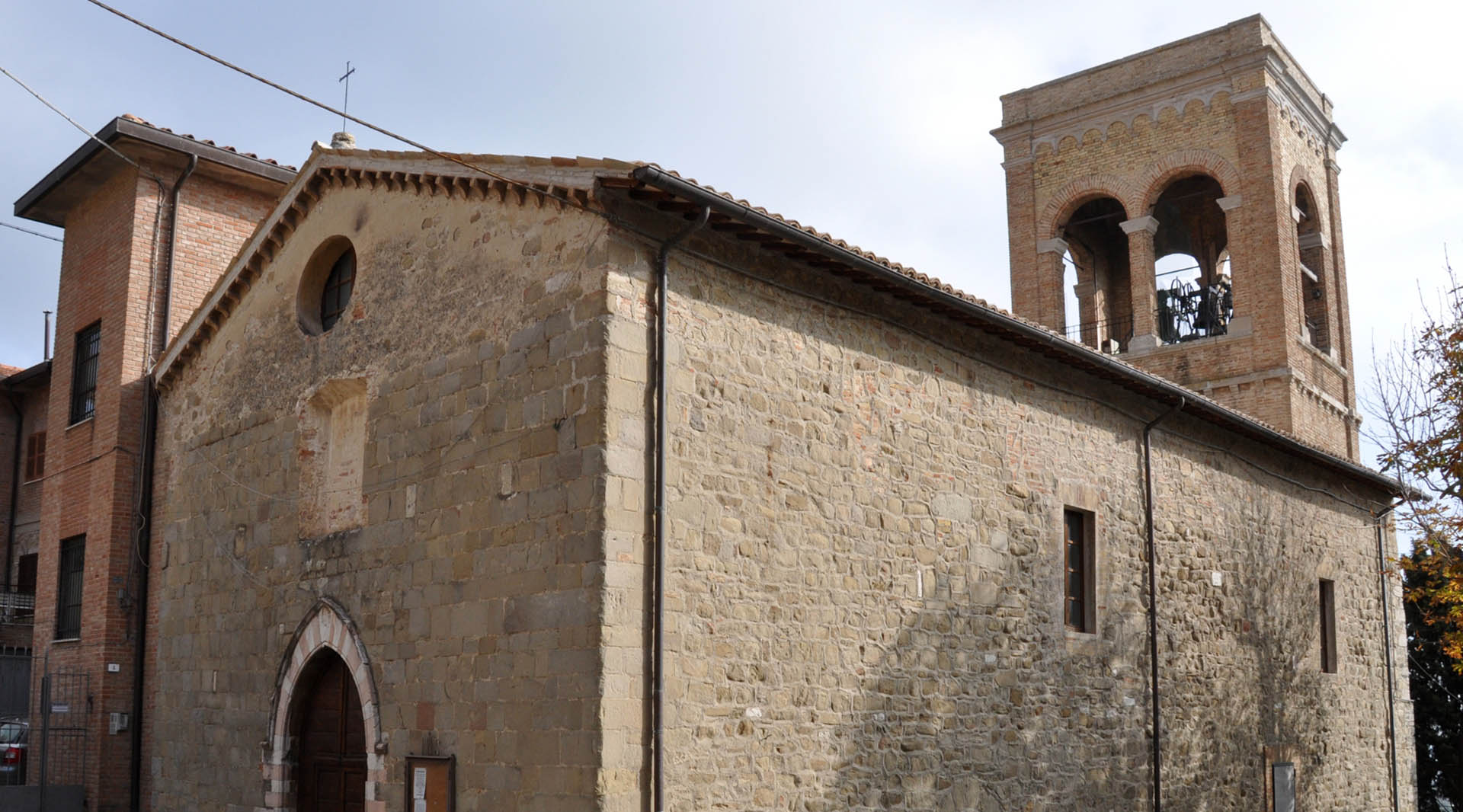
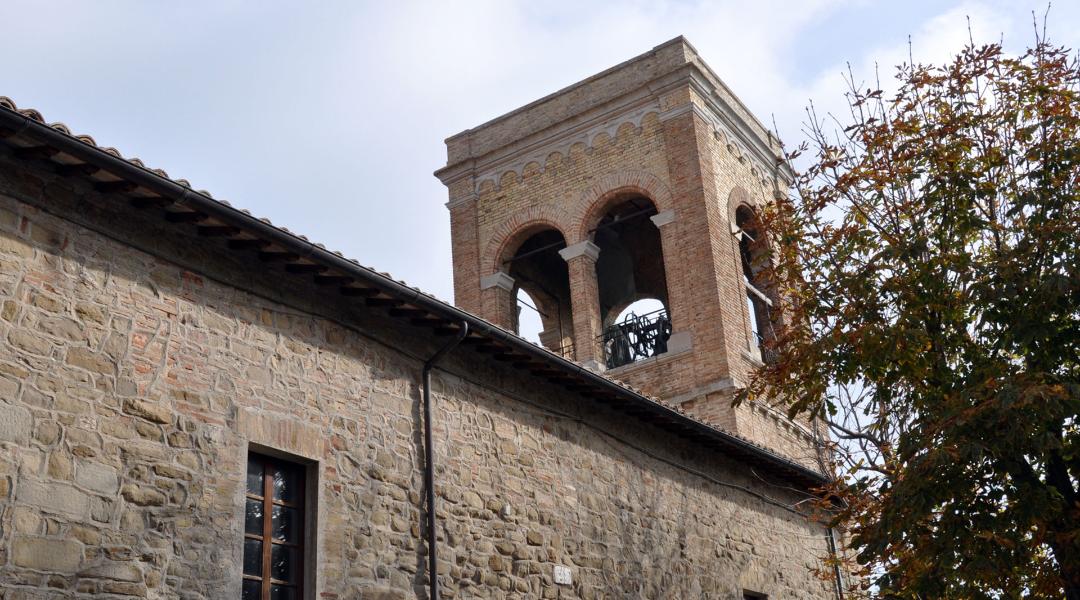
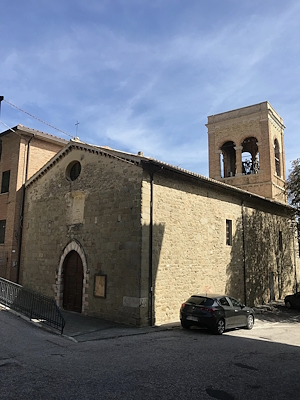
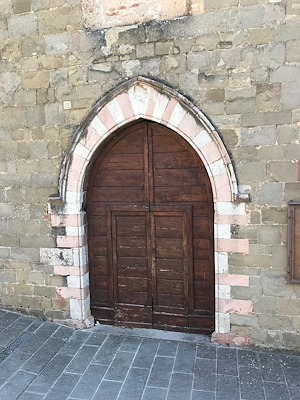
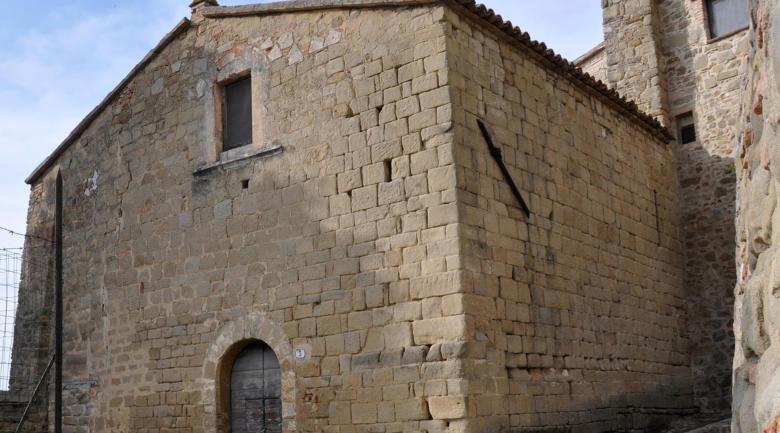
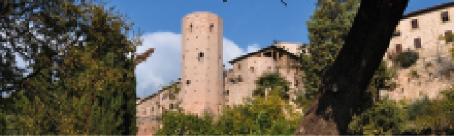
The façade, austere and built in sandstone blocks, is opened by an elegant ogival portal in pink and white stone, crowned at its centre by an image of Saint Michael the Archangel, the patron of the municipality. The most striking feature of this dialogue between the sacred and the defensive is the bell tower, which does not simply stand beside the church but incorporates the apse within its structure, being built on the solid base of an ancient defensive tower. Outside, a careful eye can spot, set into the side wall, a carved stone depicting a fish — an early Christian symbol.
The interior: simplicity and surviving masterpieces
Beyond the portal, the single-naved interior stands out for its simplicity. The space, ending in a rectangular apse covered by a groin vault, is dominated by a fine wooden truss ceiling. Its current bareness is not the result of time, but of history: during the plague of 1620, the walls were whitewashed to sanitise the building, sacrificing the frescoes for the sake of survival.
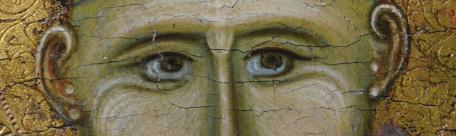
Not everything was lost, though. In a side chapel survives a fresco of extraordinary power: the Crucifixion of 1482, created by the workshop of the Foligno painter Nicolò di Liberatore, known as “l’Alunno”. The work, rich in devotional intensity, shows Christ between the Virgin, Saint John, Saint Augustine and Blessed Ugolino, whose cell was once located in this very church. The scene is animated by weeping angels collecting Christ’s blood, while others cover their faces in sorrow.
Alongside this fifteenth-century masterpiece, the church preserves an important cycle of seventeenth-century paintings: two works by Andrea Polinori (Saint Catherine of Alexandria and Saint Augustine), a Madonna of the Rosary by the Todi painter Pier Paolo Sensini, and a Purgatory by the Bolognese artist Francesco Providoni.







.jpg/e9571273-0e35-1ff2-0713-76c7fd4e3cc5?width=456)