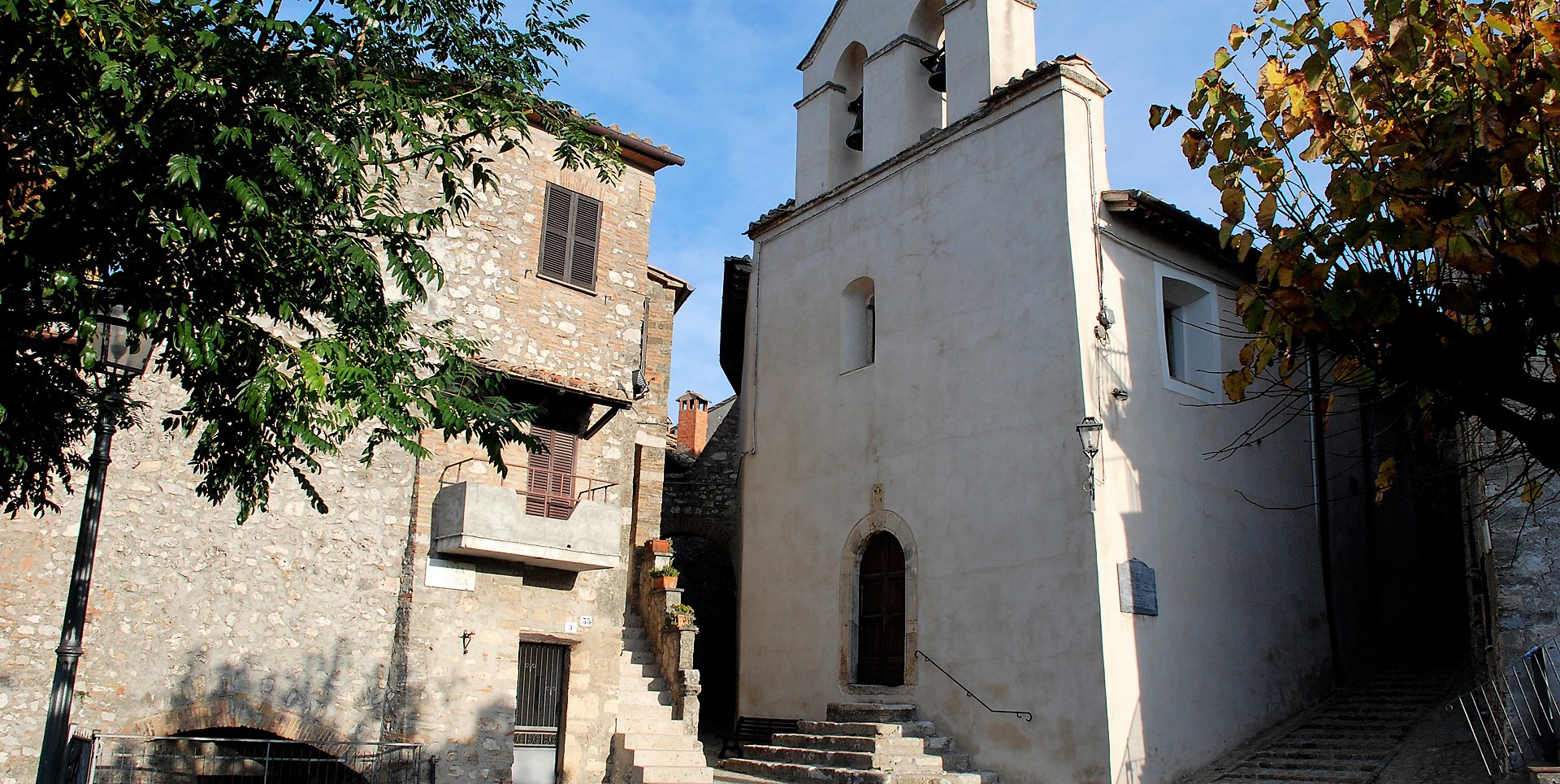
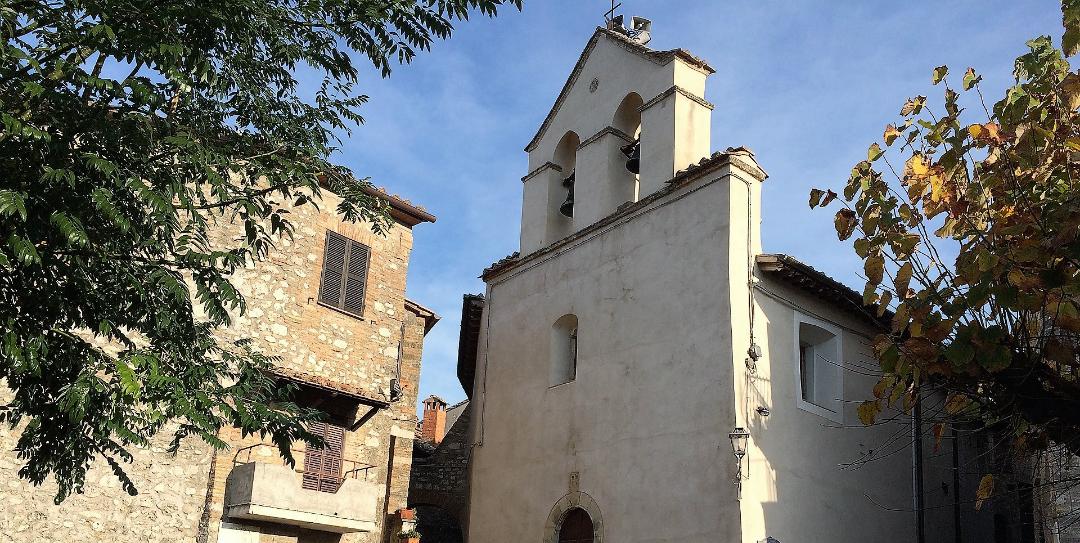
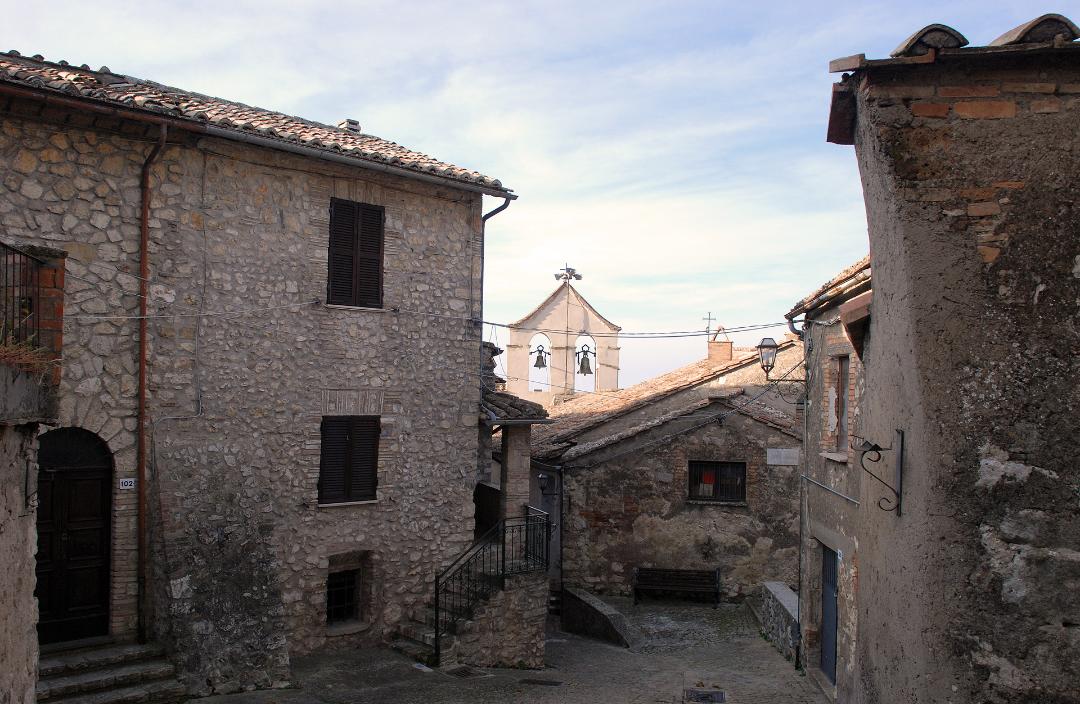
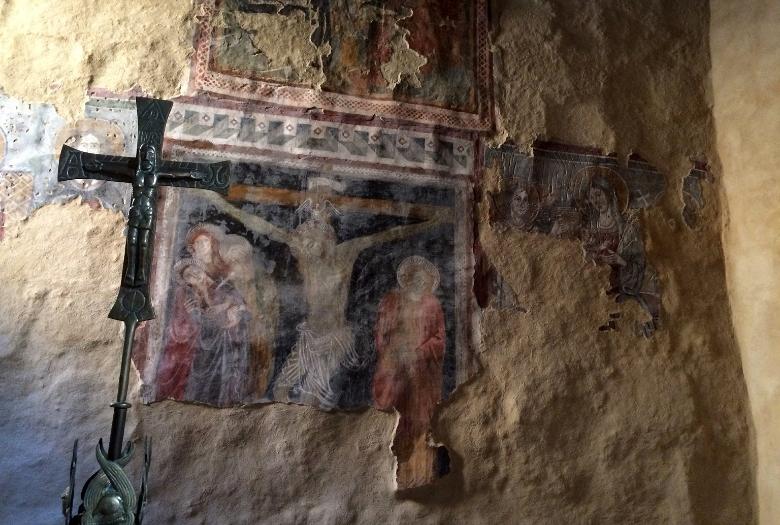
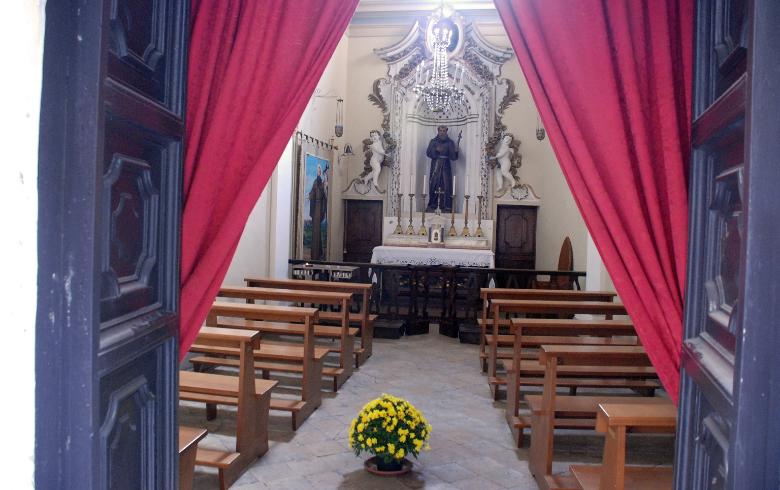
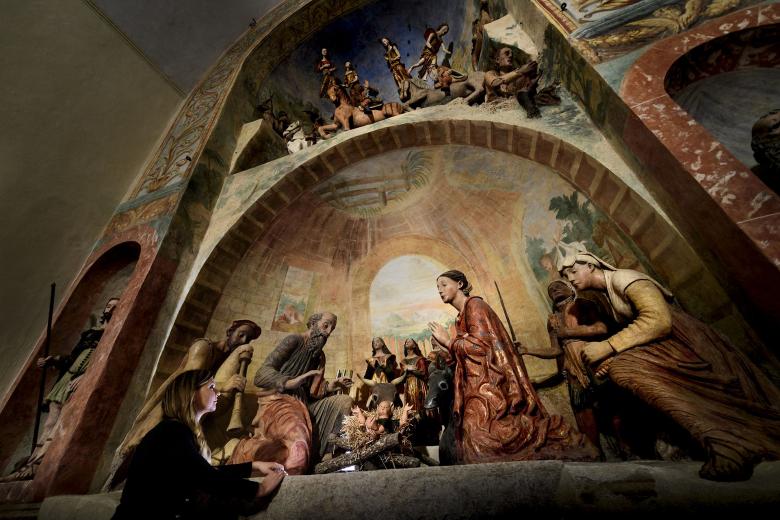
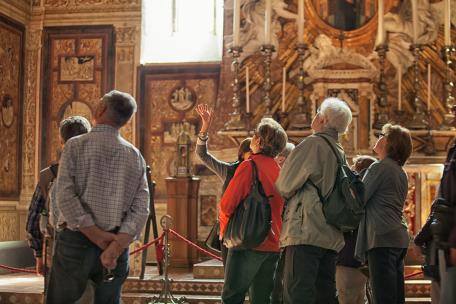
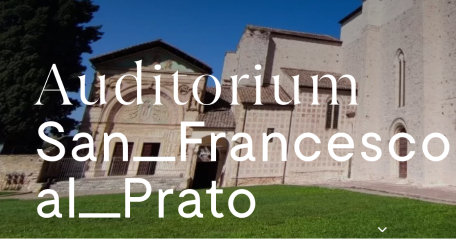
Inside, the rectangular hall, covered by cross vaults, is flanked by a side chapel, the only remaining part of the original late-medieval layout. The space is divided into two vaulted bays. Ancient inventories record the presence of fifteen reliquaries, including one containing relics of Saint Nicholas. Although most of the artworks have been lost (some are documented in a 20th-century publication), restoration works have brought to light fragments of 15th-century frescoes and reopened niches once sealed off to make room for Baroque altars. One of these niches once featured Saint Anthony Abbot, protector of animals; today, only the pig at his feet remains — a typical element of the saint’s iconography, especially venerated in this agriculturally rooted area.
The Devil and Holy Water
Near the entrance are two significant 16th-century works: a baptismal font and a holy water stoup. The latter, decorated inside the basin with two fish and a serpent carved in stone, symbolically represents the eternal struggle between the faithful (the fish) and the snares of evil (the demonic serpent).
This symbolic dualism — the serpent as an emblem of evil opposed to the fish, an ancient Christological symbol — transforms the simple act of making the sign of the cross into a powerful allegory of redemption.








.jpg/e9571273-0e35-1ff2-0713-76c7fd4e3cc5?width=456)