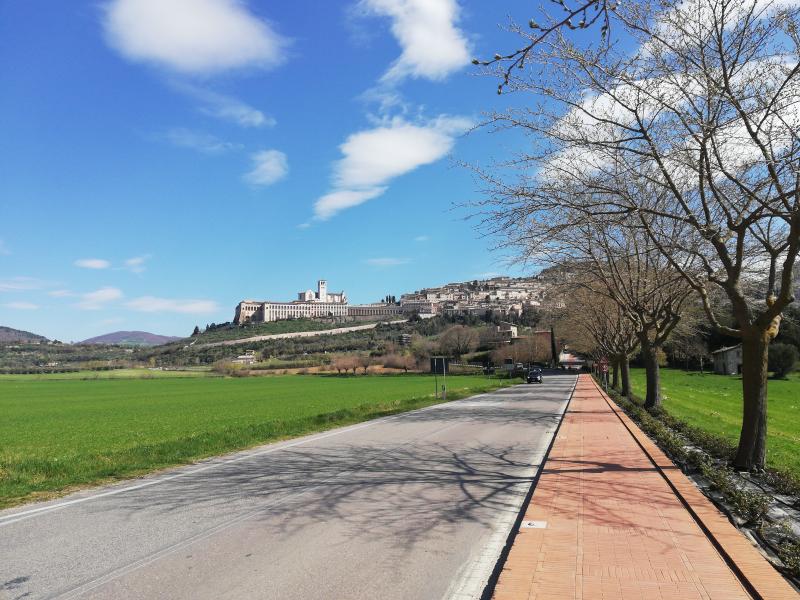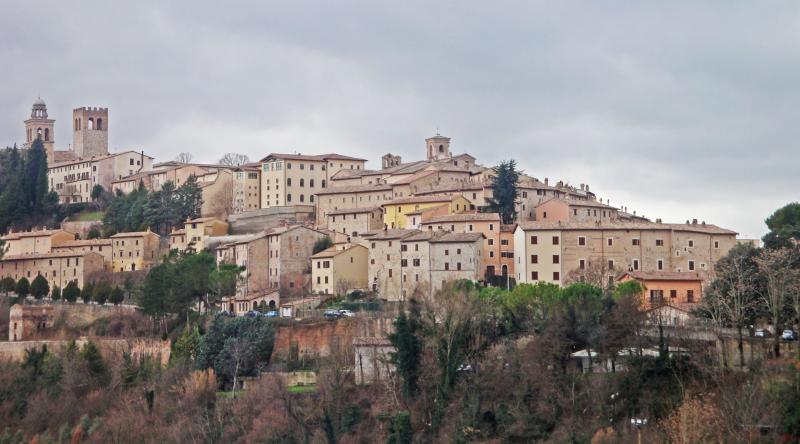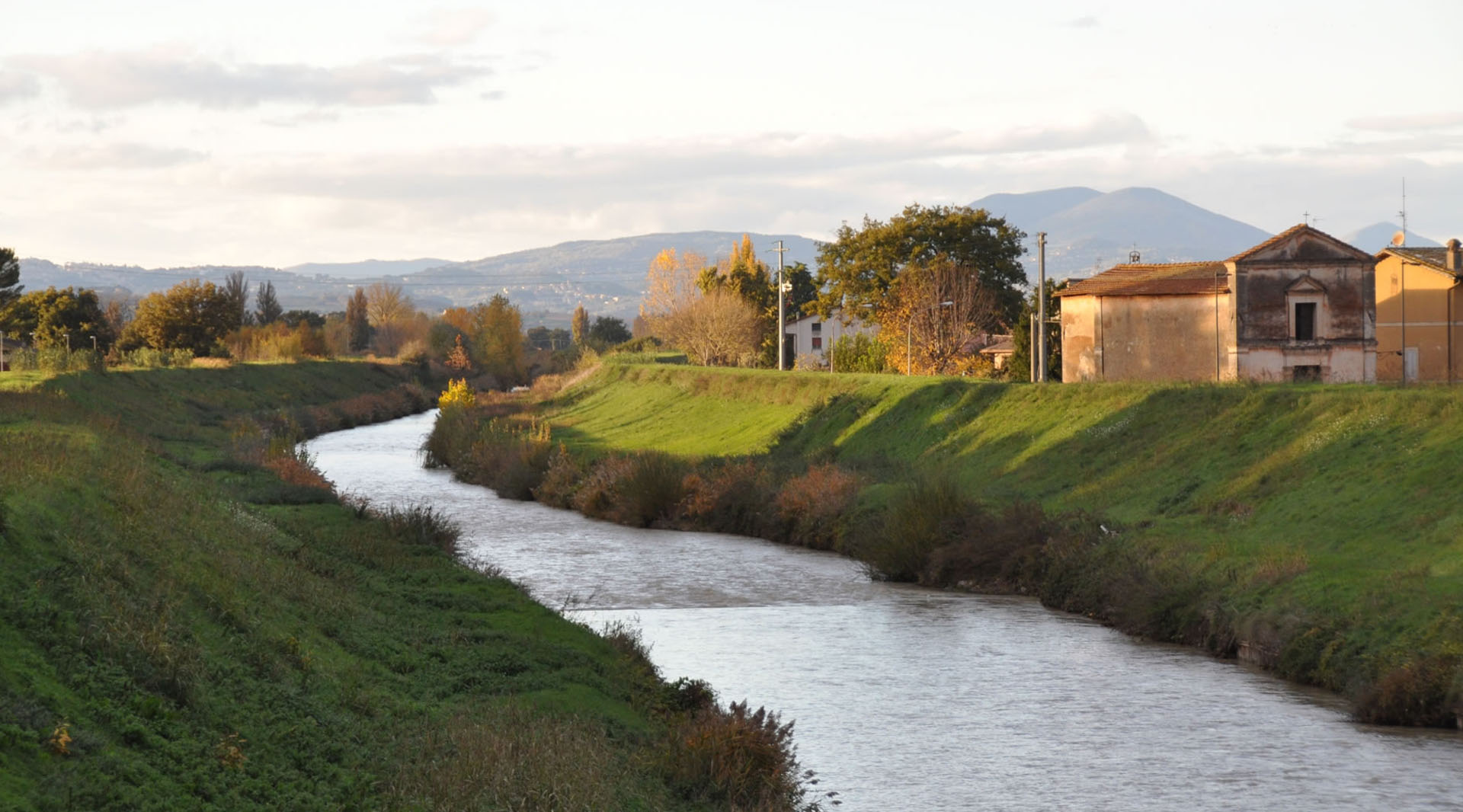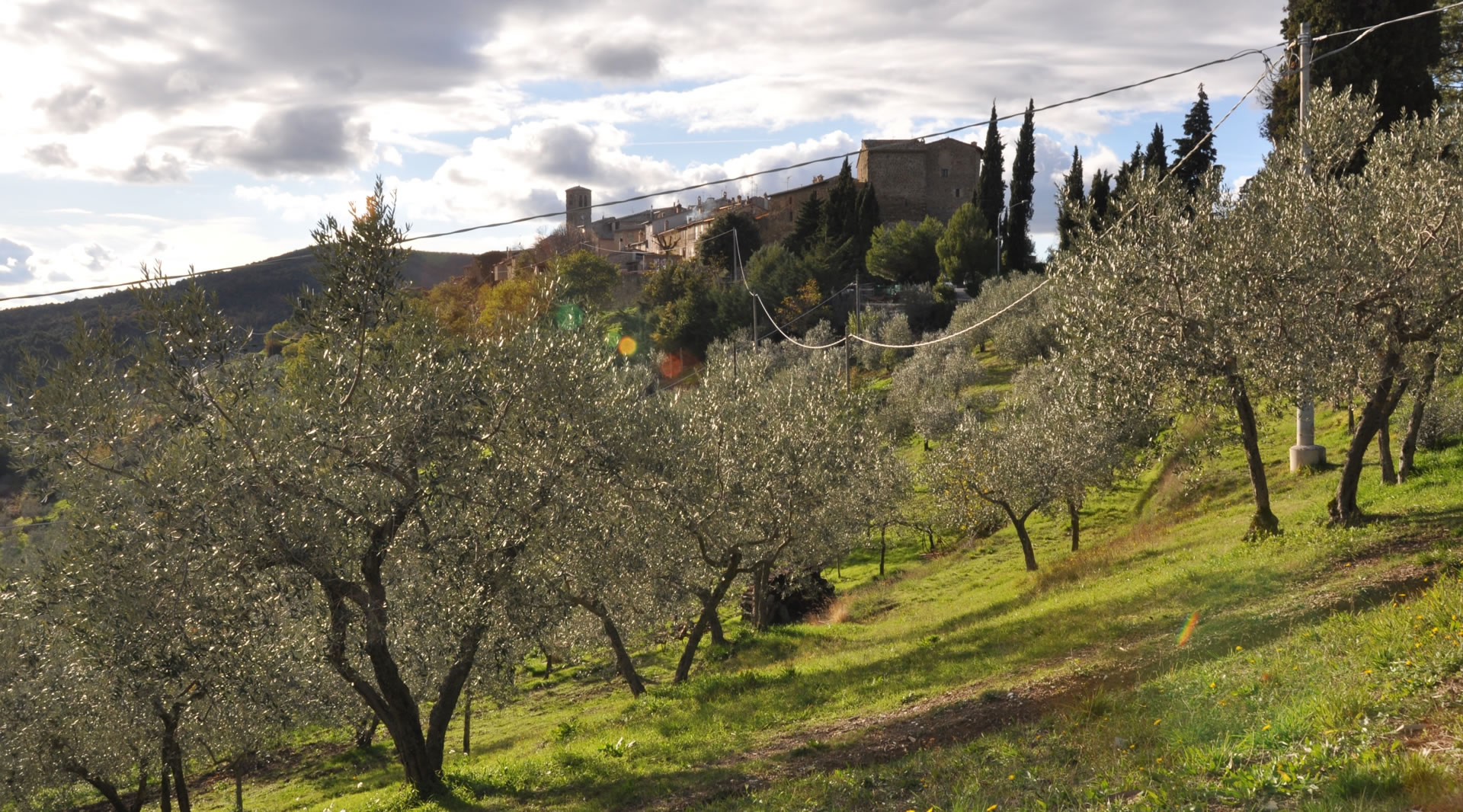




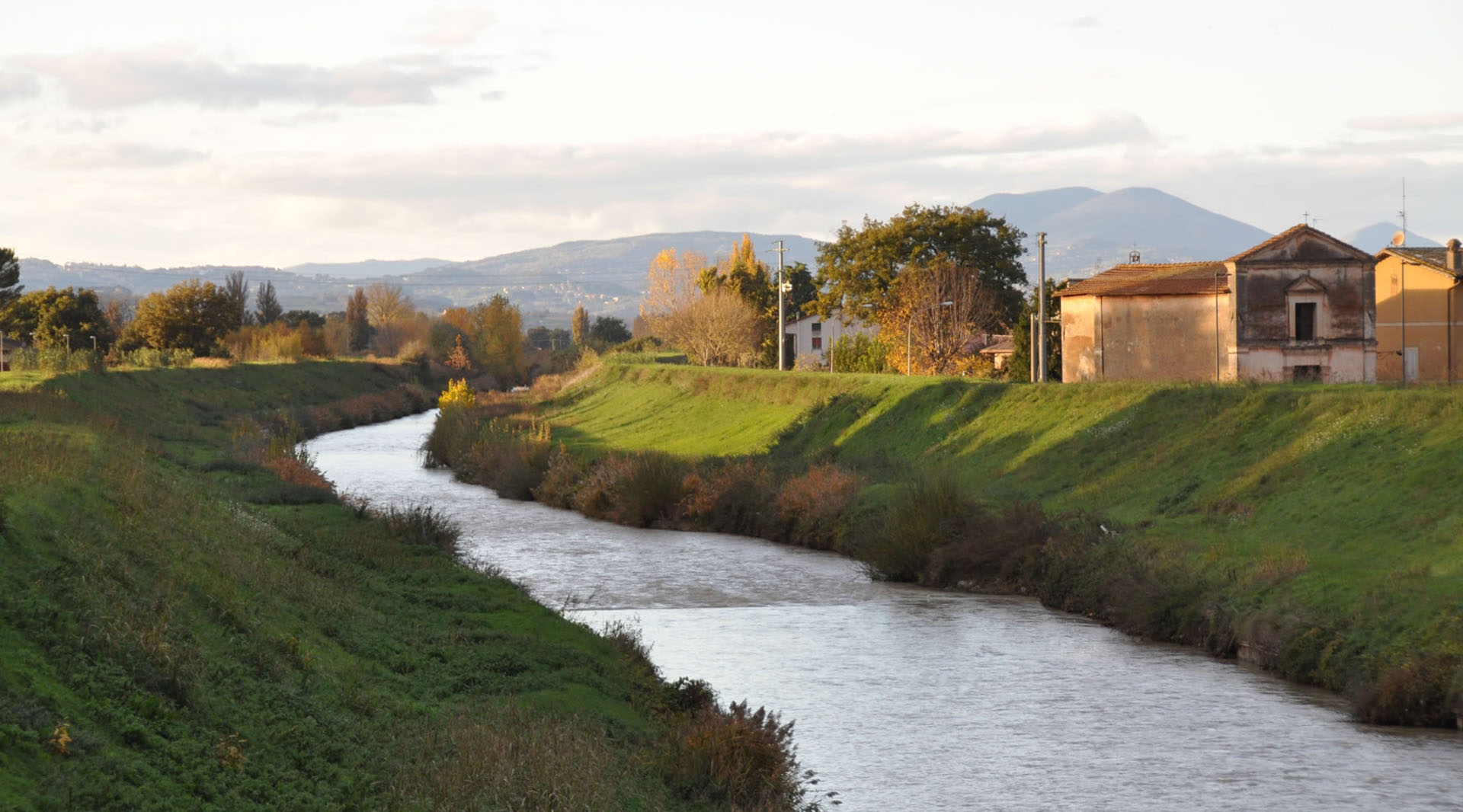
Located in the heart of Umbria, Cannara lies on the left bank of the Topino River, at the centre of the Valle Umbra, facing Assisi and Spello. According to tradition, its name comes from the abundance of reeds that once grew along the marshy areas of the Topino.
An Umbrian settlement, a Roman municipium, a medieval castle, the seat of a Signoria: the long history of Cannara
The origins of the settlement are most likely linked to the ancient Umbrian village of Castrum Canarii, perhaps established after reclamation works carried out by its inhabitants. This was originally, according to sources, a lacustrine area (the Lacus Umber of the Romans), characterized by an abundance of marsh reeds. During the Roman era, it became a municipium under the name Urvinum Hortense. After the fall of the Roman Empire and the Lombard invasion, the settlement moved down to the Topino plain, where a new centre was built with houses made of clay and reeds. Tradition has it that in 1171, Valerio Ranieri, a nobleman of the Guelph faction fleeing from Perugia, had a fortress built here. In fact, sources mention a castle with high walls and towers since the early Middle Ages, probably constructed due to the constant threat of expansion from nearby Assisi.
In 1221, according to tradition, Francis of Assisi established in Cannara the Third Franciscan Order and clothed its first follower, Blessed Lucio Modestini of Cannara. By then, the town had become a free Comune, and in 1291 it submitted to Perugia in exchange for protection.
In 1352 it became part of the Duchy of Spoleto, but as early as 1424 Braccio da Montone granted it to the Baglioni family of Perugia, who ruled until 1648, the year of the death of Malatesta V, the last descendant of that branch of the Perugian lords. The territory then became part of the Papal States, where it remained until the establishment of the Kingdom of Italy in 1860.
Slow steps through beauty
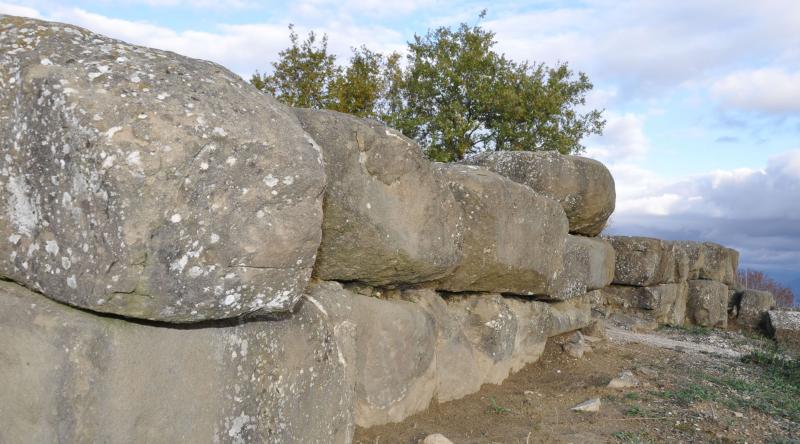
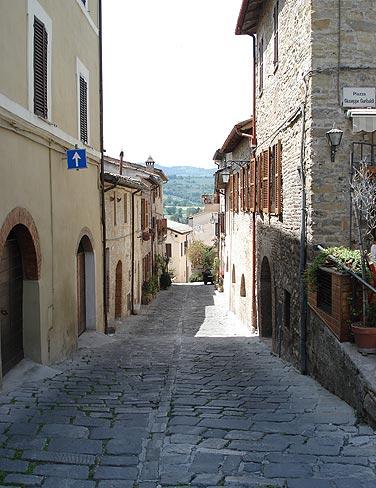
This ancient and well-preserved Umbrian village is ideal for slow walks through alleys and picturesque views. Only part of the medieval walls survives, including a tower and a circular bastion, but the urban layout is still perfectly intact.
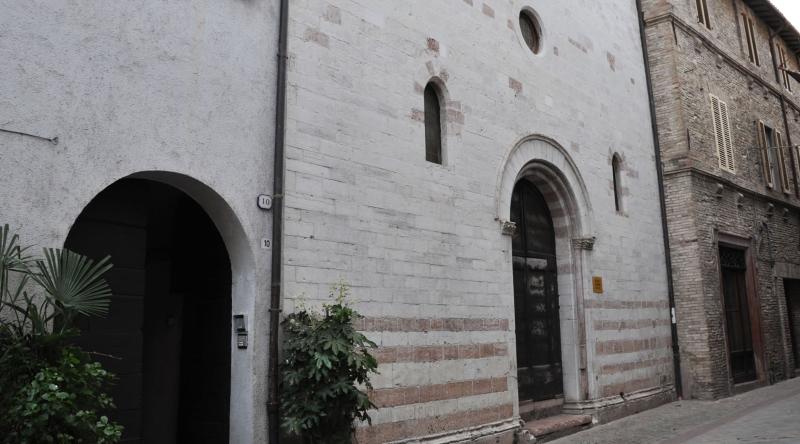
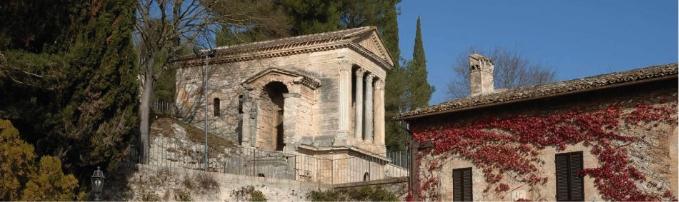
The bridge over the Topino River along Via Umberto I leads to the square of the same name, where visitors can admire the Town Hall and the 15th-century Civic Tower, bearing the coat of arms of the Baglioni family, lords of the city for more than two centuries. The Church of San Biagio, a fine example of late Umbrian Romanesque, preserves its 13th-century façade and a stone portal from Assisi. Also worth visiting is the 14th-century Church of San Matteo, completely rebuilt in the 18th century: inside it houses a triptych by Nicolò di Liberatore, known as l’Alunno (1430–1502), depicting the Madonna enthroned with the Child between St. Francis of Assisiand St. Matthew the Evangelist, along with other fine 18th-century paintings. The formerChurch of San Sebastiano, documented as early as 1184, now serves as the municipal auditorium.
The Church of San Giovanni Battista, dating to the 14th century but renovated around 1584, is also rich in artworks. Of particular note is the fine altarpiece depicting the Madonna and Child between St. John the Baptist and St. Sebastian, painted in 1482 by Nicolò di Liberatore (l’Alunno) and his son Lattanzio Pagani, in thanksgiving for deliverance from the plague by Marino da Cannara and his wife.
The former Salesian convent on Via del Convitto houses the Museo Città di Cannara (Museum of the Town of Cannara), displaying archaeological finds from the excavations of Urvinum Hortense, including a remarkable 65-square-meter mosaic from the baths of the ancient municipium, dating between the late 1st and early 2nd century AD. It depicts Nilotic scenes with exotic animals and lush vegetation as the backdrop for various figurative scenes. The central panel shows figures fishing, surrounded by marine animals. The museum also preserves numerous detached frescoes, paintings and sculptures by Umbrian artists such as Dono Doni and Marcantonio Grecchi.
Through the streets and churches of Cannara in the footsteps of the Poor Man of Assisi
Cannara is particularly rich in Franciscan memories. The Church of San Francesco was built in the 15th century to commemorate the saint’s presence in the town and the foundation of the Third Order, which tradition says took place here in 1221. This is also supported by an Umbrian vernacular version of The Little Flowers of St. Francis:
‘… ionsero ad uno castello che se chiama Cannaia […] Et ivi predicò con tanto fervore, che li homini et le donne de quello castello per grande devotione volevano andarli derietro et abbandonare el Castello […] Allora pensò de fare el Terzo Ordine per salute universale de tucti’.
(“… they came to a castle called Cannaia […] And there he preached with such fervor that the men and women of that castle, out of great devotion, wanted to follow him and abandon their castle […] Then he thought of establishing the Third Order for the universal salvation of all.”)
In Piazza IV Novembre, within Palazzo Majolica-Landrini, visitors can see the Sacro Tugurio, a small grotto where Francis stayed during his visits to the town. Once owned by the Majolica family and restored by the Landrini family on the seventh centenary of the saint’s death in 1926, it now houses the Regional Council of the Secular Franciscan Order and the OFS Fraternity of Cannara.
The Church of the Buona Morte, or of the Stigmata of St. Francis, is an enlargement of the small oratory where Francis of Assisi clothed Blessed Lucio Modestini of Cannara in the first habit of the Third Order. Its simple late-16th-century façade bears a plaque commemorating the event. Inside is the venerated wooden statue of the Black Madonna of Loreto, which for a time replaced the original, stolen by Napoleonic troops at the end of the 18th century.
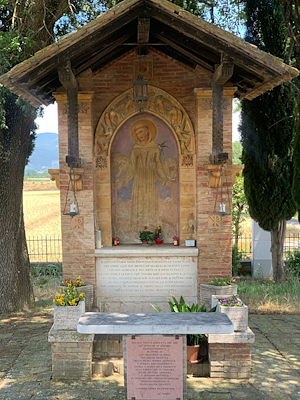
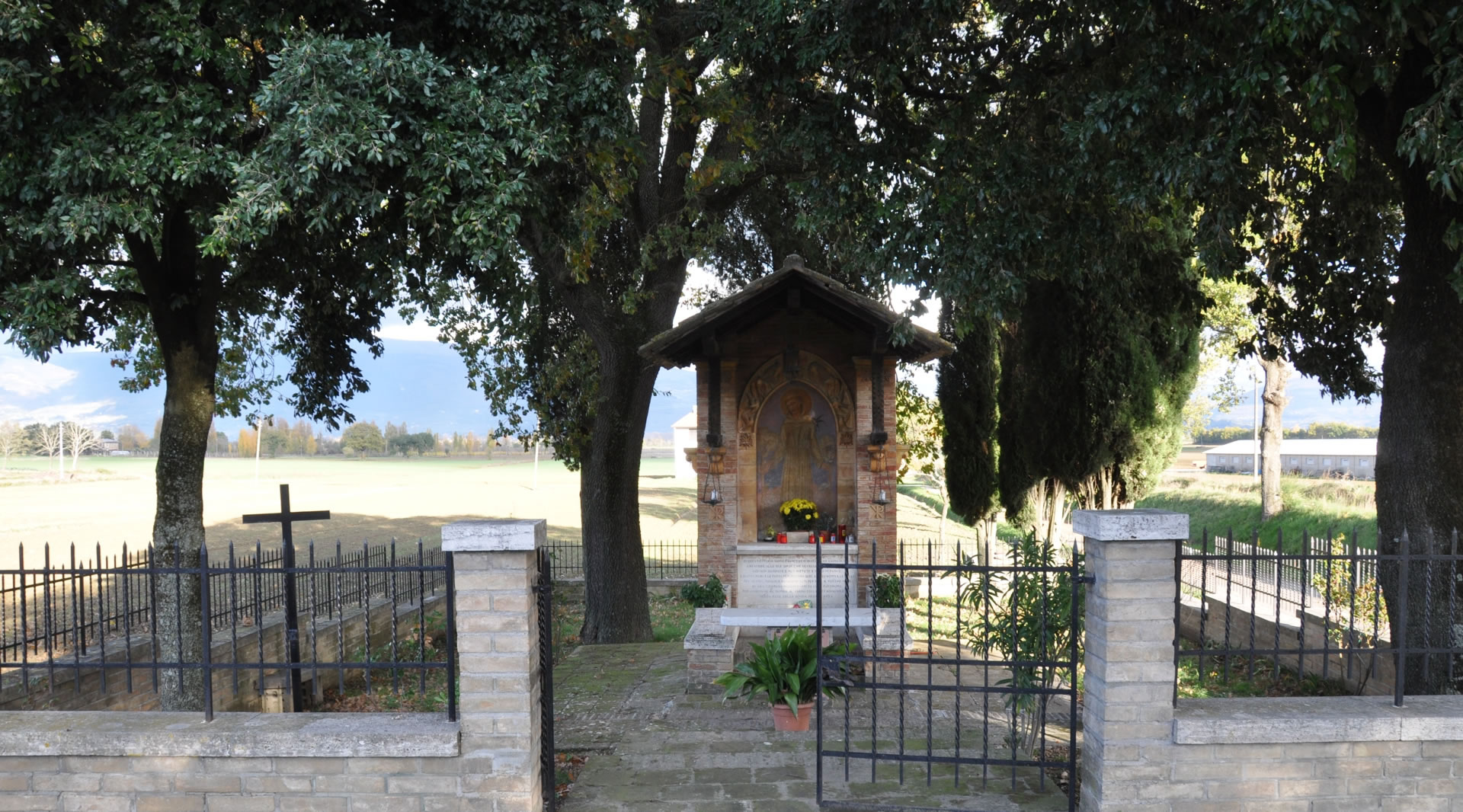
About 4 km from the town centre, along the road to Bevagna, stands the famous Piandarca shrine, built in 1926 for the seventh centenary of St. Francis’ death. Since the 17th century, this has been the destination of a procession starting from the centre of Cannara to commemorate a famous episode in the life of St. Francis: the Sermon to the Birds, which according to tradition took place near the shrine, a few kilometers away.
Beyond the town walls, among ancient churches and important archaeological sites
Near the walls, on the right bank of the Topino River, stands the Church of San Donato, built in 1667 to preserve a miraculous image of the Madonna with Child between St. Francis and St. Donato, originally painted inside a rural shrine; also noteworthy is the Church of San Giovanni Decollato, with remains of 16th-century frescoes.
Also worth a visit is Collemancio, a picturesque hamlet of Cannara. This typical hilltop castle, with its walls and imposing keep guarding the entrance, looks as if it has come straight out of a fairy tale.
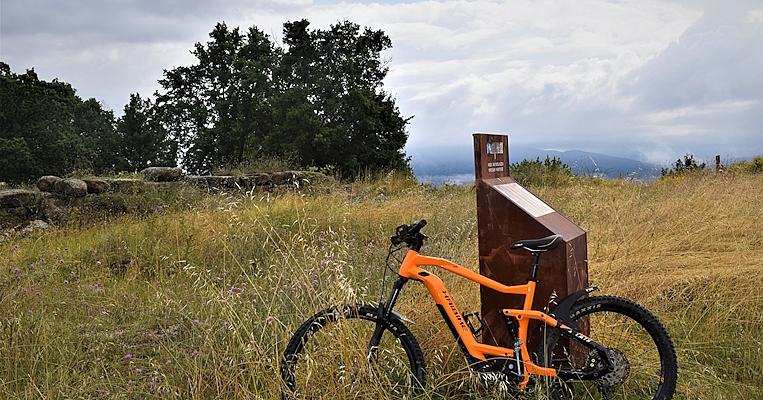
Here one can also admire the remains of the ancient Roman municipium of Urvinum Hortense, founded in the 1st century BC, where archaeological excavations have uncovered numerous artifacts now permanently displayed in the Antiquarium and in the Museo Città di Cannara.