Assisi, the Basilica of Saint Francis and Other Franciscan Sites
Assisi, the Basilica of Saint Francis and Other Franciscan Sites
The thousand-year-old town that belongs to the whole world
#01
Assisi: the town designated as a World Heritage Site
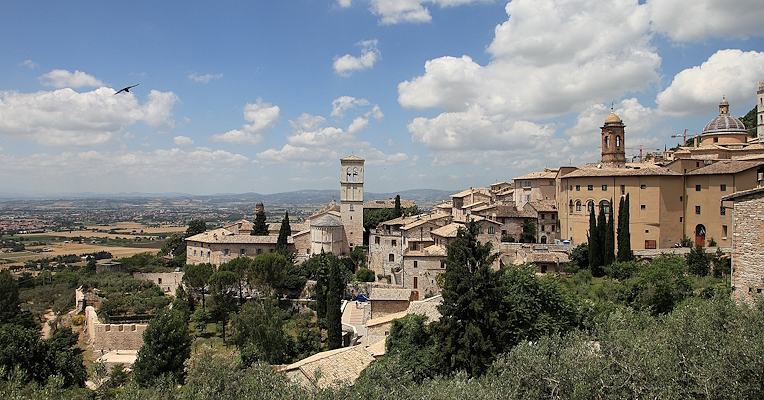
Assisi, nestled on the slopes of Mount Subasio, is a town with a history stretching back thousands of years, where art, spirituality and landscape come together in perfect balance.
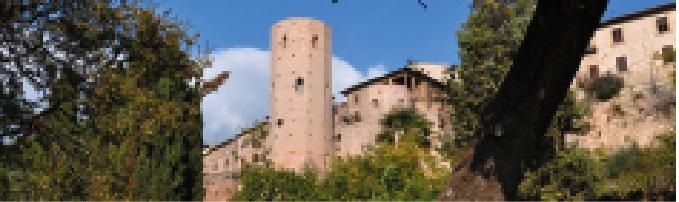
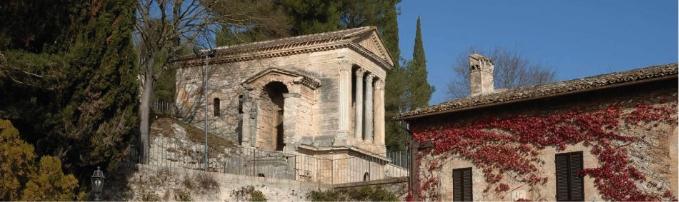
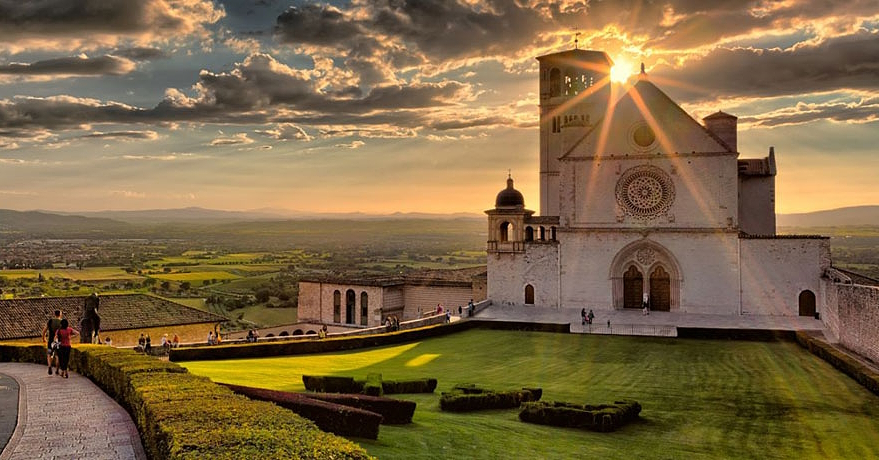
Its urban fabric is a refined mosaic of historical eras: Roman temples and theatres intertwine with the imposing basilicas of Saint Francis and Saint Chiara, while the Rocca Maggiore silently dominates from above.
A place of extraordinary beauty and universal value, so much so that it was recognised as a UNESCO World Heritage Site in 2000.
The basilica of Saint Francis is an architectural masterpiece of extraordinary importance, which has profoundly influenced artistic and cultural development.
Construction began in 1228, just two years after his death, on the site Saint Francis himself had chosen for his burial.
The Lower Basilica, completed in 1230, was frescoed by some of the greatest artists of the 13th and 14th centuries such as the Master of Saint Francis, Cimabue and Giotto. The Upper Basilica, consecrated in 1253, stands as a testament to the spiritual greatness of the Franciscan Order.
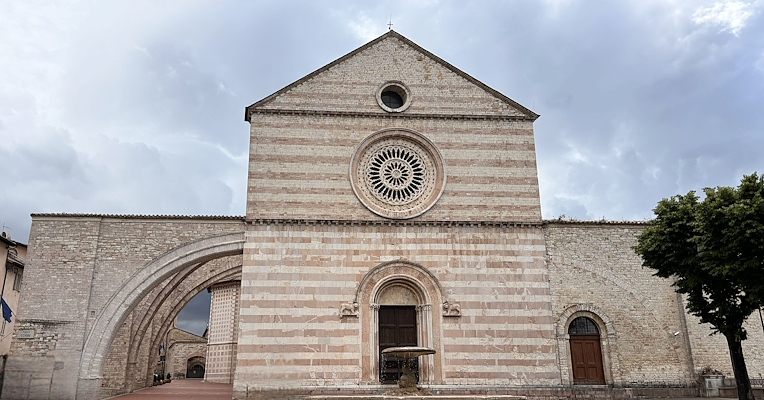
The basilica of Saint Clare was built four years after the death of Saint Francis’ most devoted disciple in 1253.
The basilica and convent stand on the site of the ancient church of San Giorgio, which was granted to the Poor Clares by Pope Alexander IV. The church, characterised by bands of white and pink Subasio stone, houses the saint’s body in its crypt.
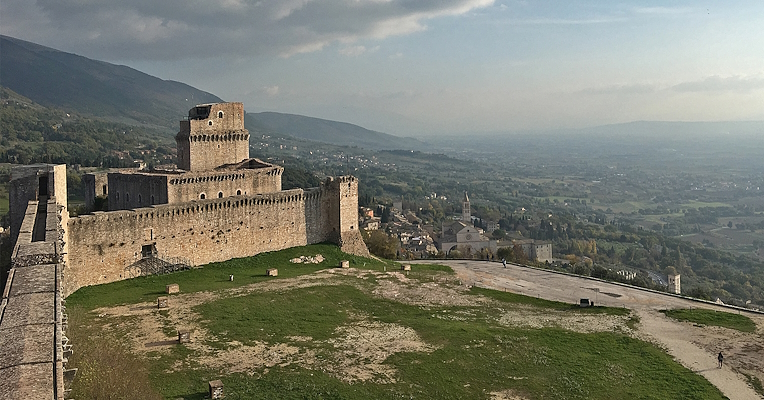
The town of Assisi is dominated by the imposing “Rocca Maggiore” fortress, rebuilt in 1356 by Cardinal Albornoz, who preserved the layout of the previous fortress, destroyed in 1198 during the revolt of the people of Assisi that ended the rule of Duke Conrad of Urslingen.
Conceived as a defensive stronghold, the Rocca Maggiore commands a dominant position over the town and the Umbrian valley, offering a privileged vantage point. Its mighty walls recount centuries of history and political strategies.
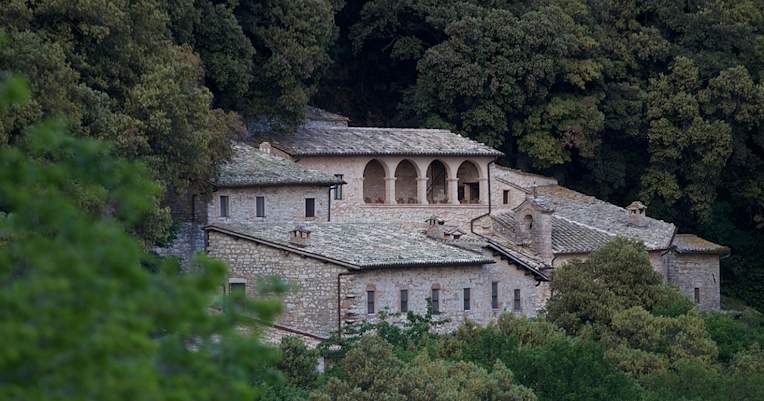
Nestled in a dense holm oak wood on the slopes of Mount Subasio, about 4 km from Assisi, the Eremo delle Carceri (Hermitage of the Carceri) is a place of deep spirituality. Its name does not derive from the presence of an actual prison, but from the ancient custom of Saint Francis and his companions to “imprison themselves”, that is, to retire in solitude and prayer.
Nearby is the Cave of Saint Francis, a place of great symbolic value, where the young Giovanni di Pietro di Bernardone embraced poverty and began his journey as Francis of Assisi.
Not far from the historic centre of Assisi, the church and convent of San Damiano are places of extraordinary spiritual significance. Built between the 8th and 9th centuries, in honour of Saint Damiano, a doctor and martyr, the church became an important Benedictine priory as early as 1030.
It was here that Saint Francis first heard the voice of Christ through the Crucifix, now kept in the basilica of Saint Clare.
Restored by Francesco himself in 1212, the church holds a profound connection to his life: within its walls he welcomed St Clare and found the inspiration to compose the Canticle of the Creatures.
#07
Sanctuary of Rivotorto
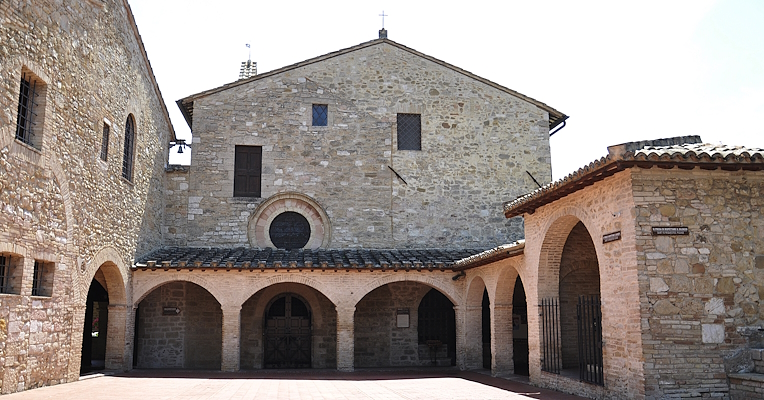
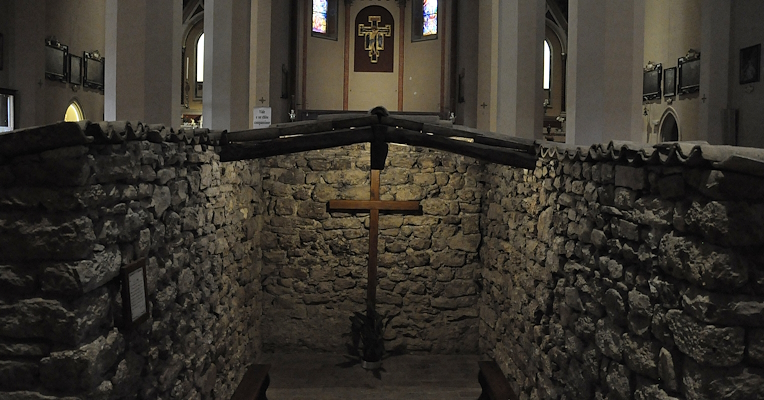
Upon entering the church of Santa Maria di Rivotorto, one looks up and reads the inscription: Hic primordia Fratrum Minorum - here began the Friars Minor.
The building stands on the site of Saint Francis’ first prayer refuge, shared with his companions, where the first draft of the Franciscan Rule was written. Inside, it houses the Sacro Tugurio (Holy Hovel), a simple and unadorned space that serves as a tangible symbol of the radical poverty embraced by the saint from Assisi.
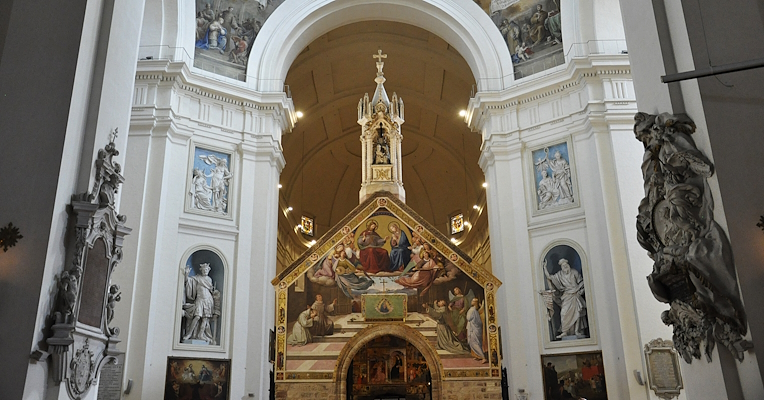
About 6 km from Assisi stands the majestic basilica of Saint Mary of the Angels, built between 1569 and 1679 at the behest of Pope Pius V to protect and encompass the structures of the Franciscan convent built around the Porziuncola, the small church dear to St Francis.
A place of great spirituality, the Porziuncola, according to tradition, was visited by angels, becoming a universal symbol of Franciscanism. Its legacy extends beyond the borders of Italy: in 1769, two Spanish Franciscan friars founded a modest village in California dedicated to Nuestra Señora la Reina de los Ángeles de la Porciúncula de Asís, destined to become the metropolis of Los Angeles.