






.jpeg/0963e313-3fe7-31da-b05c-a3c6aca0a775?width=456)
.jpg/82d76794-ab9b-f87f-b9e6-5f77e6eb3b4c?width=456)

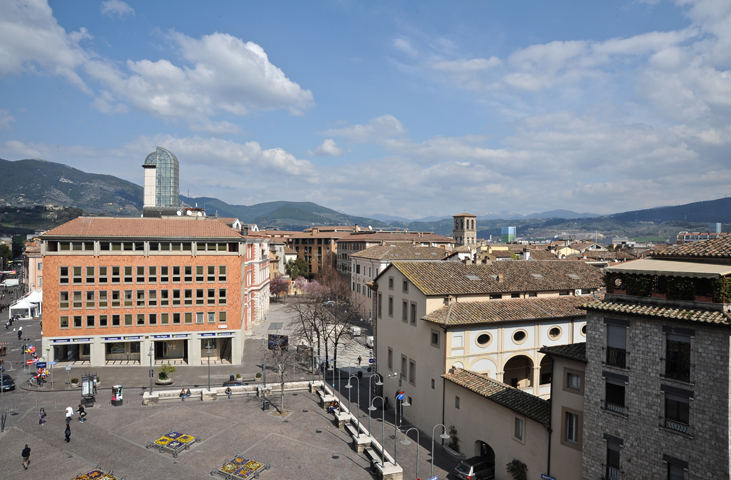
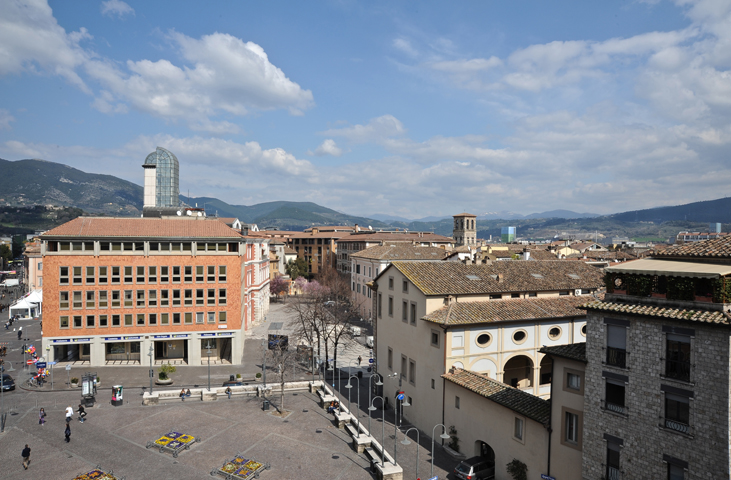
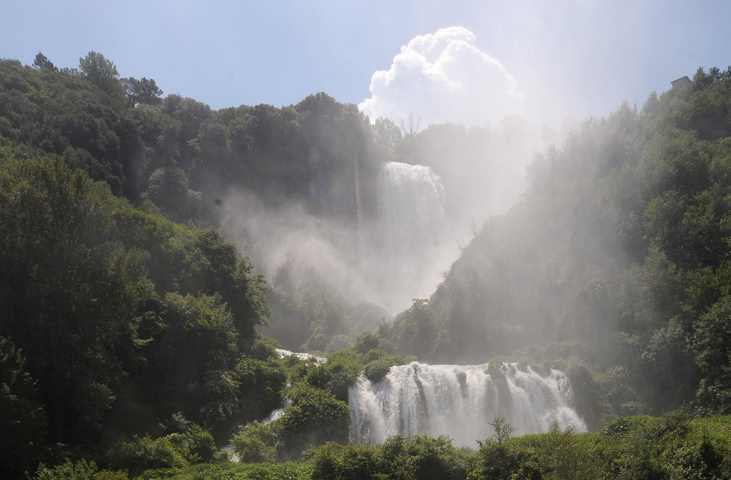
Située dans le sud-est de l’Ombrie, entourée d’un amphithéâtre de collines et traversée par les rivières Nera et Serra, Terni raconte une histoire unique, faite d’antiquité, d’industrie et de paysages à couper le souffle. Connue comme le « Manchester italien » pour son rôle pionnier dans la révolution industrielle du XIXᵉ siècle, la ville a su conjuguer son héritage manufacturier avec le charme d’un territoire riche en trésors naturels, comme la spectaculaire cascade des Marmore.
Aperçus d’une histoire à l’âme ancienne
La nécropole protohistorique et la naissance de la ville entre deux rivières
Les premières traces de peuplement dans la région de Terni remontent à l'ère néolithique et à l’âge du Bronze, période à laquelle appartient un village de huttes mis au jour sur le site des aciéries. Dès le début de l’âge du Fer, une continuité d’occupation est attestée, avec de petits noyaux d’habitat situés à l’emplacement de la future ville : les données archéologiques semblent confirmer la date de fondation de 672 av. J.-C., mentionnée dans une inscription d’époque tibérienne.
De cette même période date la nécropole dite « delle Acciaierie » (des Aciéries), découverte en 1884 lors de la construction des usines industrielles, fréquentée du Xe au IVe siècle av. J.-C. par le peuple des Nahartes, habitants de la vallée du Nera.
Au IIIᵉ siècle av. J.-C., Terni entra dans l’orbite romaine. Le consul Manius Curius Dentatus, célèbre conquérant de la Sabine, entreprit l’assèchement du Lacus Velinus et, en déviant les eaux du Nera, donna naissance à la célèbre cascade des Marmore. Interamna Nahars devint un municipe prospère entre l’époque républicaine et l’époque impériale, grâce à l’abondance des ressources hydriques et des terres fertiles.
Le centre urbain, traversé par la branche de la Via Flaminia, qui se dirigeait vers Spoletium et correspondait au cardo maximus, s’enrichit au Ier siècle apr. J.-C. de bâtiments monumentaux tels que le théâtre, l’amphithéâtre et au moins deux complexes thermaux. L’empereur Marcus Claudius Tacitus et l’historien Cornelius Tacitus y naquirent.
Entre le VIᵉ et le VIIᵉ siècle, Terni fut marquée par des invasions et des destructions. La ville fut conquise par les Goths de Totila en 546, par les Byzantins de Narsès en 554 et par les Lombards en 755, intégrant ensuite le duché de Spolète. En 1174, elle fut détruite par Frédéric Barberousse, avant de passer sous la domination des États pontificaux de 1420 jusqu’à l’Unité de l’Italie.
Le développement de la ville industrielle
Entre les XVIIIᵉ et XIXᵉ siècles, Terni connut une période particulièrement prospère qui la transforma en principal centre manufacturier de l’Ombrie. À partir de 1832, la ville changea profondément: les anciennes murailles furent détruites, les axes routiers et les cours d’eau redessinés, tandis que d’imposants complexes industriels et de modernes centrales hydroélectriques virent le jour dans la basse Valnerina, alimentés par les eaux de la cascade des Marmore.
Pendant la Seconde Guerre mondiale, Terni devint une cible stratégique et subit pas moins de 108 bombardements qui marquèrent profondément son tissu urbain et touchèrent son pôle industriel. Dans les années 1970, des tentatives de relance de l’économie locale furent entreprises, mais la fermeture d’usines historiques, comme la filature de jute Cinturini en 1970 ou la centrale hydroélectrique de Papigno en 1973, laissa un vide irréparable dans le panorama industriel et social de la ville.
Rares vestiges du passé au milieu des bâtiments modernes
Malgré les chapitres récents de son histoire, Terni a conservé une partie de son patrimoine artistique :
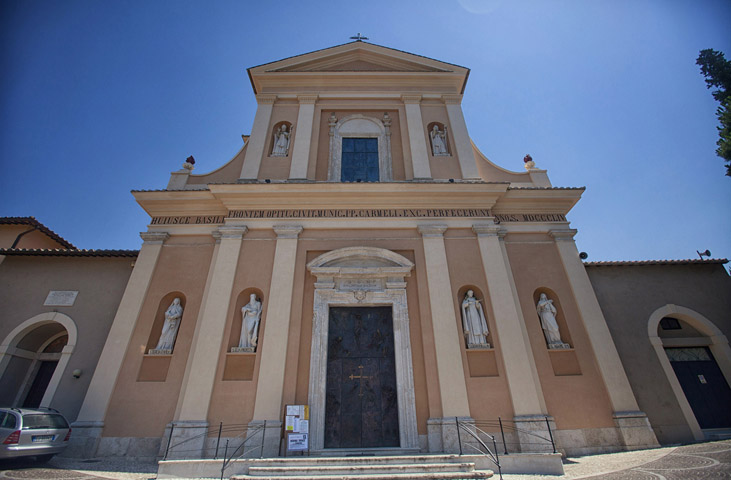
- Basilique de Saint-Valentin : elle conserve les reliques du saint patron, qui vécut à Terni au IIIᵉ siècle et devint célèbre dans le monde entier comme protecteur des amoureux. Elle est un lieu de pèlerinage, surtout en février, lorsque la ville s’anime d’événements dédiés à l’amour.
- Cathédrale Santa Maria Assunta : édifiée au XIIᵉ siècle, son aspect actuel est le résultat de transformations successives. La façade est ornée de statues de huit évêques de Terni, tandis que l’intérieur conserve des traces de peintures du XVIᵉ siècle ainsi que l’œuvre Rete mistica (2007) de Ricardo Cinalli. La crypte abrite le tombeau de saint Anastase, évêque et martyr de Terni.
- Église San Francesco : érigée en 1265 ; en 1437 elle fut agrandie avec trois nefs et la chapelle de saint Bernardin. Son clocher gothique, doté de fenêtres géminées et bigéminées, fut réalisé en 1345 par le sculpteur Angelo da Orvieto. La chapelle Paradisi, située au fond de la nef centrale, est décorée d’un Jugement dernier d’inspiration dantesque peint par Bartolomeo di Tommaso.
- Église San Salvatore : construite sur une domus romaine d’époque républicaine et augustéenne, dont quatre salles avec sols en cocciopesto et une partie du péristyle ont été identifiées. Plus à l’ouest, un complexe thermal, probablement lié à la même demeure, a été mis au jour. L’édifice comprend une structure circulaire absidée, probablement du IXᵉ siècle, et une nef du XIIᵉ siècle. Ici aurait eu lieu la rencontre légendaire entre le roi Liutprand et le pape Zacharie.
- Église Sant’Alò : édifiée au XIᵉ siècle sur un temple dédié à Cybèle. À l’intérieur et à la base du clocher se trouvent plusieurs éléments de remploi d’époque romaine, dont des autels circulaires, des fragments de monuments funéraires et deux lions placés sur l’escalier d’accès.
- Église San Lorenzo : construite entre les XIᵉ et XIIᵉ siècles, probablement sur un lieu de culte romain antérieur, comme l’indiquent deux colonnes de remploi à l’intérieur. Agrandie au XVIIᵉ siècle, elle conserve, malgré les restaurations du XXᵉ siècle, un précieux portail de 1492.
- Église San Pietro : fondée au XIIᵉ siècle ; à partir de 1287, elle fut confiée aux Augustins qui entreprirent sa reconstruction au début du XIVᵉ siècle, avec le couvent attenant.
Parmi les édifices historiques de la ville, se distinguent :
- Palais Spada : édifié au XVIᵉ siècle par la puissante famille Spada, il fut conçu par Antonio da Sangallo le Jeune. Il s’agit du premier palais « à cour » construit dans la ville. Aujourd’hui, il abrite la mairie.
- Palais Mazzancolli : construit vers le milieu du XVe siècle, c’est l’un des rares exemples d’architecture médiévale préservés à Terni ; il accueille aujourd’hui les Archives d’État.
Là où l’histoire industrielle rencontre l’art et le cinéma
Terni est également une ville à l’âme industrielle, et ce patrimoine est mis en valeur par un intéressant parcours d’archéologie industrielle comprenant de véritables vestiges provenant d’usines désaffectées, comme la Grande Presse hydraulique — un colosse d’acier de 12 000 tonnes situé devant la gare, et utilisé dans les aciéries de 1935 à 1993.
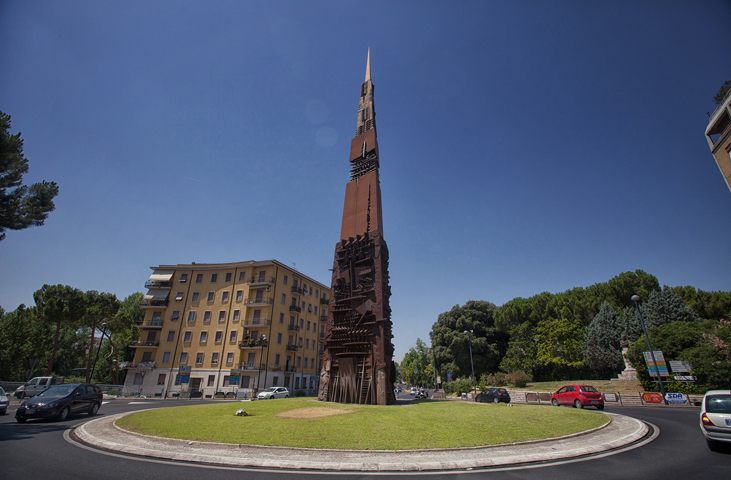
L’architecture contemporaine a, elle aussi, laissé son empreinte grâce à des artistes comme Arnaldo Pomodoro, auteur de la monumentale Lancia di Luce (un géant de 105 tonnes d’acier), et aux architectes Mario Ridolfi et Mario Fagiolo, créateurs de la Piazza Tacito et de sa fontaine scénographique.
À ne pas manquer : le musée CAOS – Centre pour les Arts Opificio SIRI, installé dans l’ancienne usine chimique SIRI, qui a habilement transformé ses 5600 m² en salles de conférence, espaces pédagogiques, un théâtre et une bibliothèque. Il abrite le Musée d’Art Moderne et Contemporain Aurelio De Felice, où sont exposées des œuvres de Chagall, Kandinsky, Miró et Picasso, ainsi que le Musée Archéologique Claudia Giontella, qui présente des objets retraçant les phases protohistoriques et romaines de la ville.
Près de Papigno, les anciens établissements industriels ont été transformés en studios de cinéma, utilisés comme décors pour de nombreux films, dont La vie est belle et Pinocchio de Roberto Benigni.
Nature et archéologie : cascades, lacs et cités romaines
Terni est le point de départ idéal pour découvrir certaines des merveilles naturelles les plus fascinantes d’Italie :
Cascade des Marmore : avec ses 165 mètres de hauteur, c’est la plus haute d’Europe ; elle offre de spectaculaires sentiers panoramiques et des activités sportives telles que le rafting sur le Nera.
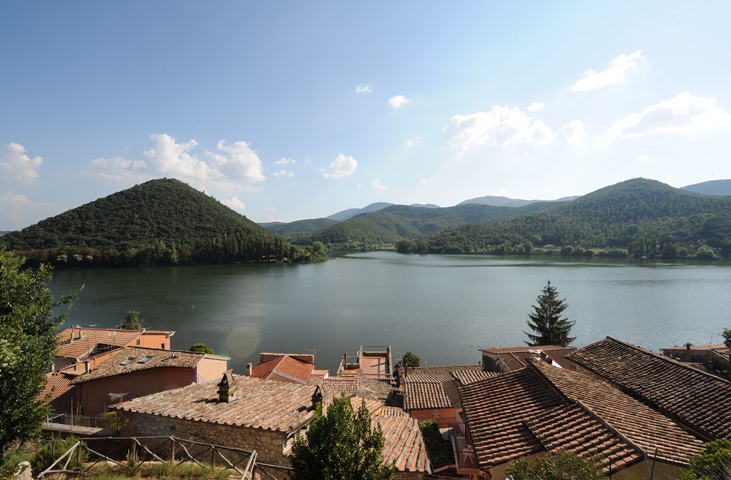
Lac de Piediluco : un paysage de carte postale, parfait pour les amateurs d’aviron, de voile ou simplement pour la détente au bord de l’eau. Le village, avec ses maisons colorées et son ancienne église Saint-François, est un petit joyau. Depuis Piediluco, on profite d’une vue magnifique sur la Montagne de l’Écho, située sur l’autre rive : une hauteur mystérieuse où l’on peut entendre d’incroyables phénomènes de résonance acoustique.
Aire archéologique de Carsulae : ancienne cité romaine née le long de la Via Flaminia et accessible autrefois par l’Arc de San Damiano, porte d’entrée de la ville ; le site conserve les vestiges du forum, du théâtre, de l’amphithéâtre et de l’église de San Damiano, construite avec des matériaux romains.
Temples du Monte Maggiore : au-dessus de Cesi, ancien centre noble aujourd’hui rattaché à Terni mais autrefois capitale des Terre Arnolfe, se dresse l’imposant Monte Torre Maggiore. Après avoir croisé l’église Sant’Erasmo, on atteint l’aire sacrée au sommet, où subsistent les vestiges de deux importants édifices cultuels.
.png/7bb610df-6171-fe1f-1176-43723dc941cc?width=374)
.jpeg/0963e313-3fe7-31da-b05c-a3c6aca0a775?width=374)
.jpg/b60a2409-dedf-2474-9ae5-7acf0e0c48cf?width=374)