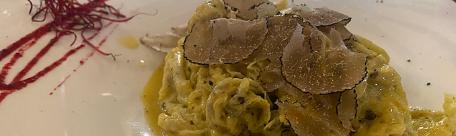

Plate of tagliatelle with truffle shavings, with hands resting on the table ready to eat in the background.
Italian cuisine, a UNESCO heritage to experience at the table
When Umbrian food becomes identity, relationship and memory.

At the end of 2025, Italian cuisine was declared Intangible Cultural Heritage of Humanity by UNESCO. This recognition does not celebrate a single dish or recipe, but rather a true cultural model: the Italian way of living food as an expression of identity, relationships and sharing. A heritage shaped by conviviality, memory and the transmission of knowledge, where food becomes a common language, an act of care and a way of bringing people together.
In this collective story, where every region contributes to making Italian cuisine unique and recognisable, Umbria holds a special place, as a land of products and recipes rooted in agricultural cycles, religious festivities and community moments, where food is not just something to be consumed, but an experience to be lived.

The value of some Umbrian dishes, beyond the ingredients that enhance outstanding local products, is often connected to stories and fun facts about their origin and preparation. Tasting them means entering a narrative shaped by traditions, knowledge and gestures handed down over time: an experience that fully embodies the intangible cultural heritage recognised by UNESCO.

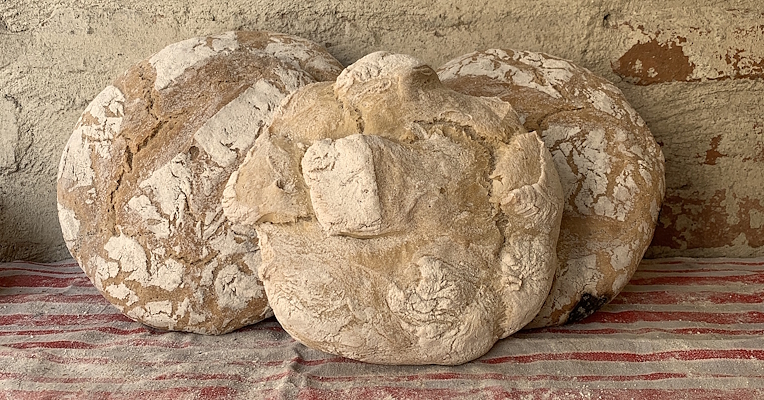
Three loaves of handmade unsalted bread dusted with flour on an ecru and red striped cloth, in front of a stone wall.
#1
“Sciapo” bread

Without salt, as in Tuscany, this bread is the result of a choice born of historical necessity, linked to the Salt War, and it’s perfect for enhancing seasonings such as new extra virgin olive oil and a variety of accompaniments, especially norcineria products.

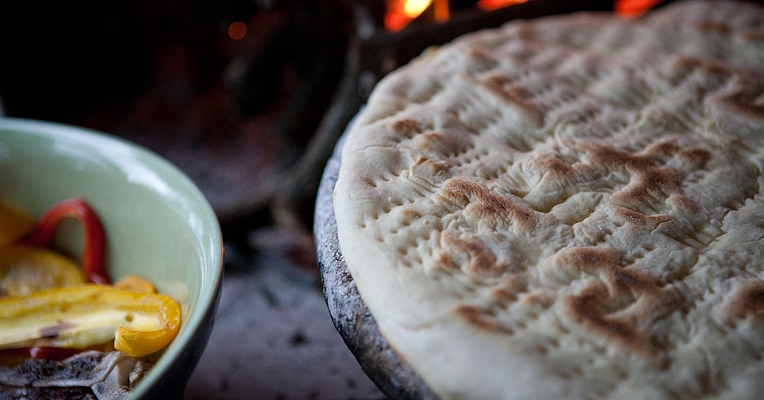
Umbrian torta al testo cooked on a testo (stone griddle) in front of a lit wood-fired oven, with grilled vegetables in a bowl.
#2
Torta al testo

The name comes from the Latin “testum”, meaning both a brick or tile and the terracotta vessel filled with hot embers used by the Romans to cook food, especially bread or flatbread-like preparations. Today known as “neither bread nor focaccia”, it is made from a simple, often unleavened dough, cooked on stone or cast iron. Born as subsistence food, it is now one of the most famous dishes in the Perugia area, where it represents the ultimate convivial dish, meant to be filled and shared at the centre of the table.

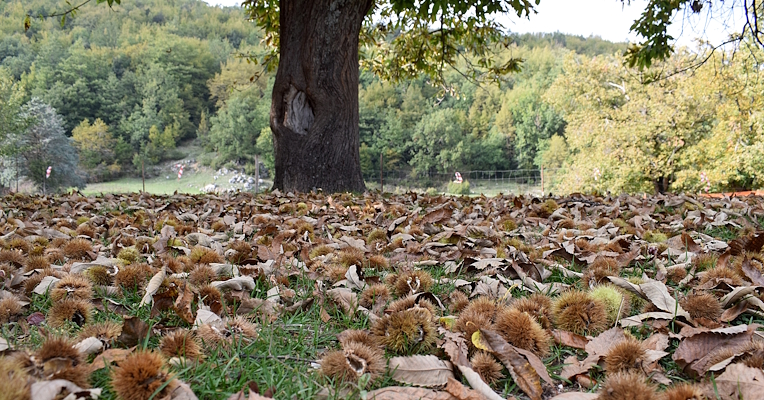
Chestnut burrs and dry leaves on the grass beneath a large tree, with a forest in the background.
#3
The bread tree

Before the widespread cultivation of wheat, in the Umbrian mountains chestnuts were a fundamental resource: dried and ground, they were often turned into a hearty flour used to make bread and polenta.

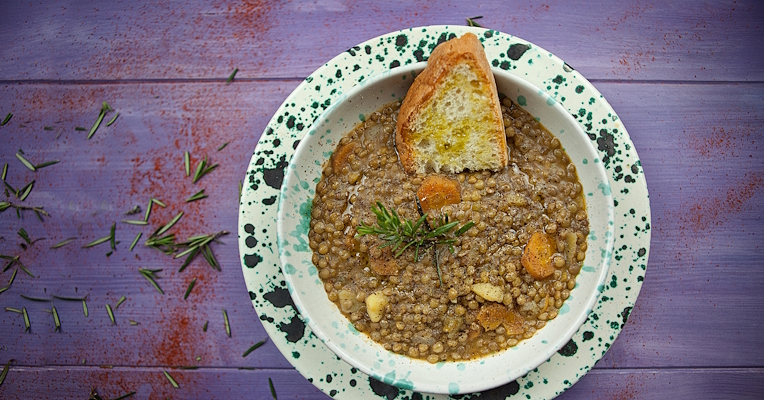
Lentil soup with carrots and potatoes, rosemary and a slice of toasted bread on a decorated plate, top view.
#4
Soups, dishes of community

In Umbria, legume soups such as fagiolina del Trasimeno or roveja, along with cereals, especially spelt, are never individual dishes: they are meant to be shared. Traditionally prepared in large quantities and eaten together, they reinforce the value of conviviality that lies at the heart of the UNESCO recognition.

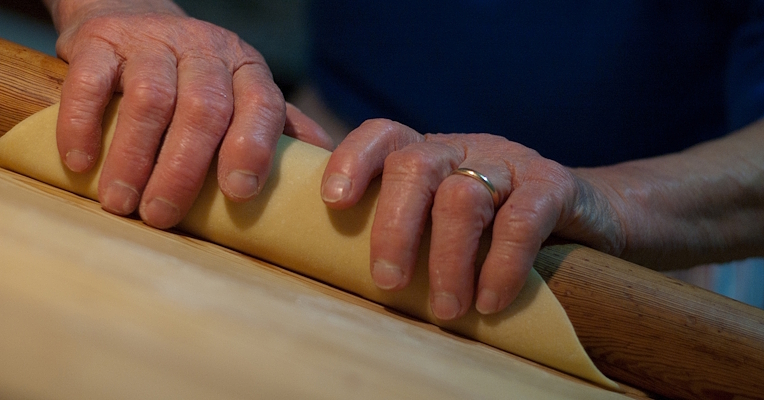
Hands rolling out a pasta sheet with a rolling pin on a floured wooden table.
#5
“A culo mosso” pastry sheet

This curious and playful popular expression refers to the continuous and precise movement of the hips needed to stretch a hand-rolled pastry sheet to perfection.

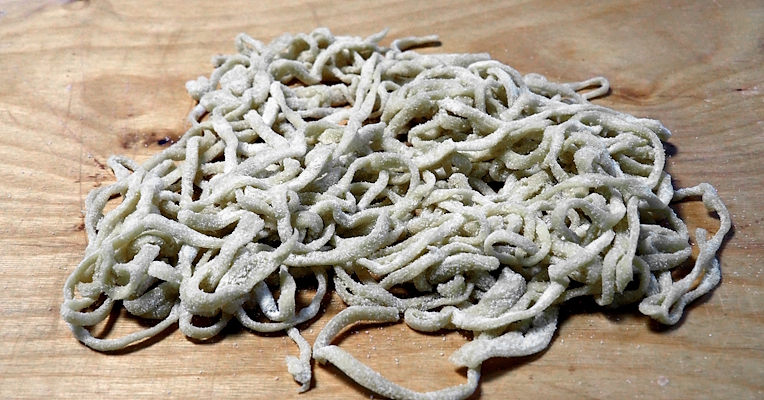
Pile of handmade strangozzi pasta on a wooden board, ready to be cooked.
#6
Homemade pasta

From a simple dough made of flour and water come some of the most typical Umbrian pasta shapes, some of which have such ancient origins that they are attributed to the Etruscans. Names and preparation methods vary from area to area: from Perugia’s umbricelli to Terni’s ciriole, to Spoleto’s strangozzi, also known as strozzapreti, a popular name linked to the history of the Papal States.

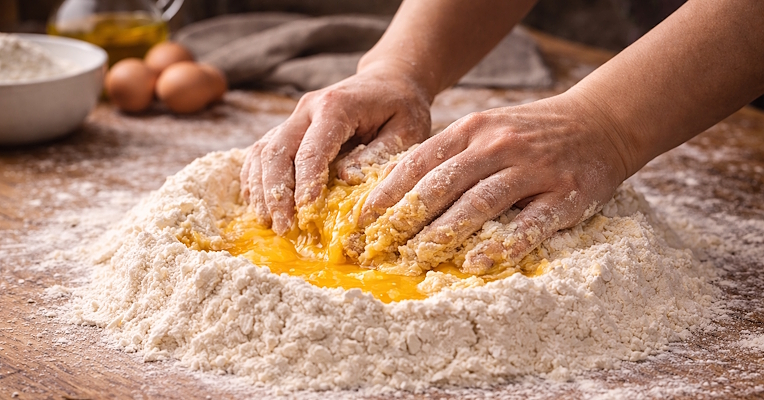
Hands mixing flour and eggs on a wooden table to prepare homemade fresh pasta.
#7
Hands as a unit of measure

“Quanto basta” (as needed), “a occhio” (by eye), “finché regge” (until it holds together). In many Umbrian recipes there are no precise quantities: knowledge is passed on through experience, not measured on scales.

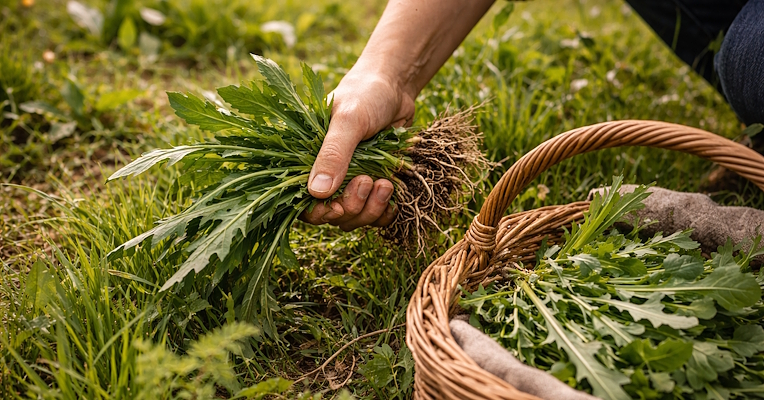
Hand picking wild herbs from an uncultivated field and placing them into a wicker basket.
#8
Wild herbs

Recognising, gathering and cooking wild herbs is knowledge passed down orally for centuries, preserved in traditional recipes such as fojata, whose filling can be made with a variety of wild herbs, but is traditionally based on strigoli.