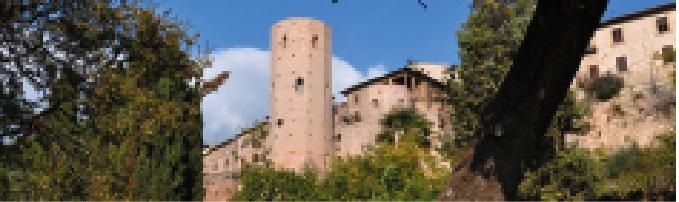
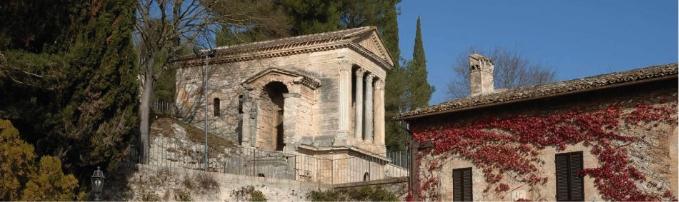




Bridge over the Tiber River with the historic centre of Umbertide in the background.

Seven days in the Upper Tiber Valley

There is a place where time seems to flow with the same gentle harmony as the river that runs through it. A natural gateway between Umbria and Tuscany, the Upper Tiber Valley reveals itself to travellers like a well-kept secret: a mosaic of rolling hills, hilltop medieval villages and lush green valleys.

This itinerary is an invitation to slow down and follow the course of the Tiber, discovering an authentic region far from the usual tourist routes.

Along the way, an extraordinary dialogue with art awaits, spanning from the Renaissance to the contemporary age. This valley has inspired and welcomed great artists throughout history. Admire Piero della Francesca’s geometric mastery in Citerna and the refined harmony of Raphael in Città di Castello, before being amazed, just a few kilometres away, by the revolutionary, richly textured works of Alberto Burri, also in Città di Castello.

You will discover the beauty and authenticity of villages where time seems to stand still. From the medieval lanes of Montone, listed among Italy’s Most Beautiful Villages, to the imposing architecture of Umbertide and the grandeur of Castello Bufalini in San Giustino, every stop is a journey back through the centuries.

If you love the outdoors, you can choose from hiking, cycling along the riverside cycle path, or spiritual routes such as the famous Way of St Francis. Here, spending time in nature is synonymous with renewal.

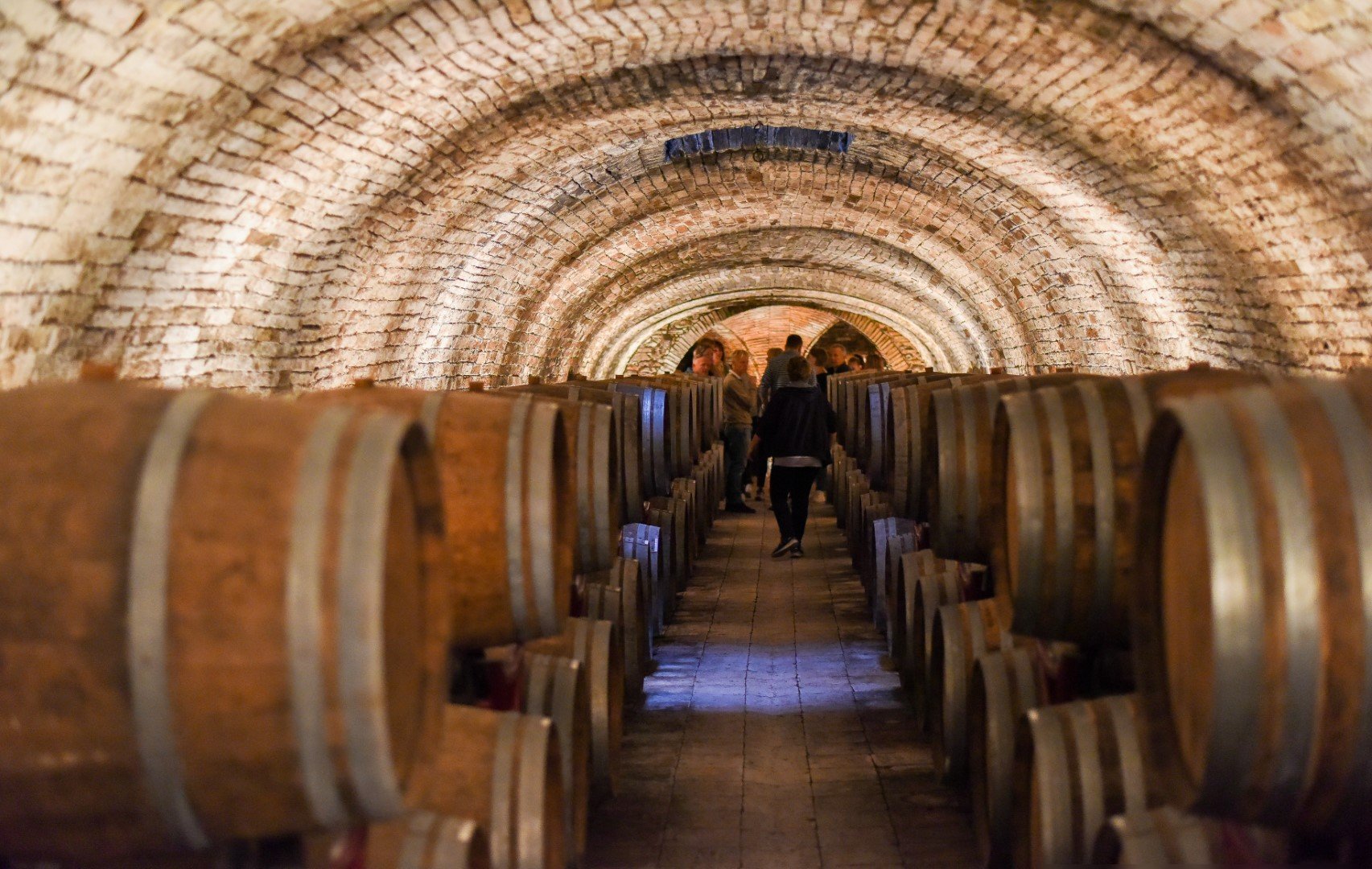
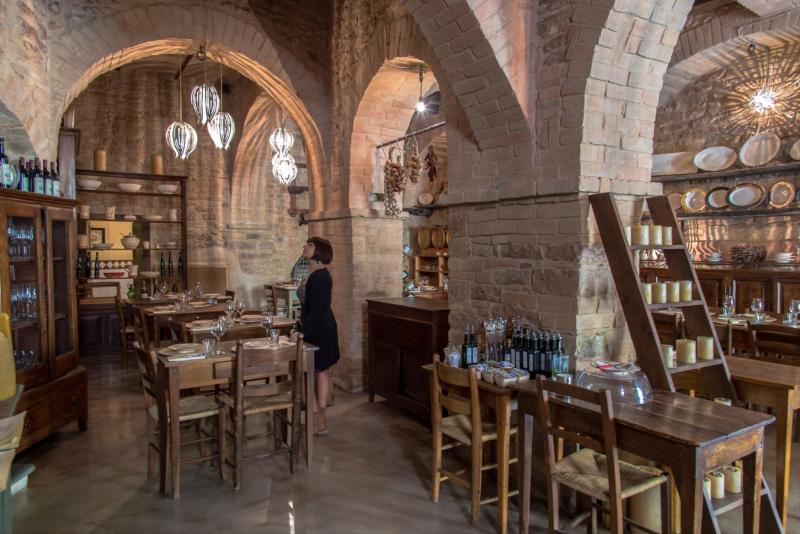
And, of course, no journey is complete without good food. This is the land of prized white truffles, premium Chianina beef, characterful extra virgin olive oil and wines that embody the soul of a generous land.

Take your time. The best way to experience the Upper Tiber Valley is to wander along its quiet back roads, stop for a chat in its village squares and let the landscape set the pace of your day.

Lace up your walking shoes, awaken your curiosity and get ready to take in the beauty around you.

Panoramic view of Città di Castello with the historic centre, Palazzo Vitelli and its monumental garden.
Day 1. Città di Castello: the historic centre and Renaissance art
Black and red iron sculptures by Alberto Burri in front of the former Tobacco Drying Sheds in Città di Castello.
Day 2. Città di Castello: the contemporary art of Alberto Burri
  • Morning: visit Palazzo Albizzini, home to the Fondazione Palazzo Albizzini Collezione Burri, where the master’s early and seminal works are displayed.
  • Afternoon: continue to the Foundation’s second and most spectacular venue: the former Tobacco Drying Sheds (Ex Seccatoi del Tabacco). These immense black industrial buildings house Burri’s monumental painting cycles, offering one of the world’s most extraordinary artistic experiences.
  • If time permits, visit the Tela Umbra Weaving Workshop and Textile Collection, housed in the historic Palazzo Alberti Tomassini, just a short walk from the main square. Here the wooden looms still operate as they did at the beginning of the twentieth century, preserving a unique local textile tradition. It is also the perfect place to purchase authentic handmade souvenirs.
Castello Bufalini a San Giustino con il fossato, le mura fortificate e il giardino all'italiana.
Day 3. San Giustino: castles and Roman history
  • Morning: head to Colle Plinio to visit the archaeological remains of the Villa of Pliny the Younger, a fascinating journey into the Roman history of the Upper Tiber Valley. Complete your visit at the Archaeological Museum of San Giustino, housed in the elegant Villa Margherini Graziani, where finds from the villa are on display.
  • Afternoon: visit the majestic Castello Bufalini, a medieval fortress later transformed into an elegant noble residence. Don’t miss its beautifully frescoed rooms and the magnificent Italian-style garden with its historic hedge maze.
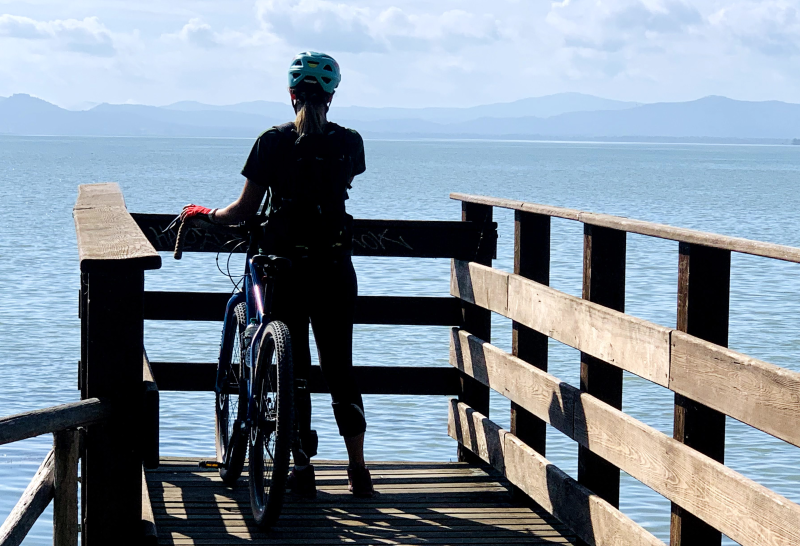
Covered wooden footbridge on the Tiber Cycle Route with a bicycle leaning against the structure and the river on the left.
Day 4. Cycling along the Tiber Cycle Route
  • Morning: hire a bicycle and set off along the Tiber Cycle Route. Ride south along the flat riverside path, surrounded by the peaceful scenery of the Umbrian countryside.
  • Afternoon: continue cycling towards Lama or Selci, two small villages surrounded by rural shrines and picturesque countryside, before returning along the banks of the Tiber.
Medieval street in Citerna with stone houses and an arch connecting the buildings.
Day 5. Walking the Way of St Francis: a pilgrimage through nature
  • Morning: devote the day to one of the Umbrian sections of the famous Way of St Francis, following the route from Citerna to Città di Castello (about 20 km). Set off from the beautiful hilltop village of Citerna and enjoy breathtaking views while walking through olive groves and woodlands.
  • Afternoon: arrive in Città di Castello by following the distinctive yellow and blue trail markers. Entering the city on foot after a day’s walk offers a unique and unforgettable perspective.
Civitella Ranieri Castle surrounded by greenery, with its entrance drive and circular towers.
Day 6. Umbertide: fortresses and historic villages
  • Morning: explore the historic centre of Umbertide, starting with the imposing Rocca, the medieval fortress that now houses a contemporary art exhibition centre. Be sure to visit the remarkable Church of Santa Maria della Reggia, distinguished by its unusual octagonal plan.
  • Afternoon: drive a few kilometres to admire the exterior of the enchanting Castello di Civitella Ranieri, which is nestled amid dense woodland and is one of the most iconic landmarks of northern Umbria.
Rocca d'Aries in Montone, an ancient medieval fortress surrounded by the greenery of the Umbrian hills.
Day 7. The medieval village of Montone
  • Morning: visit Montone, one of Italy’s Most Beautiful Villages, perched on a hill overlooking the Upper Tiber Valley. Wander through its beautifully preserved medieval streets and visit the San Francesco Museum Complex.
  • Afternoon: spend the final hours of your journey visiting the Rocca d’Aries and enjoying breathtaking views over the surrounding Umbrian hills. Before leaving, sample some local specialities, such as extra virgin olive oil or wines from the Colli Altotiberini wine-growing area.