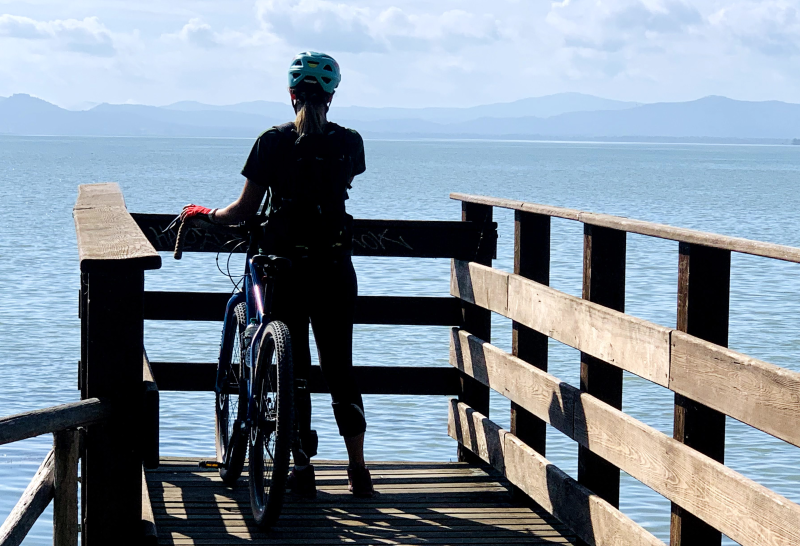
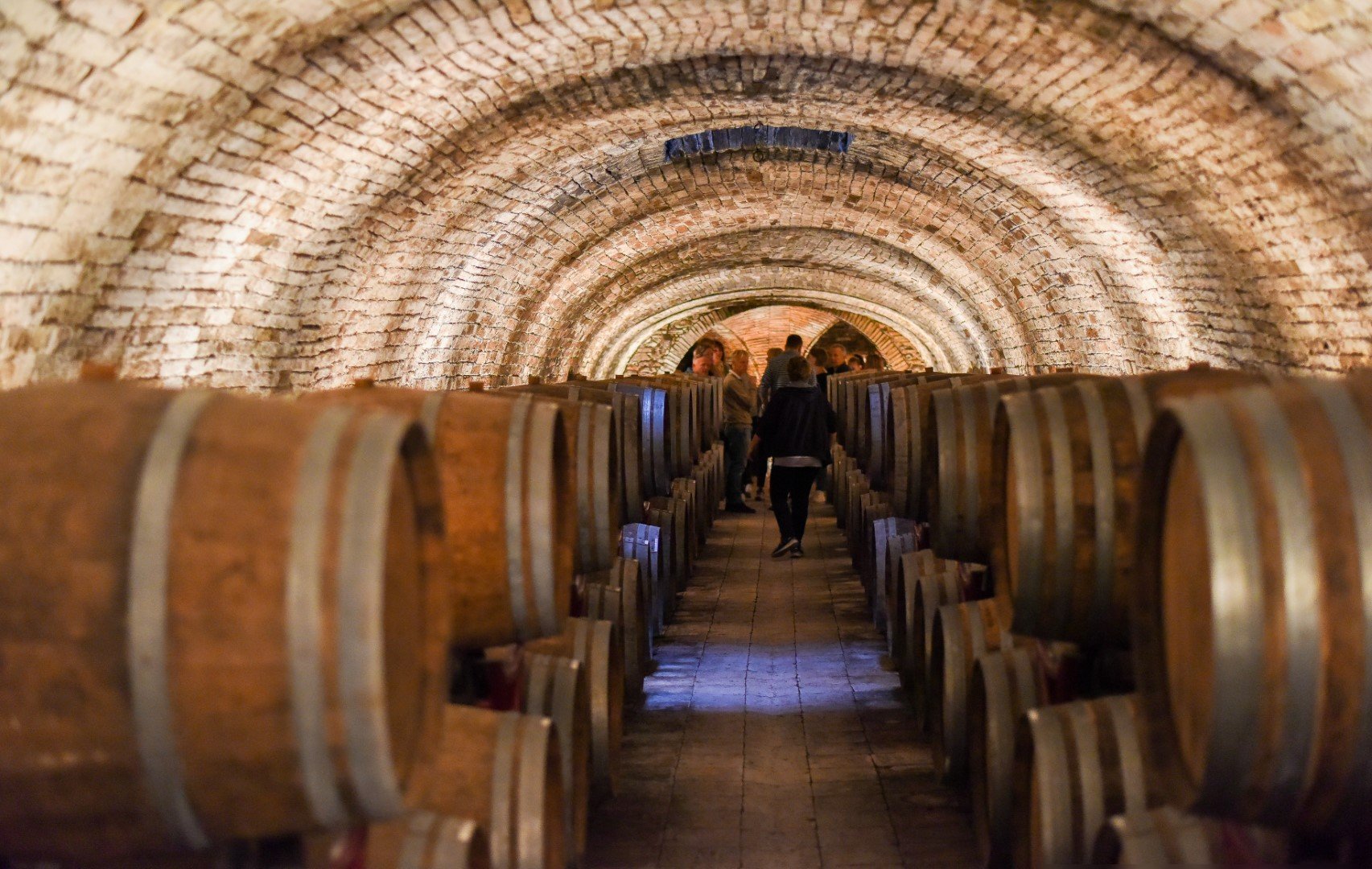

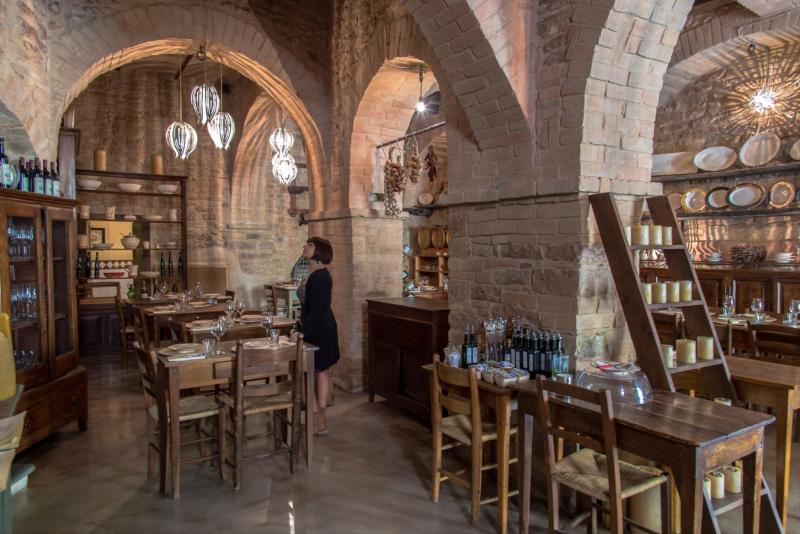


In summer, Valnerina offers a surprisingly pleasant microclimate. The narrow gorges and lush vegetation along the Nera River provide welcome relief even during the hottest hours of the day, while the higher elevations of the Sibillini Mountains are ideal for hiking and cycling. This seven-day itinerary combines river sports, climbing, trekking and visits to ancient villages steeped in history.
7 Days in Umbria’s Green Heart

Summer: 7 days in Valnerina

Day 1 – Spoleto, Gateway to the Valnerina
The journey begins in Spoleto, the ideal place for a first day of acclimatisation among art, history and nature. The city’s most iconic landmark is the Ponte delle Torri bridge, the majestic medieval aqueduct bridge linking the historic centre to Monteluco. From the bridge, which rests on nine pillars (the two tallest are hollow and may once have served as watchtowers), visitors can follow the Giro dei Condotti, a scenic trail that traces the route of the ancient water channels along the slopes of Monteluco. The walk can be extended to the summit, through the Sacred Wood, a cool, shaded area that is particularly pleasant during the summer months.
The most direct route into Valnerina follows the SS 685 “Tre Valli Umbre” road through the Forca di Cerro tunnel. Beyond the tunnel, the valley of the Nera River opens up before visitors.

Day 2 – Vallo di Nera and the Hermits’ Trail
The day is devoted to Vallo di Nera, one of Italy’s most beautiful villages, known for its well-preserved medieval walls and a network of narrow stone alleys climbing the hillside. Inside the Church of Santa Maria Assunta are remarkable frescoes attributed to the Giotto school.
From Vallo di Nera begins the Hermits’ Trail, a circular route of approximately 10–12 kilometres that leads through Castel San Felice and the Abbey of Saints Felice and Mauro to Sant’Anatolia di Narco, crossing holm oak woodlands along the way. On the return journey, visitors can follow part of the former Spoleto–Norcia railway line.
Alternatively, a shorter route, the Piedipaterno Loop (about 8 kilometres), follows the river, passes an ancient mill and offers close-up views of the cliffs used for rock climbing.

Day 3 – Arrone, Ferentillo and the Nera Greenway
The medieval village of Arrone rises dramatically on a rocky outcrop overlooking the Nera River. Its castle, dominated by a powerful square tower topped by an olive tree—the symbol of the village—was built by the Arroni family. According to tradition, around AD 880 a Roman exile named Arrone settled here, founding the earliest nucleus of the settlement.
From Arrone or nearby Ferentillo, visitors can access the Nera River Cycle Route, an unpaved route suitable for walking, cycling or horse riding that follows the river at a leisurely pace. It leads either to the Marmore Falls (12 km away) or, in the opposite direction, to the villages of Scheggino and Sant’Anatolia di Narco (15 km away). Part of the Greenway also follows the Way of Saint Francis, the pilgrimage route linking sites associated with Saint Francis of Assisi.
Ferentillo is home to two remarkable treasures. The Abbey of San Pietro in Valle preserves one of Umbria’s most important Romanesque fresco cycles. Nearby, the Crypt of the Mummies in the Church of Santo Stefano contains naturally mummified sixteenth-century bodies whose exceptional condition has intrigued scientists from around the world. The day can end with a climbing session at the Ferentillo Cliff, where routes ranging from 15 to 120 metres cater to all skill levels. The Le Mummie sector is particularly suitable for beginners.

Day 4 – The Marmore Falls
At 165 metres, the Marmore Falls are among Italy’s most spectacular waterfalls. Few visitors realise that they are entirely artificial: the Romans created them by diverting the Velino River into the Nera to drain the Rieti plain.
Today, the waterfall’s three cascades can be admired from both the Upper Belvedere, which overlooks the first drop, and the Lower Belvedere, which offers sweeping views of the waterfall. During summer, evening openings and special illuminations create a particularly memorable spectacle.
Outdoor activities extend far beyond rafting, with Grade II and III rapids downstream. Visitors can also experience hydrospeed, river walking in wetsuits, and even caving excursions through the Grotta della Condotta, a cave system stretching for more than 190 metres.

Day 5 – Scheggino, Ceselli and Central Valnerina
After the waterfall, the route continues gently upstream through the valley. Scheggino takes its name from the rocky spur on which it stands. Its triangular castle once controlled the only bridge across the Nera in this strategic passageway.
A local curiosity dates back to 1831, when the future Pope Pius IX, then Bishop of Spoleto, fled a revolt on foot and took refuge at an inn in Ceselli before continuing to Leonessa on muleback.
From Scheggino, a hiking trail— or a short drive—leads to Ceselli, where visitors can discover ancient sandstone quarries where millstones were carved. Partially hidden among the trees, unfinished millstones bear witness to an industry that once supplied mills throughout the valley. The Church of San Michele Arcangelo houses frescoes dating from the fifteenth and sixteenth centuries. Numerous hiking and cycling routes branch out from this area.

Day 6 – Sellano, Preci and Triponzo
Sellano is officially listed among Italy’s most beautiful villages. Its Tibetan Bridge, the highest in Europe, links the historic centre with the hamlet of Montesanto, suspended above the Vigi stream valley. Crossing the bridge—517 metres long and 175 metres high—takes approximately fifty minutes. Not to be missed is the Rote Waterfalls Trail, which descends through woodland and streams to a small artificial lake nicknamed the “Italian Loch Ness”, an artificial lake where, according to local legend, a giant trout once lived. Sellano’s cuisine features two traditional specialities: Fojata, a savoury herb pie, and Attorta, a rolled dessert filled with apples, walnuts and cinnamon.
The route continues to Triponzo, known for the meeting point of the Nera and Corno rivers, a striking natural spectacle. Here visitors can see the remains of a Roman bridge and a hydroelectric power station, an interesting example of industrial archaeology. Nearby are the historic thermal baths, renowned for their natural sulphurous waters.
Finally, Preci is famous for its School of Surgery. For centuries, generations of surgeons from Preci were sought after by courts throughout Europe, pioneering medical practices ahead of their time. The Mill Museum, housed in a historic watermill that is still partially operational, is well worth a visit. Preci also serves as the eastern gateway to the Sibillini Mountains National Park.

Day 7 – Roccaporena and Cascia
The final day is dedicated to spirituality and nature. Roccaporena, birthplace of Saint Rita, is home to the Grotta dell’Oro, a cave where the saint is said to have withdrawn for prayer. According to a pre-Christian legend, the site once housed an oracle linked to the nymph Porrina, from whom the village may derive its name. The Scala Santa is a steep staircase that pilgrims traditionally climb on their knees to reach Saint Rita’s cell.
At the highest point of Cascia stands the Sanctuary of Saint Rita, adjacent to a natural park featuring contemporary art installations inspired by nature and meditation. The itinerary concludes with a dinner featuring some of the region’s finest products: Castelluccio PGI lentils, black truffle and strangozzi pasta with wild boar sauce. Nearby Norcia, birthplace of Saint Benedict, offers the perfect inspiration for another week of exploring the Valnerina.