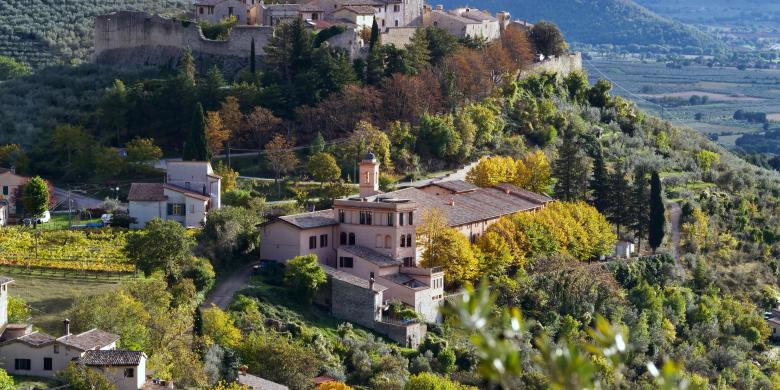



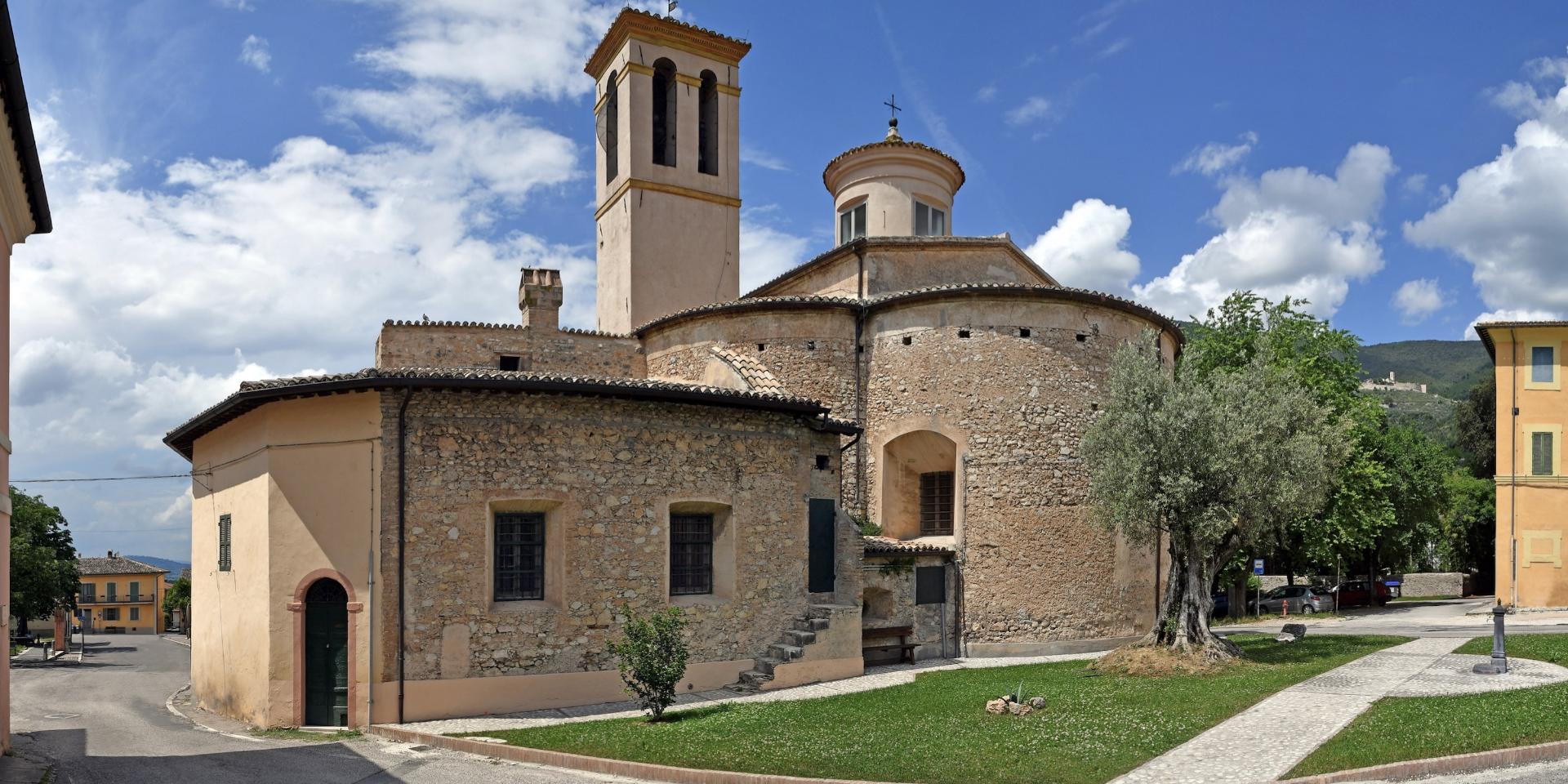
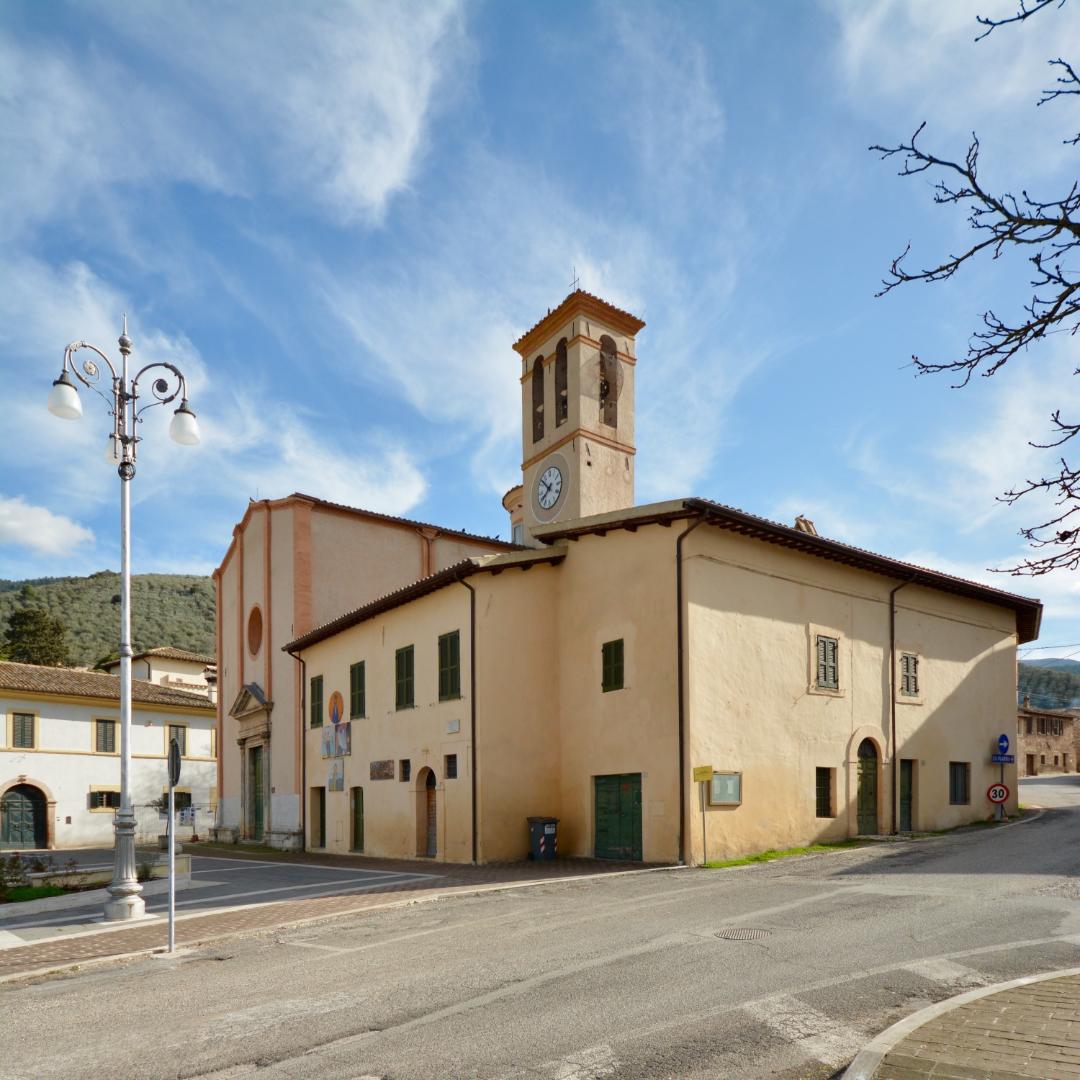
Church of Madonna della Bianca seen from the back, with its bell tower and rounded apse, set within the village of La Bianca

Sanctuary of the Madonna della Bianca in Campello

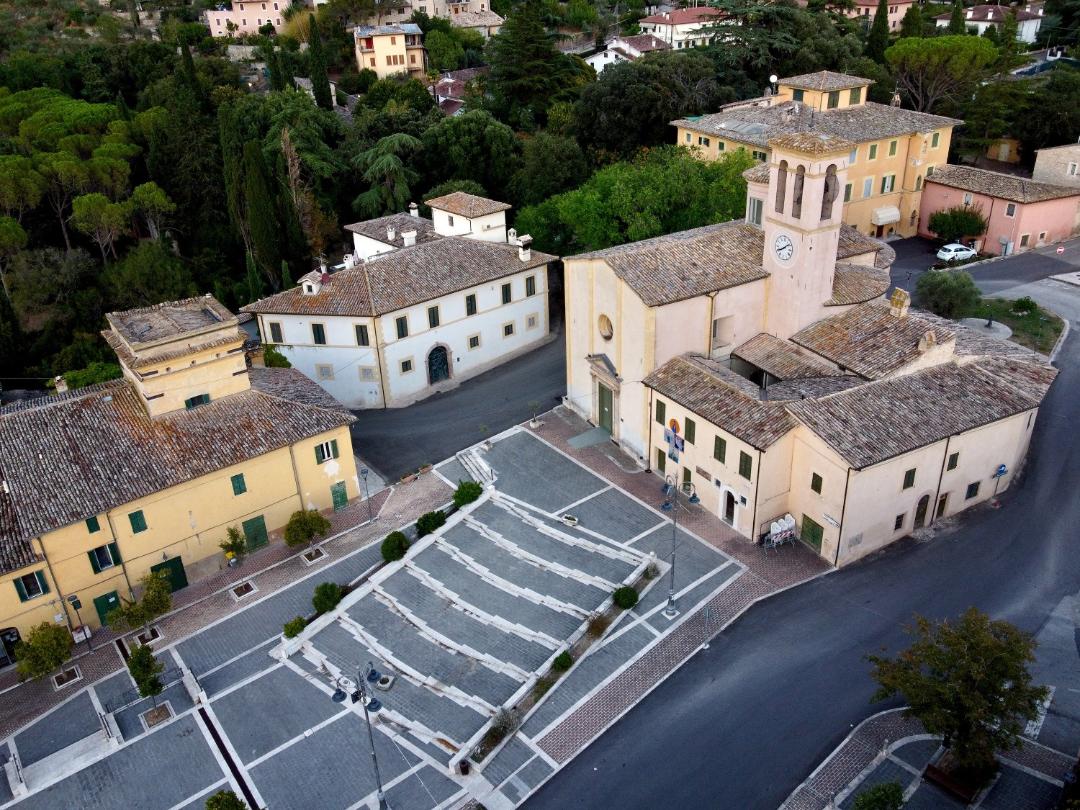
In Piazza Garibaldi, between the Town Hall, Palazzo Casagrande and Palazzo Negri Arnoldi, stands the Sanctuary of the Madonna della Bianca, one of the most important places of worship in Campello sul Clitunno.

The foundation of the sanctuary dates back to the early 1500s, when the inhabitants decided to build a church on the site where a miraculous image of the Virgin and Child was venerated. The effigy, the work of an anonymous local painter, depicted the Madonna and Jesus with fair skin and blond hair—an unusual trait that earned her the name “Madonna della Bianca” (“The White Madonna”).

Origins and popular devotion

At the foot of the hill of Campello Alto, in a wooded area once known as La Macchia, stood a small shrine containing a fresco of the Virgin and Child. Before long, miracles and graces were attributed to the sacred image, prompting the population first to build a small chapel and later—given the increasing number of pilgrims—a larger and more solemn church.

On 29 September 1516, the bishop of Spoleto Francesco Eroli granted permission for the construction of the new building, initially dedicated to Our Lady of Help, then called Our Lady of Mercy, and finally Madonna della Bianca. From that moment, the sanctuary became the religious and symbolic heart of the village, which grew around it and centuries later became the seat of the Municipality.

 A popular tradition, recorded by historian Luigi Fausti (1926), recounts that after the construction of the new church, the sacred image repeatedly returned to its original location: despite being moved, the Madonna would miraculously reappear at night in the old shrine. Only after persistent prayers and the devotion of the people of Campello did the Virgin agree to remain in the new sanctuary, thus sealing the divine and communal will to make it her dwelling place.
Construction and expansions

Construction began in 1516 and continued for several decades. In 1536, during the pastoral visit of Cardinal Fulvio Orsini, the main altar was still missing. Over the centuries, the building underwent numerous restorations and embellishments, which enriched its structure without altering its spiritual essence.

Next to the church stood an inn for pilgrims, damaged by the 1703 earthquake and later purchased by Countess Lavinia della Genga in 1737; it is now part of Villa Arnoldi.

In the eighteenth century the church acquired a more elegant appearance, and in 1797 the architect Giuseppe Valadier—already active at the Cathedral of Spoleto—designed the main altar, the side altars and the neoclassical stuccoes that still adorn the interior today.

Exterior architecture

The church has a Latin-cross floor plan, topped by a dome and by a bell tower added in 1617, as recorded by an inscription. Next to the sanctuary stands the parish house, connected to the main building through the sacristy.

The façade, sober and harmonious, features two sloping sections divided by four terracotta pilasters ending in an elegant dentilled cornice. At the center stands the Renaissance stone portal, created in 1521 by sculptor Cione di Taddeo da Como, framed by Corinthian pilasters and surmounted by a triangular pediment.

Interior and artworks

The interior, with a single nave, houses precious artistic treasures.

On the side altars designed by Valadier at the end of the 18th century are paintings from the 16th and 17th centuries, including a Madonna and Child with Angels, Saint Francis and Saint Anthony of Padua painted in 1656 by Gian Domenico Mattei. Opposite it, another canvas depicts the Madonna and Child with Saints, accompanied by a wooden statue carved by Giuseppe Stuflesser.

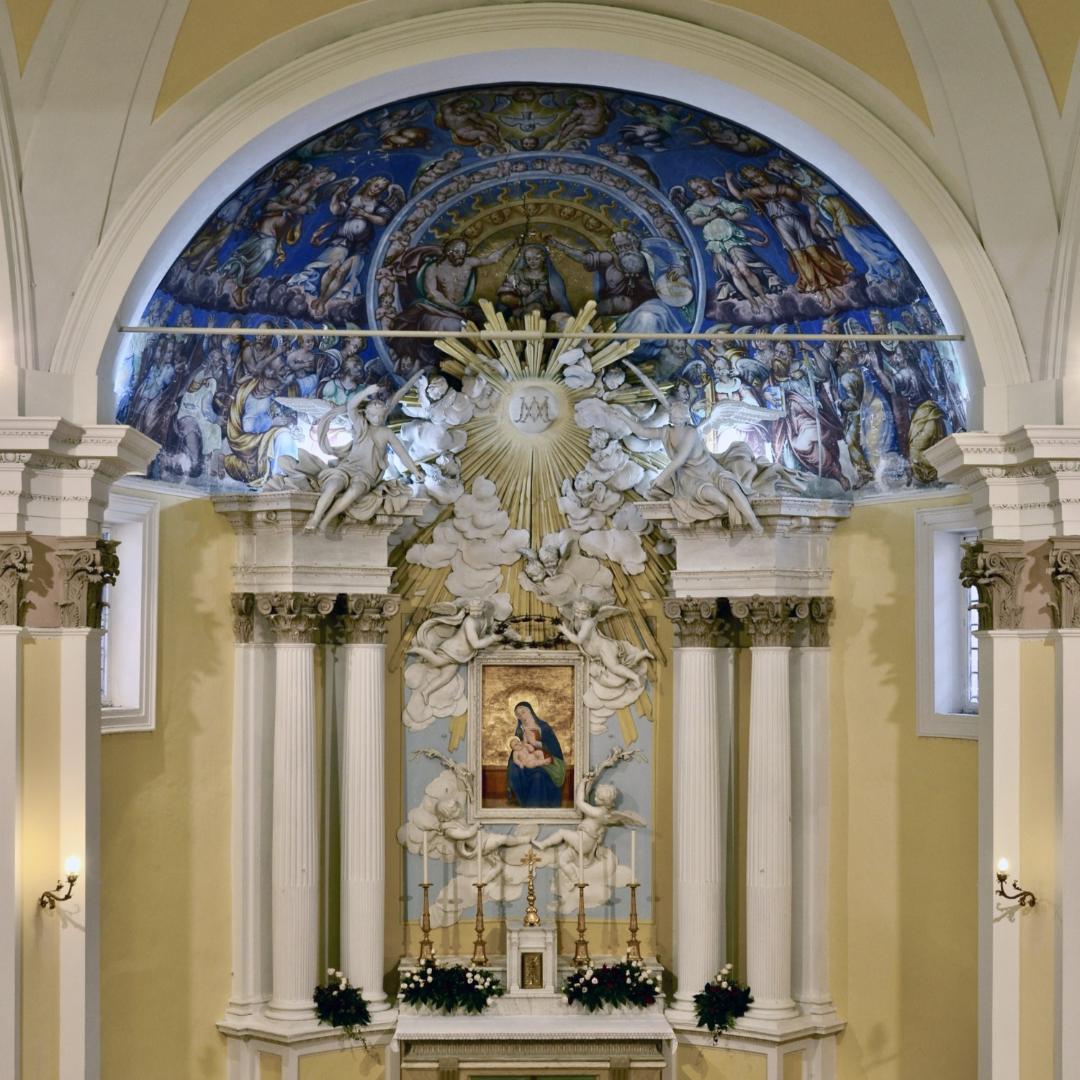
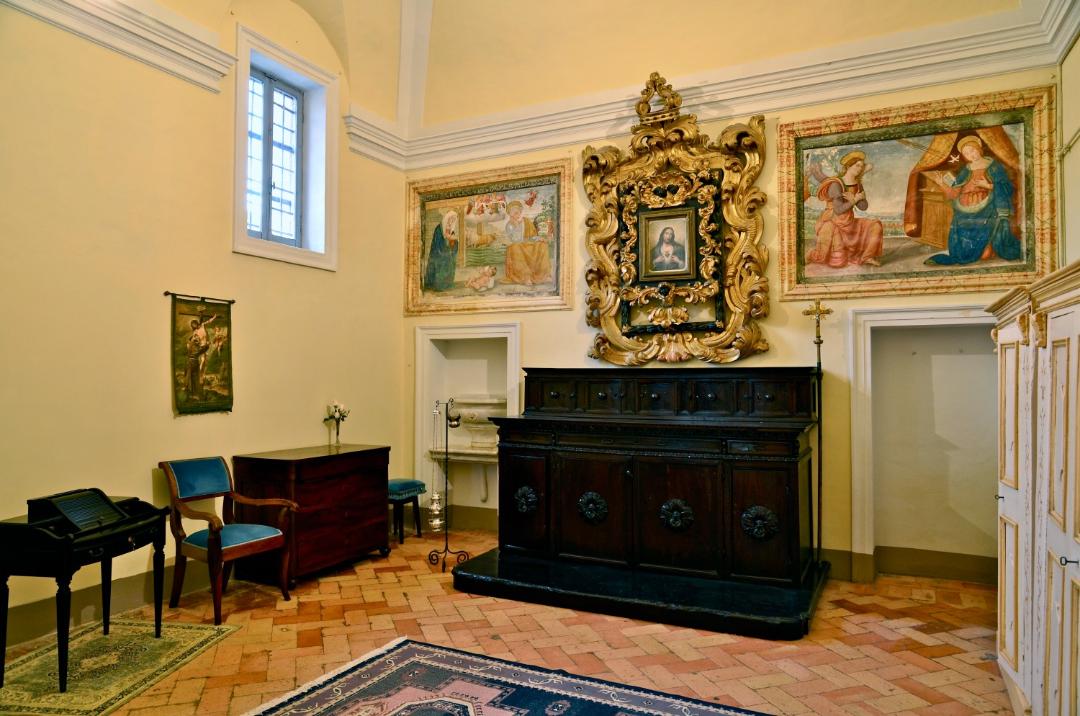
In the apse conch stands a majestic fresco painted in 1574 by Fabio Angelucci da Mevale of Visso, depicting the Coronation of the Virgin by the Eternal Father and Christ, surrounded by figures from the Old and New Testaments. Beneath it, at the center of the main altar, is the image of the Madonna della Bianca that gave rise to the sanctuary, set into the apse wall in 1785 after two paintings created around 1530—attributed to the school of Spagna (Nativity and Annunciation)—were removed and placed in the sacristy, which also preserves valuable sacred furnishings and liturgical objects.

Explore the surroundings
Main attractions in the vicinity