


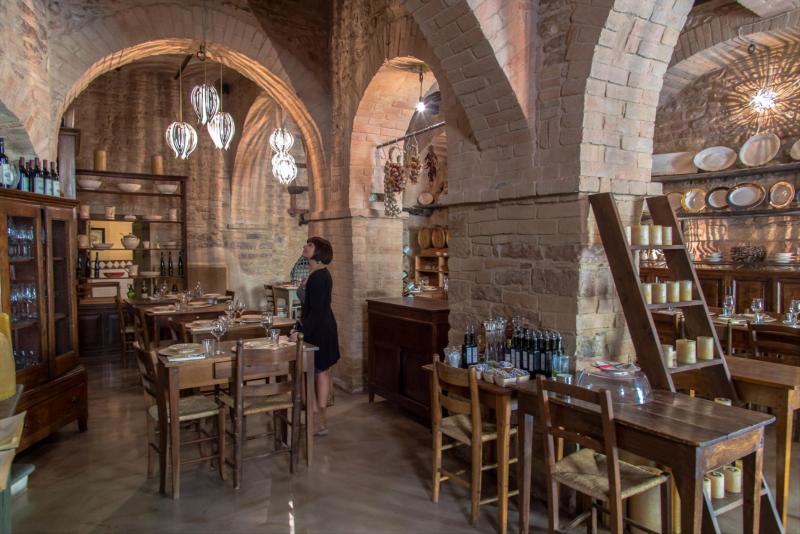


Atrium of Palazzo dei Priori in Città di Castello, with cross vaults, octagonal pillars and a staircase.

Palazzo dei Priori

If, while strolling through the historic centre of Città di Castello, you notice a subtle resemblance to Tuscan architecture, it is no coincidence: Palazzo dei Priori, now the Town Hall, boasts a majestic rusticated façade that immediately recalls the austere elegance of Florentine palaces.

Still home to the municipal administration, it is considered one of the most significant 14th-century public buildings in Umbria.

Civic pride and an unfinished project: the history

The palace was built on the site of an earlier bishop’s residence, which was sold to the Municipality by Bishop Azzo in 1234. The present building, however, dates from the first half of the 14th century, with construction beginning between 1322 and 1338. The project was designed by Angelo da Orvieto, one of the great masters of medieval architecture in the region. During the same period, the architect was also working on two other major Umbrian projects: Palazzo dei Consoli in Gubbio and the nearby Palazzo del Podestà.

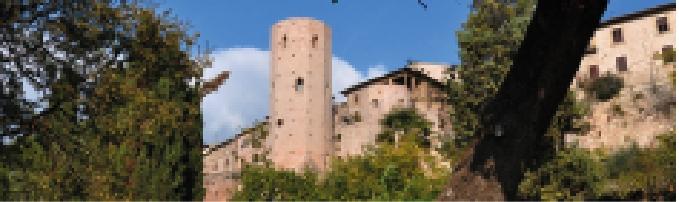
Palazzo dei Priori remains unfinished. The original design envisaged a second floor and an imposing bell tower. Construction came to a halt in 1338, after the first row of mullioned windows had been completed, while the tower was never built. The nearby Civic Tower (or Bishop’s Tower) came to fulfil a similar visual role, dominating the skyline of the historic centre.

Architecture and treasures within

Despite remaining partially unfinished, the palace offers striking architectural features and houses valuable artistic elements.

The sandstone façade was built using stone blocks quarried from the hills of the Upper Tiber Valley and is articulated by a first row of elegant Gothic trilobed mullioned windows. The lunette above the main entrance portal bears the sculpted coat of arms of the Municipality of Città di Castello: a cross and a fortress with three towers. The lunette above the smaller doorway features a carved figure of Justice.

Immediately beyond the entrance is a monumental atrium, with cross vaults supported by just two massive octagonal pillars. Rectangular ribs and intersecting rounded ribs spring from capitals carved with plant motifs.

An elegant grand staircase, built in the 16th century, replaced the original entrance route and leads to the piano nobile. At the top of the staircase, on the right, is the spacious Council Chamber, also known as the Sala Maggiore, where fragments of frescoes were uncovered during restoration work. As well as being at the heart of the city’s civic life, the hall preserves an important archaeological collection of Roman tombstones and inscriptions from ancient Tifernum Tiberinum. It also houses the plaster model of the Allegory of Umbria by sculptor Elmo Palazzi (Città di Castello, 1871–1915), created for the Vittoriano monument in Rome.

Also worth seeing is the Sala della Giunta (Municipal Executive Chamber), which, alongside various paintings and memorabilia from the Italian Risorgimento, houses a large canvas depicting the Martyrdom of Saint Lawrence by local painter Vincenzo Barboni (Città di Castello, 1803–1859).

Explore the surroundings
Main attractions in the vicinity