




Panoramic view of Citerna, a hilltop village in Umbria surrounded by woodlands and cultivated fields, with a sunflower field in the foreground.

Citerna - One of the Most Beautiful Villages in Italy

Perched on a hill on the border between Umbria and Tuscany, Citerna is a charming hamlet listed among the "Most Beautiful Villages in Italy"; it is known for its breathtaking panoramic views, which earned it the nickname “the terrace of the Upper Tiber Valley”.

It takes its name from the numerous cisterns (at least seven) built over time by the local population to collect rainwater; the main cistern lies beneath the former Monastery of San Francesco and holds around 450 cubic metres of water.


From Etruscan Origins to the Wounds of the Twentieth Century

The origins of the village date back to the Etruscan era. Flourishing during Roman times under the name Civitas Sobariae, it benefited from a strategic location controlling the transit routes across the Apennines. In the Early Middle Ages, it was destroyed by the Gothic invasion, much like neighbouring Città di Castello. In the following centuries, Citerna developed into a defensive stronghold, caught in the struggle between Ghibelline Arezzo and Guelph Città di Castello, to which it submitted in 1199. Subsequently, it fell under the ambitions of various ruling dynasties, including the Tarlati of Pietramala and the Malatesta, as well as the Papal States. However, it was during the 16th century, under the protection of the powerful Vitelli family of Città di Castello, that the village experienced its period of greatest artistic and urban peak.

In July 1849, it granted refuge to Giuseppe Garibaldi and his volunteers following the fall of the Roman Republic. In 1860, it was annexed to the Kingdom of Italy.The 20th century inflicted severe damage on the ancient urban fabric, both from the devastating 1917 earthquake and the destructive bombings of World War II in 1944; meticulous restoration work has since faithfully restored the village's historic layout.

The Village Highlights

The town remains largely enclosed within its medieval walls, which still feature evocative covered walkways, undoubtedly one of its most distinctive elements. These arcaded loggias along the perimeter walls were originally created for defensive purposes and are today perfect for a panoramic stroll sheltered from the elements.

At the highest and oldest point of the settlement, offering an extraordinary view, lie the remains of the Fortress (Rocca), a visible reminder of the village's past military history, largely destroyed by German raids in 1944.

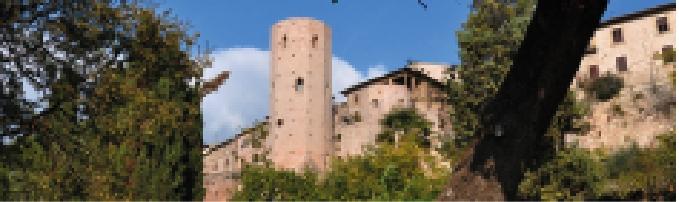
The heart of this Umbrian town is the characteristic Piazza Scipione Scipioni, dedicated to a World War I hero who was born and lived in Citerna: it is a natural balcony overlooking the Umbrian-Tuscan landscape, where the tall Civic Tower stands with its rare 16th-century wooden-geared clock mechanism; here you can also admire an ancient well dating back to the 16th century.

Overlooking the square is the Church of San Michele Arcangelo, built around 1680, which houses the large canvas of the Crucifixion (1570) by Nicolò Circignani, known as il Pomarancio, and the Madonna and Child (16th–17th century), attributed to Giovanni della Robbia.

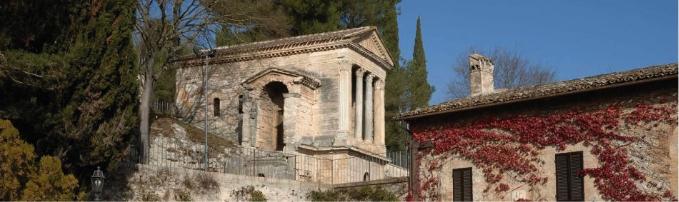
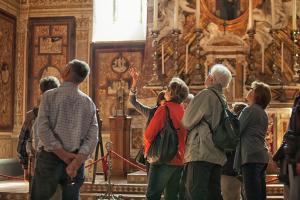
Also in the historic centre, the 14th-century Church of San Francesco along Corso Garibaldi is well worth a visit; it was remodeled in 1508 in an understated Renaissance styles. It is considered a veritable "museum church" because it houses works of exquisite artistic value, including the Deposition (16th century) by Nicolò Circignani known as il Pomarancio, a Della Robbia terracotta with fruits and cherubs, paintings attributed to Raffaellino del Colle, frescoes linked to the workshop of Luca Signorelli, a wooden choir from 1550, altars, and refined carvings. The church also holds the splendid Madonna and Child in polychrome terracotta, dated around 1415 and attributed, following major restoration work, to the young Donatello: it undeniably represents the artistic apex of this beautiful Umbrian village.

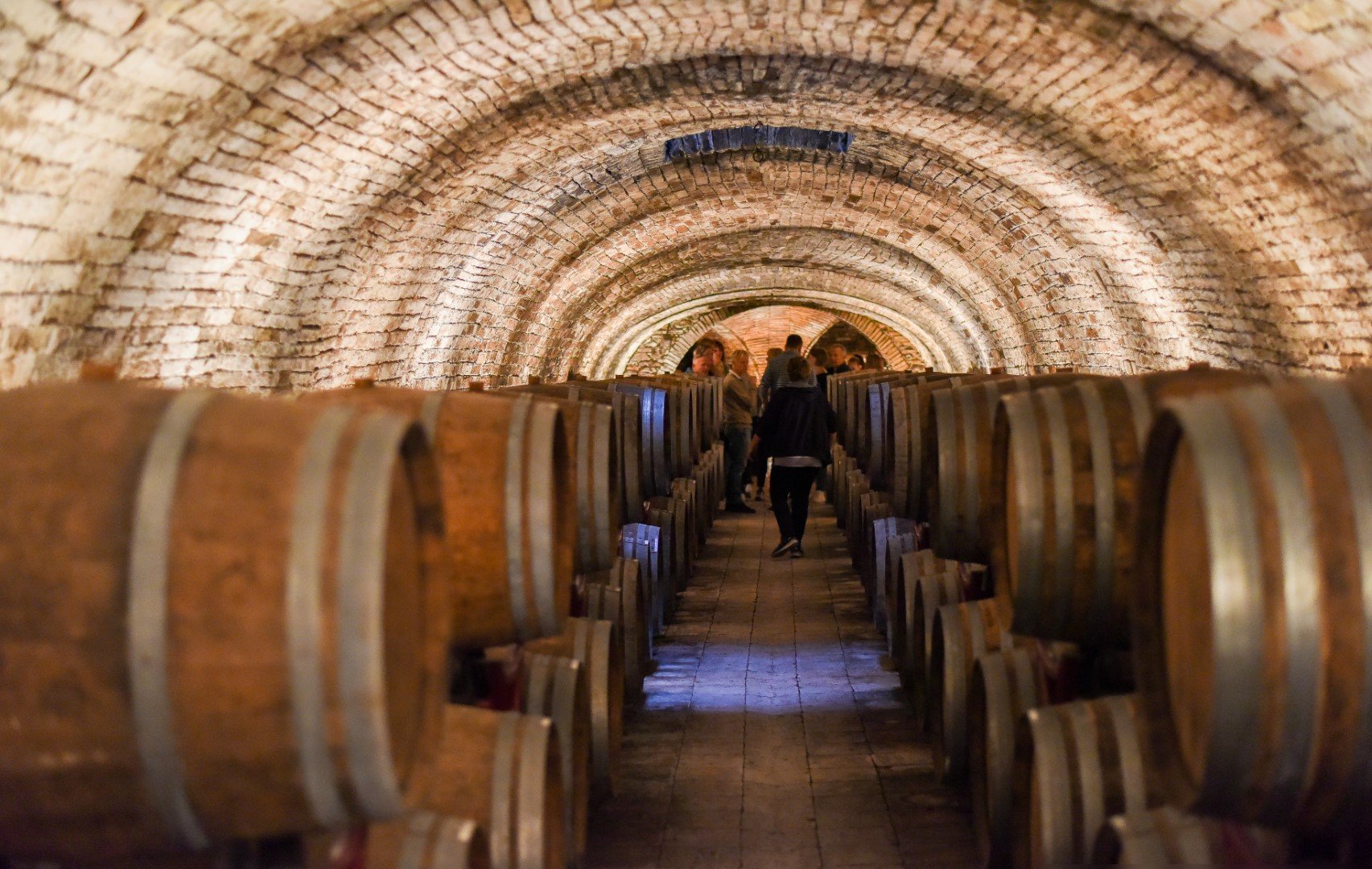
The adjacent former monastery now houses the Town Hall of Citerna, featuring an elegant internal cloister. Beneath the monastery lie Citerna’s underground chambers, built between the 15th and 16th centuries to withstand sieges and ensure water and food supplies for the village. It features two large monumental cisterns and the Sale degli Ammassi (Storage Rooms), which were once used to store vital reserves.


Take Your Time

Getting lost in the stone alleyways of Citerna offers a relaxed, authentic pace. The visit finds its perfect completion in the local traditional flavours, dominated by the truffle of the Upper Tiber Valley, PDO extra virgin olive oil, and fine wines from the surrounding hills.

 
Explore the surroundings
Main attractions in the vicinity