

An ancient hilltop settlement perched on a rocky hill at an altitude of around 400 metres, overlooking the Tiber Valley and the Sabine Hills: this is Calvi dell’Umbria, a timeless village where history meets the evocative beauty of art, nature and tradition.
Its name is thought to derive either from an ancient Roman family, the gens Calvia, or from the name of the rocky hill on which it stands, Carbium, now Calvo, meaning ‘bald’ or ‘bare’ because it was devoid of vegetation.
A journey through history: from its origins to the Middle Ages
Calvi’s history has ancient roots, reaching back to protohistory. Archaeological excavations and finds on the summit of Monte San Pancrazio attest to human settlements dating back to the Bronze Age, as well as evidence from the Italic and Roman periods, including traces of an ancient temple and the discovery of small votive bronzes. It was probably originally an archaic cultural centre controlling the Tiber Valley and the Nera Valley.
It was among the earliest possessions of the Patrimony of Saint Peter, as attested by the donation made in 741 by the Lombard king Liutprand to Pope Zacharias, which included the territories of Amelia, Orte and Bomarzo as well as Calvi. Around the 9th century, it came under the influence of the Duchy of Spoleto and later of the powerful Abbey of Farfa, which controlled the strategic routes along the Via Flaminia. Around the year 1000, according to local chronicles, the village welcomed the inhabitants of the nearby castles of Altaino and Striano, destroyed in the wars. The refugees settled in the area known as ‘La Costa’, expanding the settlement around the Church of San Salvatore.
From the 13th century onwards, Calvi’s fortunes became tied to the Papal States, although it retained strong municipal autonomy amid disputes and brief periods of subjection to Narni. First a fief of the Counts of Anguillara (with Lorenzo de’ Ceri), and later of the Orsini family, it was transformed into a well-defended stronghold. Apart from the turmoil of the Napoleonic era — including the bloody clash between French and Neapolitan troops in 1798 — Calvi retained its character until the Unification of Italy, when it became part of the Kingdom of Italy and the designation ‘dell’Umbria’ was added to distinguish it from other municipalities with the same name.
On 13 April 1944, during the Second World War, the town was the scene of one of the most brutal episodes to take place in the area. Following Operation ‘Osterei’ (‘Easter Egg’) and the subsequent round-up, the Calvi dell’Umbria massacre took place: 12 unarmed residents were shot in the small square in the historic centre, now named ‘Piazza dei Martiri’, and three others near the village of Santa Maria Maddalena.
A stroll through lanes, museums and murals
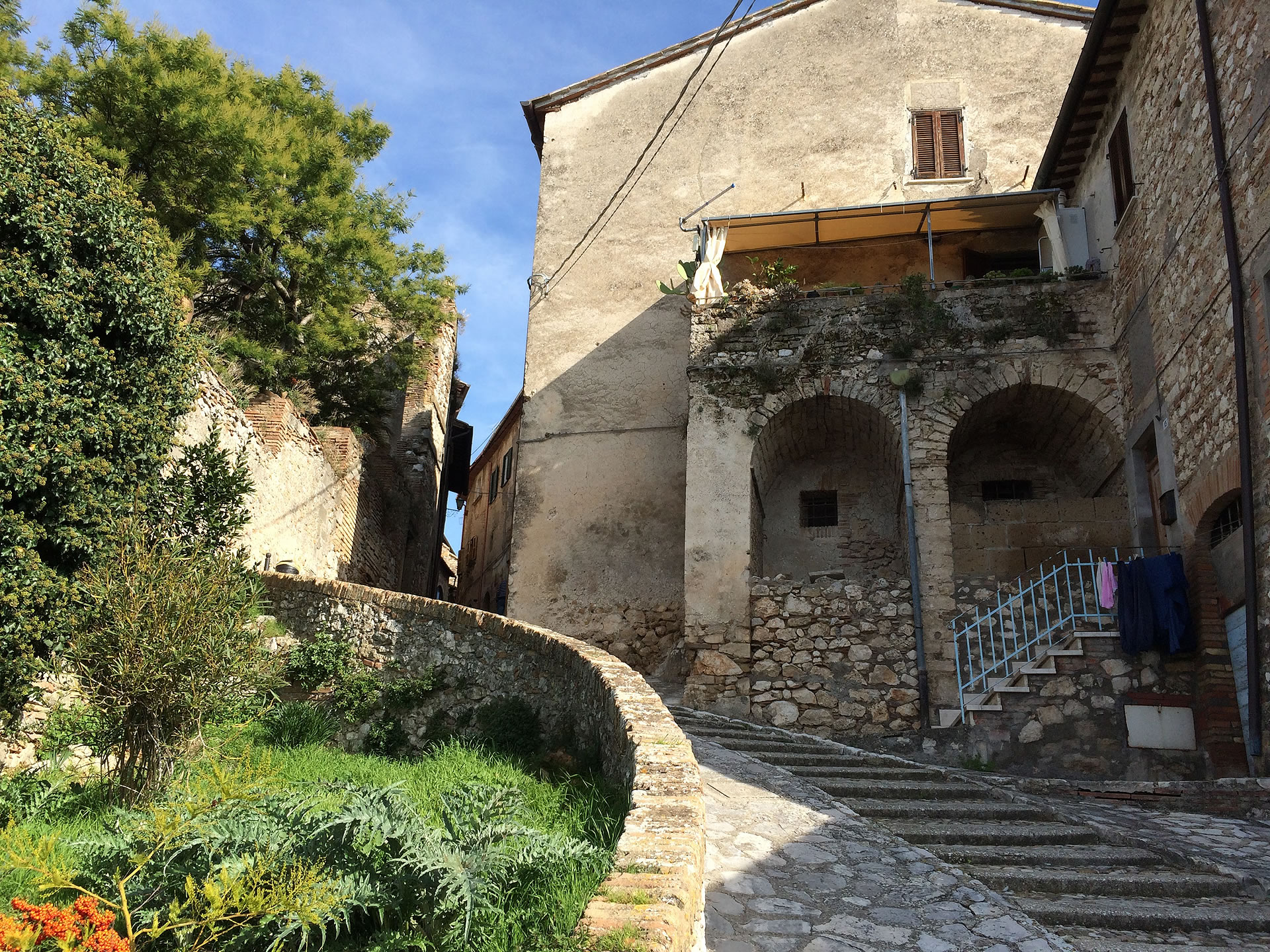
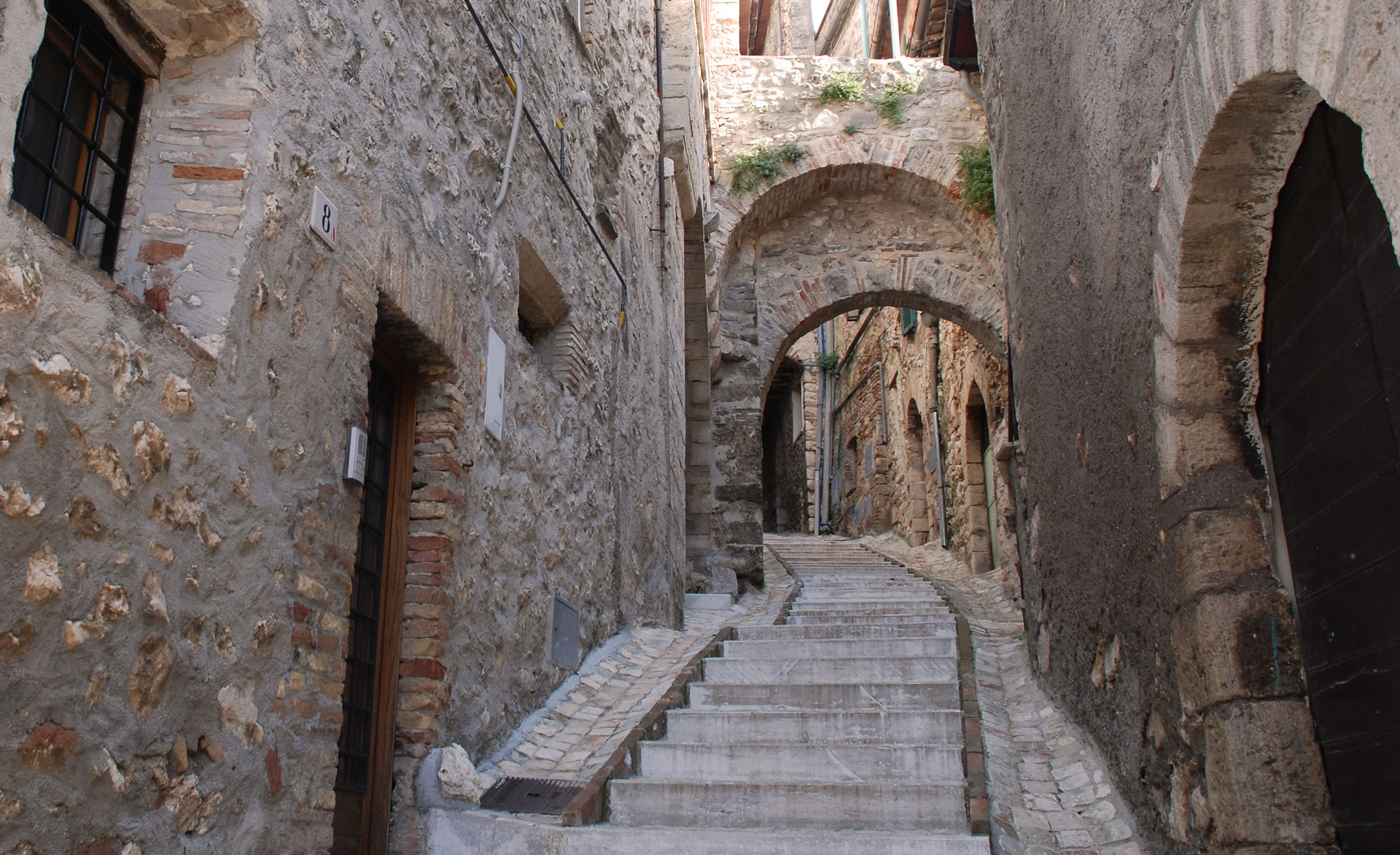
A walk through Calvi dell’Umbria means exploring a maze of paved lanes, stone stairways, arches and scenic little squares. The historic centre unfolds through narrow, steep and picturesque streets that wind up and down beneath the arches connecting the houses, past vaulted passageways and the remains of walls and towers.
Of particular historical and artistic interest is the large Ursuline Monastery, designed by the architect Ferdinando Fuga and built between 1739 and 1743. It houses the Museum, which contains the valuable Chiomenti Vassalli Collection, a rich collection of paintings dating from the 16th to the 18th century, including works attributed to great masters and other fine canvases. The complex also includes the Church of Santa Brigida and the Church of Sant’Antonio, which houses a monumental polychrome terracotta Nativity scene, comprising thirty almost life-size statues and created in 1546 by the brothers Giacomo and Raffaele da Montereale. The museum itinerary also includes historic rooms in the monastery, such as the kitchens, the washhouse the apothecary, the vegetable garden and the garden.
The village’s historic churches are also well worth a visit: the Church of Santa Maria Assunta, with its Baroque altars, an altarpiece by Giuseppe Cesari, known as Cavalier d’Arpino, and a fine 1559 baptismal font; and the Church of the Santissima Trinità, notable for its interesting octagonal floor plan dating back to the 15th century. Just outside the town centre stands the Church of San Francesco, traditionally said to have been built on the spot where Saint Francis of Assisi stayed in 1213.
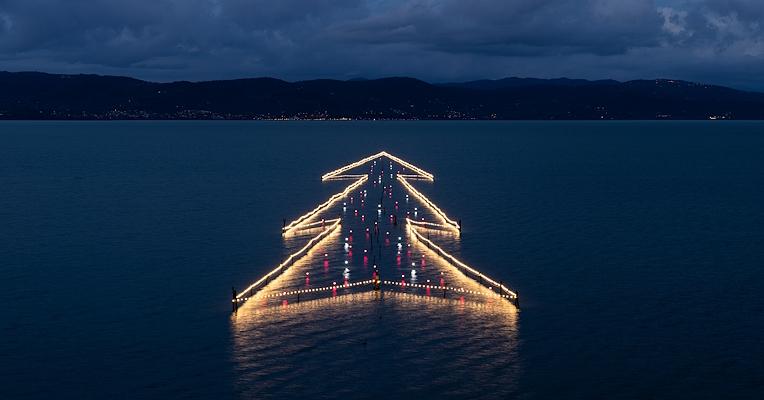
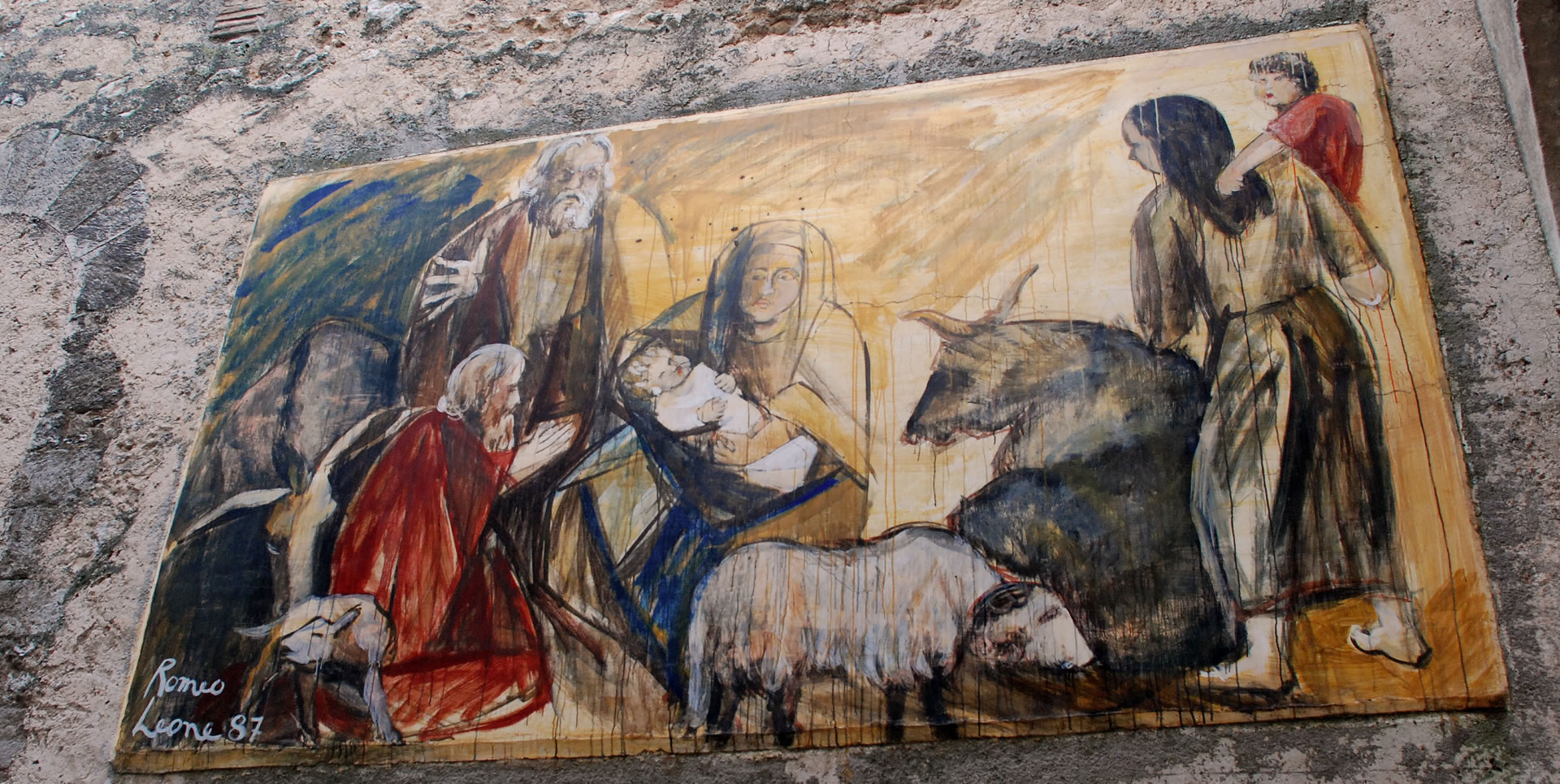
Finally, the lanes of this Umbrian village form a true open-air gallery. Calvi is, in fact, famous as the ‘Village of Nativity Scenes’. Since 1982, Italian and international artists have decorated the exterior walls of the old houses in the historic centre with murals devoted to the Nativity. Every corner offers a colourful surprise to discover at a leisurely pace.
Traditions and nature
Calvi dell’Umbria is experienced not only through its stone buildings and art, but also through the identity of its traditions and the landscapes that surround it.
The area is an ideal destination for nature lovers and walkers. The trail leading to the summit winds through holm-oak woods and offers breathtaking views stretching as far as the Tiber Valley. At the top of the mountain, visitors can see the Hermitage of San Pancrazio, the remains of a 6th-century BC sanctuary. It can be reached by a road winding through woods and open countryside, revealing truly enchanting panoramic views along the way. The village is also an essential stop on the Way of the Franciscan Protomartyrs.
Every May, one of Umbria’s oldest historical re-enactments takes place, dating back to 1459: the Feast of San Pancrazio. Four young horsemen known as ‘Signorini’, each representing one of the town’s four districts (Fiamme, Croce, Castello and Drago), parade through the village in traditional dress, visiting the characteristic banquet tables laid out by the neighbourhoods.
Visiting Calvi dell’Umbria means rediscovering simplicity and a slower pace of life, in a place where a thousand-year history blends with warm hospitality and the unspoilt beauty of the Umbrian landscape.