Between Archaeology, History and Legends
Lake Piediluco is a place where history, nature and myth have been intertwined for millennia. Archaeological excavations have uncovered important evidence dating back to the Late Bronze Age, including an extraordinary hoard discovered near the ancient harbour. Inside a cavity carved into the limestone rock, a large terracotta vessel contained hundreds of bronze artefacts: fibulae, knives, sickles, chisels, weapons, horse harnesses, chariot wheels and even fragments of a tripod of Cypriot origin. This treasure was probably hidden during a period of severe instability and was never recovered following the sudden abandonment of the area at the beginning of the Iron Age.
In Roman times, the lake was also known as Septem Aquae (“Seven Waters”), probably in reference to the seven arms that shape its outline. The name Piediluco itself, meaning “at the foot of the sacred wood,” evokes a magical and mysterious landscape which, according to Roman belief, was inhabited by nymphs, satyrs and water deities.
With the advent of Christianity, ancient beliefs evolved into new legends. The most famous tells of a terrible dragon hidden among the marshes whose breath poisoned the surrounding land. Behind the myth likely lies a real historical event: during the Middle Ages, the channel built by the Romans to drain the Lacus Velinus gradually became obstructed, causing much of the Rieti plain to return to marshland. It was only in 1601, with the opening of the Cava Clementina canal, which reclaimed more than 5,400 hectares of wetlands, that the “dragon” was symbolically defeated.From the shores of the lake, two hills with a distinctive triangular shape can be seen seemingly guarding the waters: the famous “pyramids of the lake”. Above the village of Piediluco rises Mount Luco, known as the “Fortress Pyramid”, crowned by the remains of the Albornoz Fortress. On the opposite side stands Mount Caperno, known as the “Mountain of Echoes”, crossed by shaded paths lined with holm oaks leading to the Sanctuary of the Madonna dell’Eco at more than 600 metres above sea level. Its name derives from a remarkable acoustic resonance phenomenon, which is linked to one of the lake’s most romantic legends. According to local tradition, an ancient druid imprisoned the words of an impossible love among these mountains, giving rise to the echo that still resounds across the lake today.
Nature, Relaxation and Sports
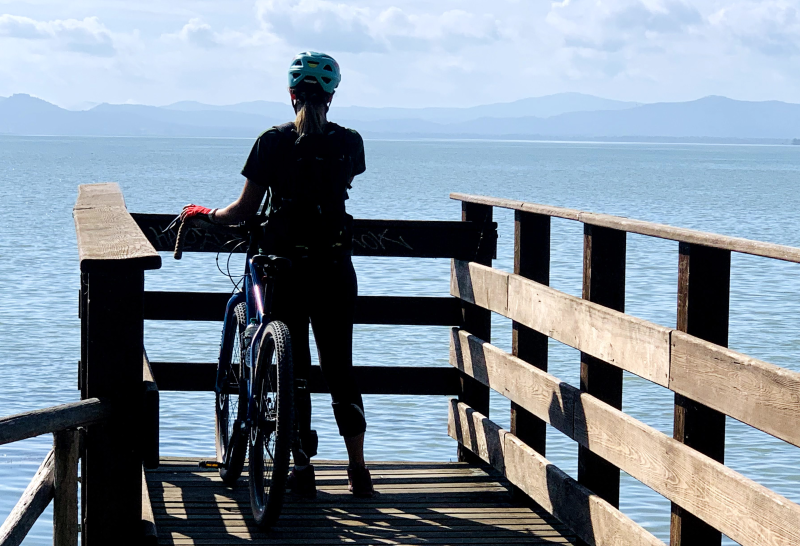
Spending a day in Piediluco offers a perfect combination of relaxation, outdoor activities and exploration of the surrounding area. One of the best ways to begin a visit is with a boat tour: vessels operate continuously and no reservation is required. When conditions allow, the route continues along a stretch of the Velino River, which flows through the lake before joining the Nera River and contributing to the formation of the Marmore Falls.
During the cruise, local guides and fishermen share stories and curiosities about the lake, from the physics experiments conducted by Galileo Galilei in 1624 to the visits of Brigitte Bardot, who spent peaceful moments in this corner of Umbria during the years of La Dolce Vita, away from the film sets of Rome.
The lake is also ideal for activities such as kayaking, pedal boating and rowing. Thanks to its regular winds and the absence of strong currents, Lake Piediluco has become one of Italy’s leading venues for rowing competitions. The nearby National Rowing Centre regularly hosts national and international events.
Biodiversity and Gastronomy
Lake Piediluco is much more than a beautiful body of water nestled among the Umbrian mountains: it is a valuable reservoir of biodiversity, where aquatic environments, reed beds and woodlands of poplars and willows provide habitats for numerous animal species.
Among the lake’s most fascinating inhabitants are water birds such as grey herons, great crested grebes, mallards, coots and kingfishers. Birds of prey are also present, including the short-toed eagle, the western marsh harrier and the peregrine falcon.
The lake's waters are home to several fish species, including native species such as the eel, tench, pike and brown trout, as well as non-native species that have successfully adapted to this environment, including carp, European perch, pumpkinseed sunfish and rainbow trout.
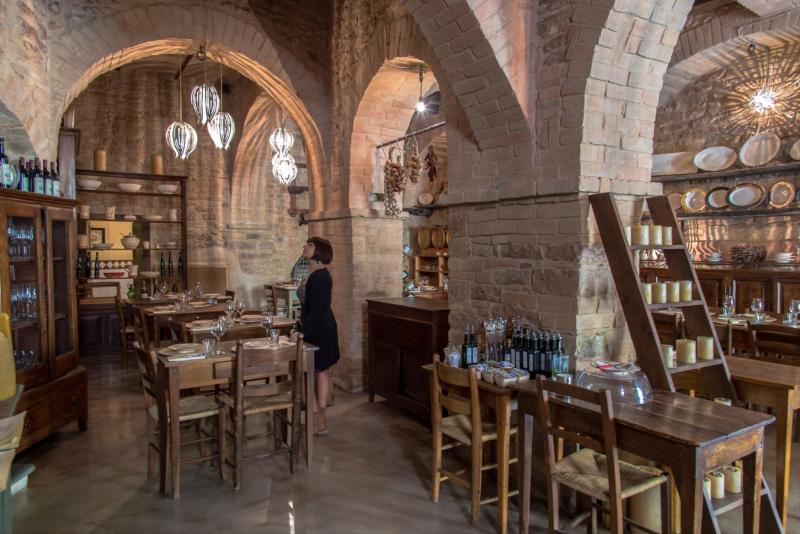
The lake’s rich natural heritage is also reflected in local culinary traditions. In the restaurants overlooking its shores, visitors can enjoy regional specialties such as freshwater crayfish in green sauce and dishes based on lake fish, including the renowned carbonaretti.