



Temple of Clitunno
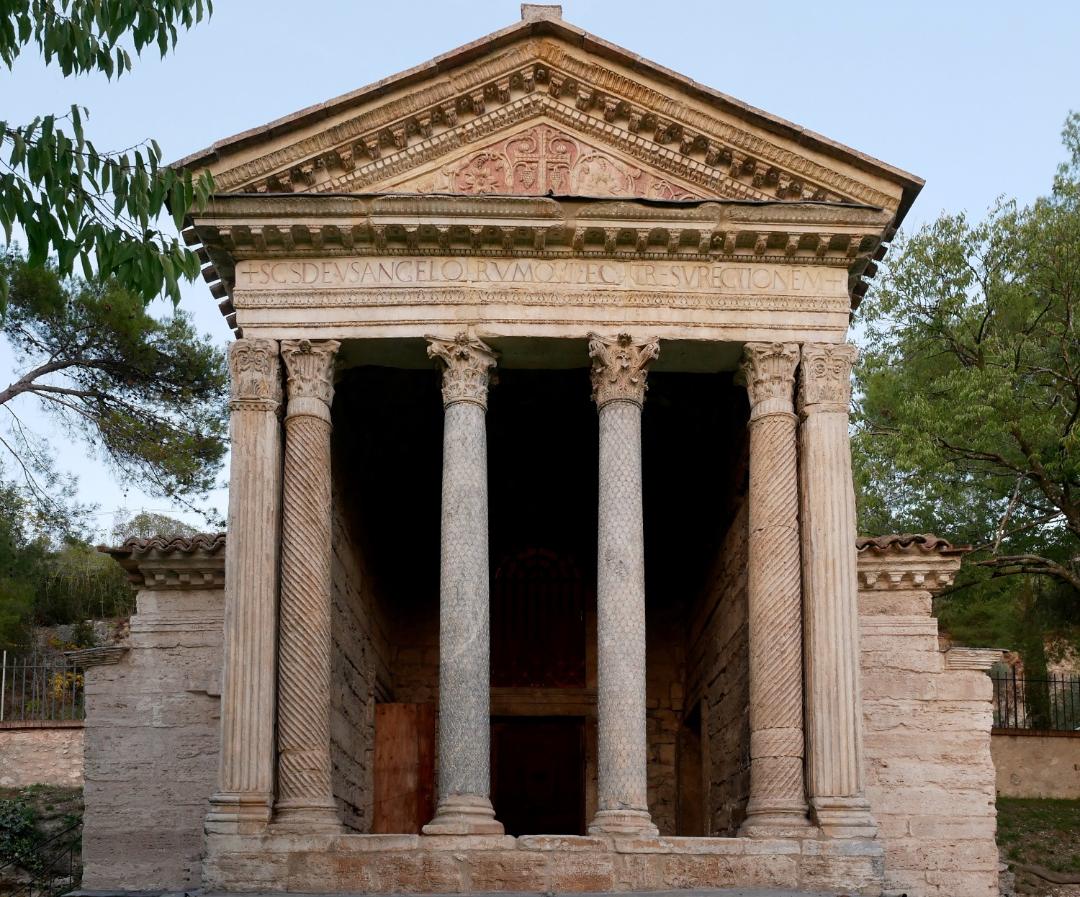
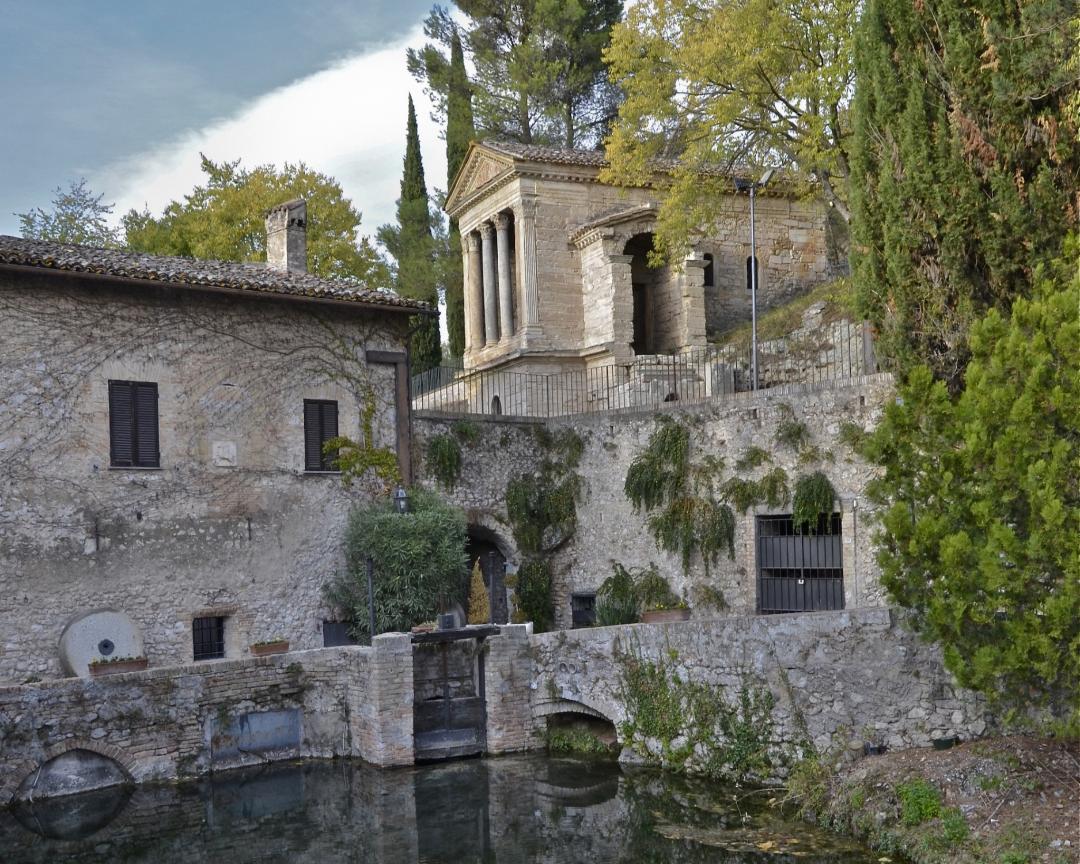
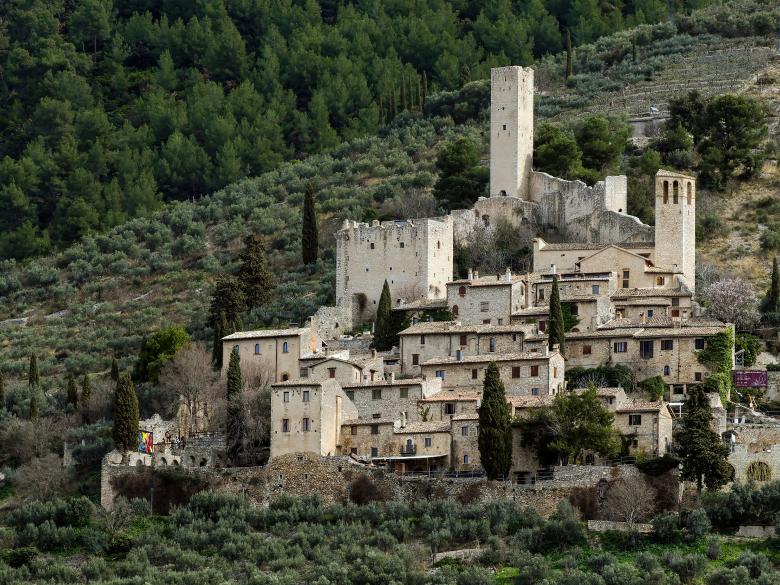
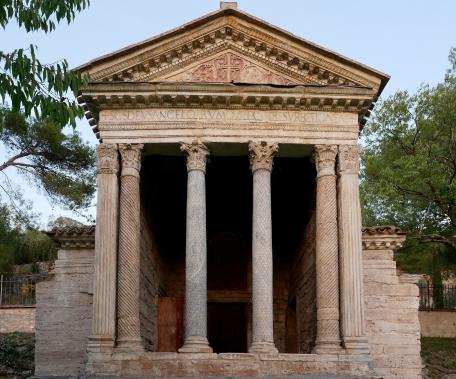
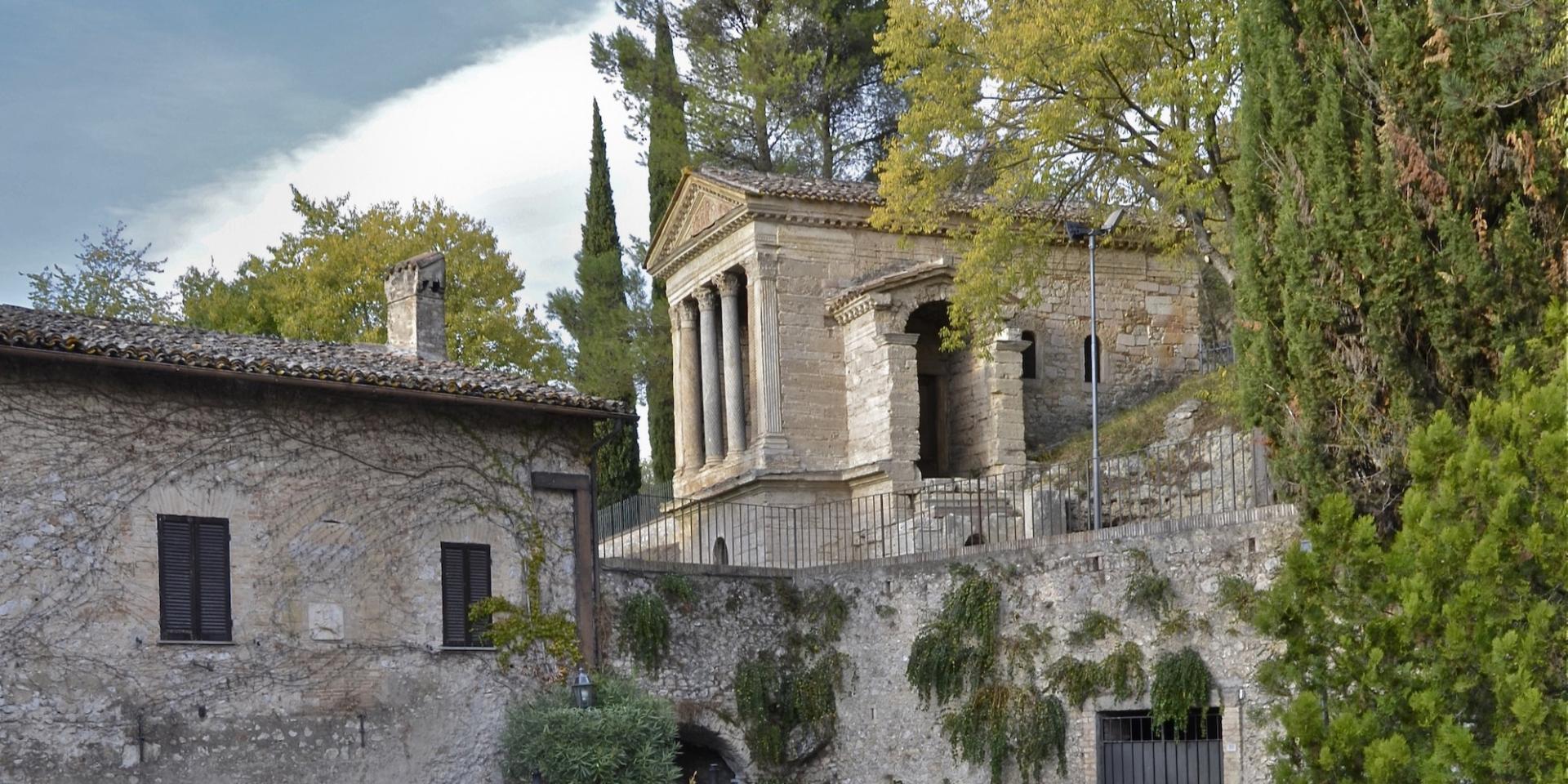
In the hamlet of Pissignano, not far from the Clitunno Springs, stands a small building that seems suspended on the rocky spur on which it was built: the Tempietto del Clitunno, dedicated to San Salvatore.
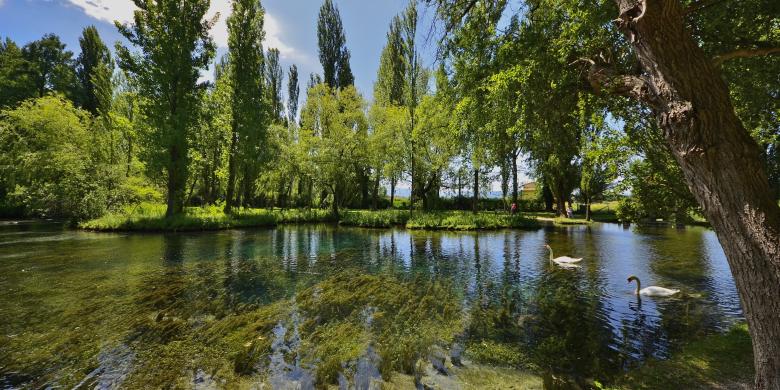
Surrounded by cypress trees and reflected in the clear waters of the river, the Tempietto appears as the result of an encounter between Christian spirituality and classical elegance. Its position, perched on a rocky outcrop, makes it a privileged viewpoint over a landscape that has enchanted travellers and poets of every era.
As early as the 1st century AD, Pliny the Younger described with wonder the waters of the Clitunno and the tranquillity of the site—an atmosphere that has remained untouched over the centuries. During the Renaissance, this tiny temple became a source of inspiration for artists and architects: Palladio, Vanvitelli, Francesco di Giorgio Martini and Benozzo Gozzoli admired its perfect proportions. Lord Byron too was struck by it and celebrated its beauty in Childe Harold’s Pilgrimage, transforming the Tempietto into a symbol of an ancient and poetic Italy.
A deceptive appearance of a Roman temple
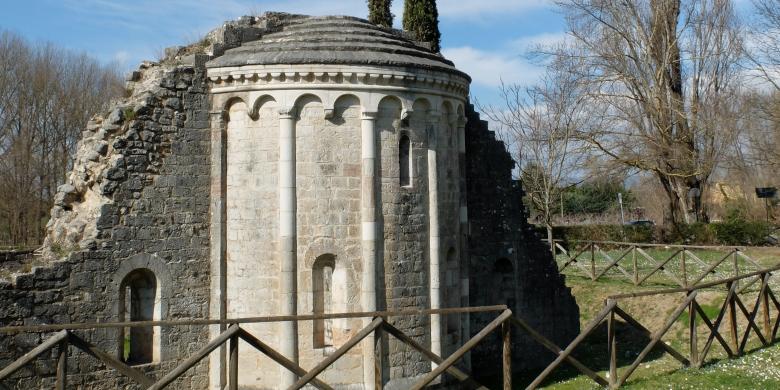
Its appearance strongly recalls that of a Roman temple: the harmonious proportions, the Corinthian colonnade and the refined reliefs deceived scholars and travellers for centuries, leading many to believe that it had been built on the remains of a temple dedicated to the god Clitumnus.
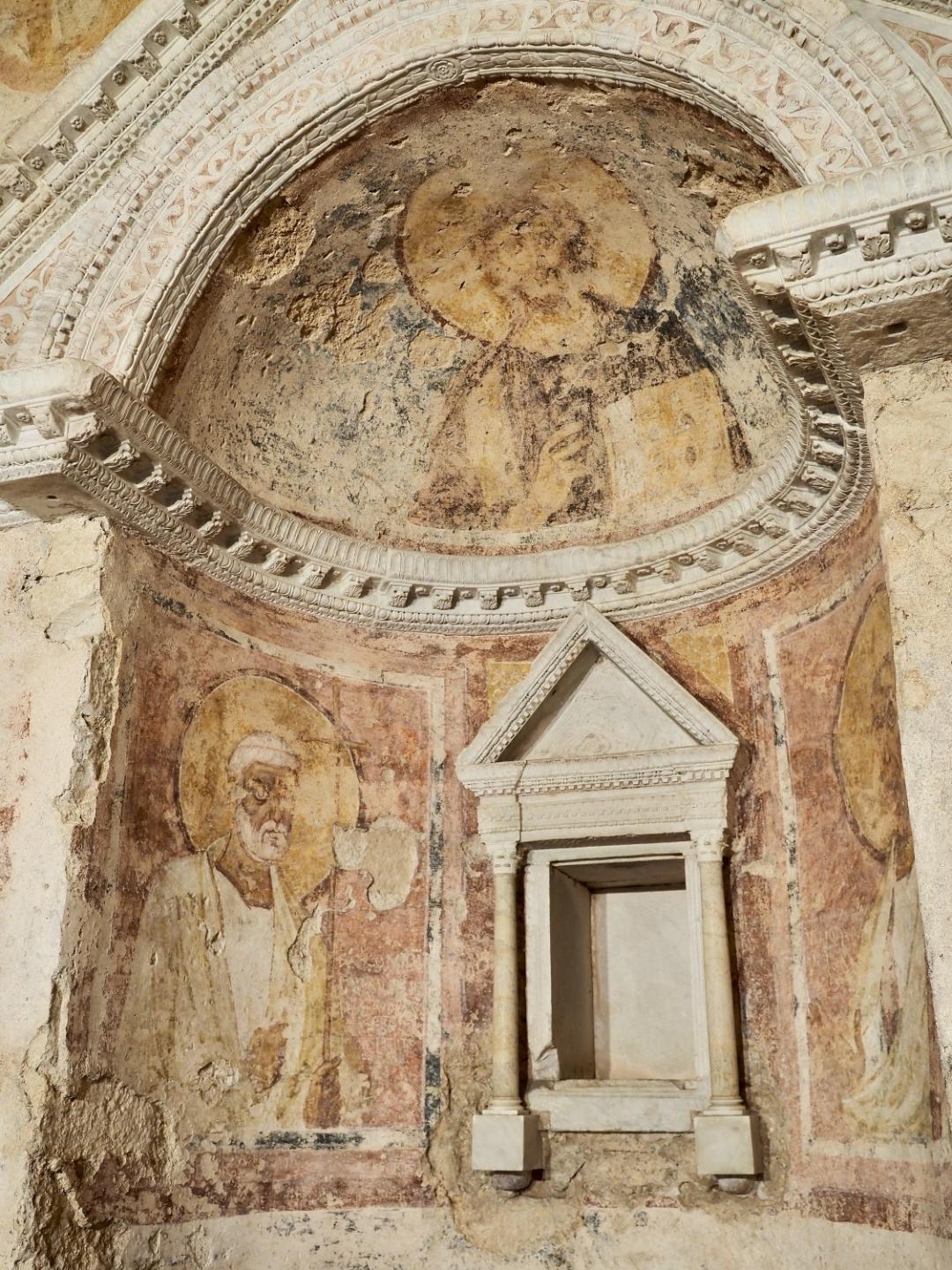
Today, however, many agree that its origins were Christian (according to some, built between the 4th–5th century, according to others between the 7th–8th). The Tempietto is the result of the architectural mastery of the Lombards, who created this monument by combining spolia from the Roman era with decorations that skillfully imitate the classical style.
Considered one of the most important early medieval monuments in Umbria, the Tempietto has been recognized as a UNESCO World Heritage Site within the serial property “The Lombards in Italy. Places of Power (568–774 AD).”