






The Convent of the SS. Annunziata in Amelia
A history of faith and living spirituality
The earliest records of this Franciscan settlement in Amelia date back to 1373, when a group of friars decided to found a convent on a pre-existing site. The convent became one of the most important centers linked to the Clareni, a branch of Franciscan friars who sought to observe the Rule of Saint Francis in a stricter and more radical way.
A major transformation of the original complex took place in the 16th century, when it came under the control of the Observant Friars Minor. In 1567, under Pope Pius V, the Clareni were suppressed and incorporated into the Friars Minor. Thanks to the support of noble families from Amelia and the contributions of the faithful, the small church was transformed into a larger convent complex, becoming a major center of spirituality and culture in southern Umbria.
In 1610, the Confraternity of the Zappatori was established at the convent—a group of devout laypeople involved, among other activities, in the restoration of the church and convent. In 1745, the monastery became a “Retreat,” a religious community with a special statute characterized by a life of austerity.
In 1810, the Napoleonic suppressions forced the religious community to leave the convent; however, some friars remained, officiating in civilian clothing and thus ensuring the continuity of religious rites and monastic life until 1814, when the community officially returned. Further suppressions followed after the Unification of Italy, but some friars remained, celebrating behind closed doors and without the ringing of bells, supported by the entire population of Amelia, until in 1882 they succeeded in repurchasing the church and convent.
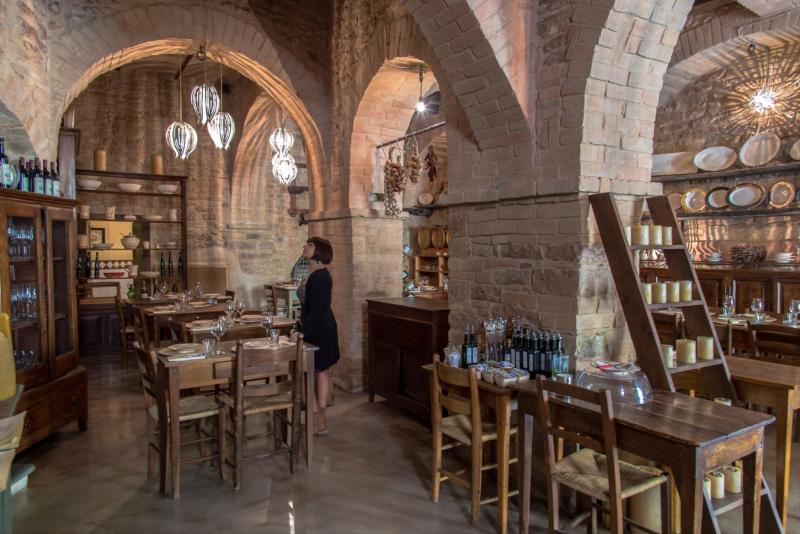
Today, the complex of the Most Holy Annunciation remains a place of living spirituality. It has been transformed into a guesthouse and also features a planetarium, created in 1989 by Gianpaolo Gambato of Venice at the request of Father Bernardino Santini of Giove.
At the convent the ancient monastic tradition of beekeeping lives on. Its doors open, by reservation, to school groups and other groups for environmental education activities. By observing an educational beehive, children learn the importance of caring for biodiversity, discovering up close the wonderful and industrious world of bees.


